FlightFinder (himaxym.com) is an aviation safety data platform: it compiles and cross-references accident, incident and hazard records from 130 sources, chiefly national investigation authorities, into one searchable, citable dataset organized by aircraft type, airline and airport.
FlightFinder: Aviation Safety is the FlightFinder corpus in your pocket: accident and incident records from official investigation authorities worldwide, aircraft and airline safety profiles, global safety maps, and the accidents recorded around wherever you happen to be standing.
Download on the App Store Get it on Google Play — free, iOS 15.0 or later, Android 7.0 or later.
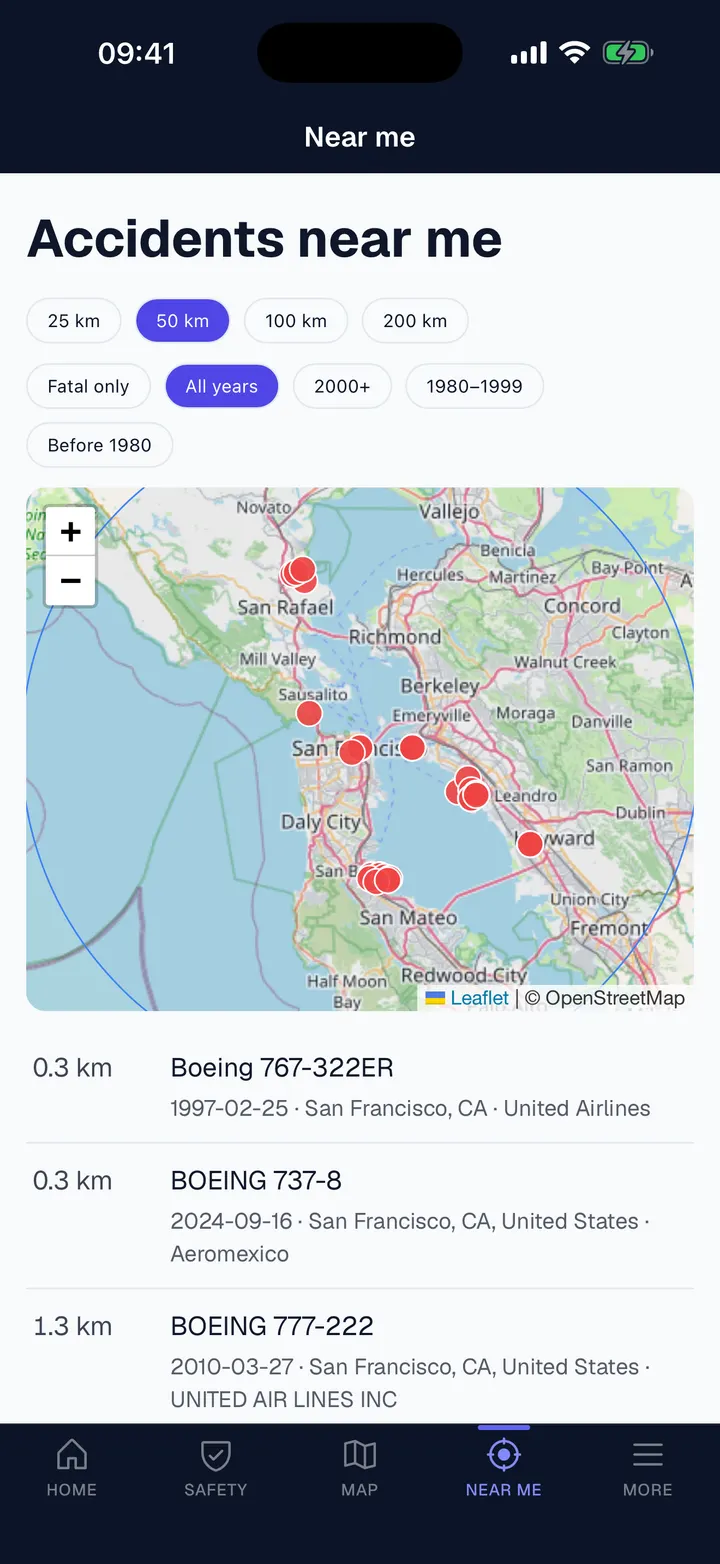
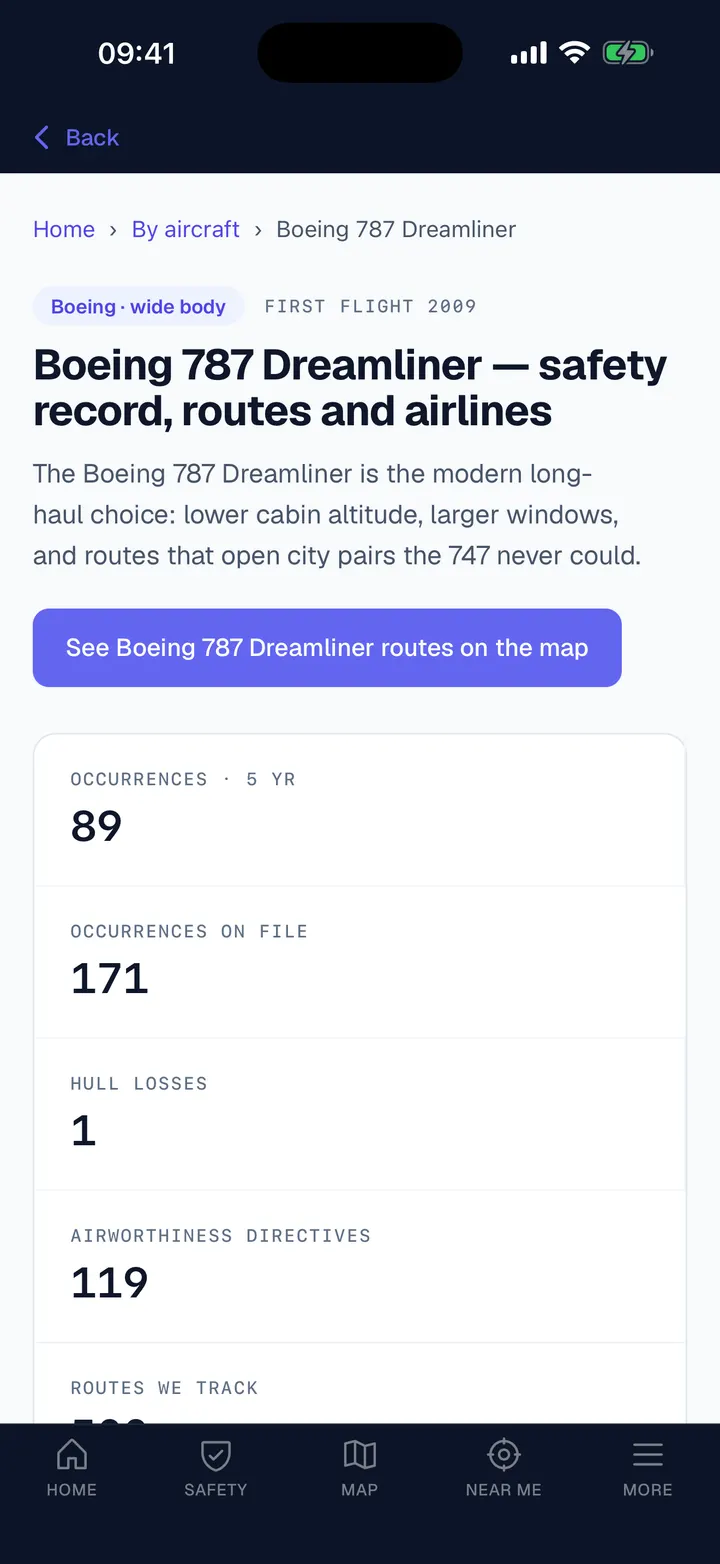
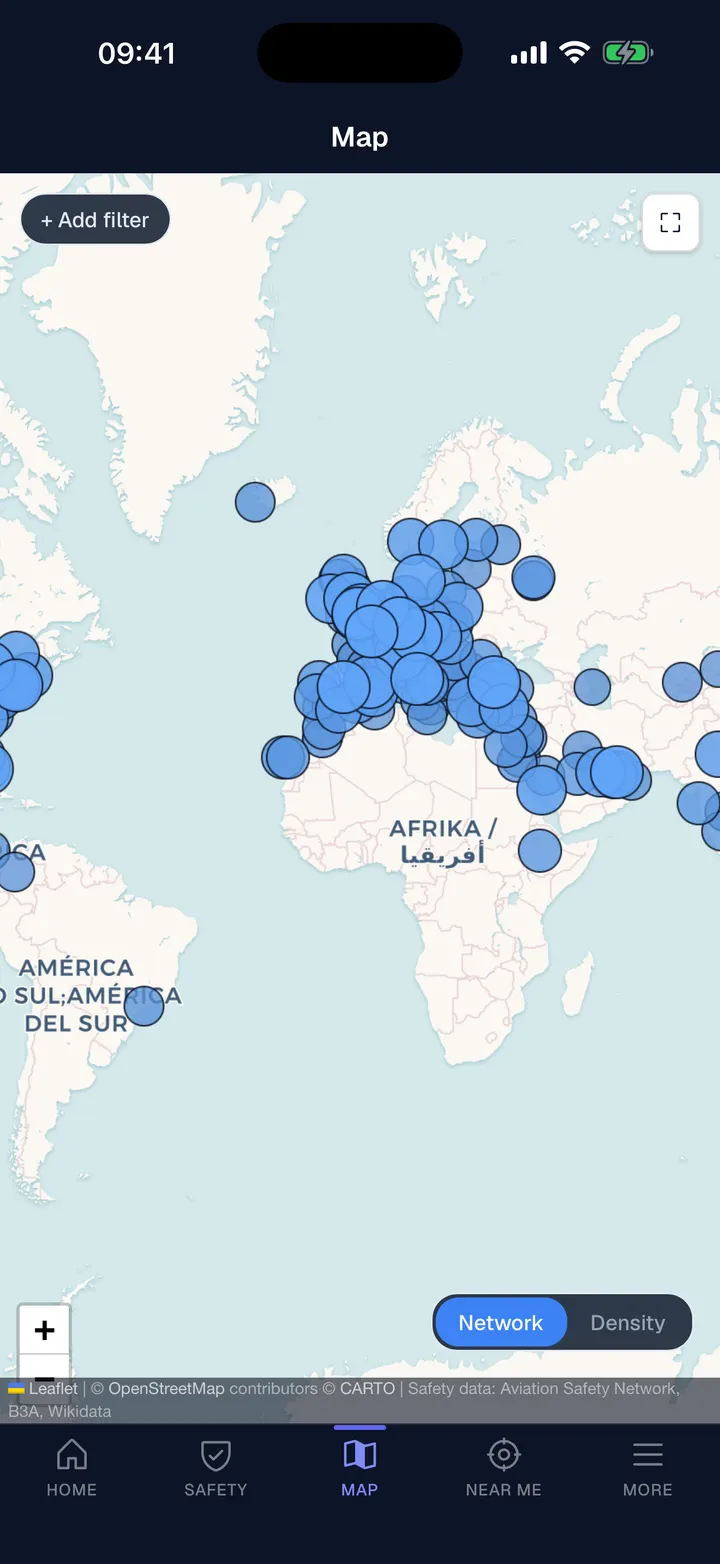
What the app does
- Home — Search the whole corpus from one field: registration, flight number, airport, aircraft type or operator.
- Safety — The global safety overview and the full profile set — aircraft families, airlines, airports — with fatality trends, event rates and the underlying records.
- Accidents — The global accident database and interactive map: browse 130+ official sources, filter by airline or aircraft type, and inspect any investigation record.
- Near me — Point the app at where you are and it lists the accidents, incidents and safety events recorded around you — the one thing a phone can do that a desktop cannot.
- More — Aviation news, data stories, airworthiness directives, wildlife and laser strikes, and your saved trips.
The same data as the site
The app reads the same merged corpus as himaxym.com — occurrences deduplicated across national investigation agencies, the NTSB, ATSB, MAK and dozens more, with per-record attribution to the authority that published it. Nothing is app-only and nothing is held back: see the methodology, browse the safety hub, or query it yourself through the Safety Data API.
Privacy
The app ships no web analytics and no advertising SDK — the tracking that runs on the website is switched off in the native build. Location is used only when you open Near me, is resolved on the device and is never stored on our servers. Full detail in the privacy policy.
Both platforms, one build
The iOS and Android apps are the same application — the screens above are the iPhone captures, and the Android build shows the same ones. Neither is a cut-down edition of the other, and neither holds anything back from the website.