TCAS Resolution Avoids Mid-Air Collision in Azores Oceanic Airspace

Casualties unknown • FIR Santa Maria, PT

A Boeing B-767 and a USAF KC-135 tanker avoided a collision in the Santa Maria Oceanic Control Area after both crews responded to TCAS resolution advisories.

What happened

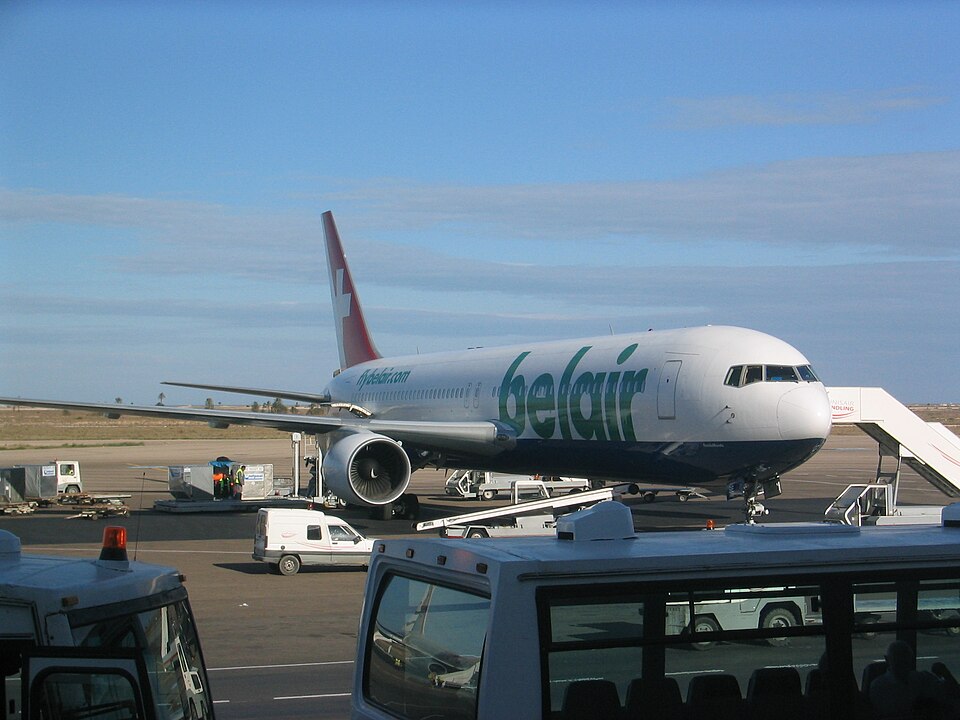
On January 31, 2008, a Belair Airlines Boeing B-767 (registration HB-ISE) was operating a flight from Zurich to Punta Cana. While traversing the Santa Maria Oceanic Control Area (OCA) at flight level 350, the aircraft encountered a potential loss of separation with a US Air Force Boeing KC-135 tanker, identified as BLEU-83.

The tanker was performing aerial refueling operations within a specially reserved airspace corridor. Due to deteriorating weather conditions, the tanker crew opted for an alternative route, reversing their track toward the LUTAK waypoint. In doing so, the tanker climbed to flight level 3 and entered Class A airspace without requesting the required ATC clearance or notifying Santa Maria Control of its change in altitude and routing.

As the two aircraft converged on the same altitude, the B-767 crew received a TCAS Traffic Advisory (TA) followed by a Resolution Advisory (RA) commanding a climb. Simultaneously, the tanker crew received a TCAS RA commanding a descent. Both crews executed the maneuvers promptly, resulting in a horizontal separation of approximately 1NM and a vertical separation of 1000ft.

The investigation

The GPIAAF investigation focused on the communication and coordination between the aircraft and the Santa Maria Radio Operator and Air Traffic Controller. The investigation established that the tanker had departed its reserved flight levels (FL240/FL260) and entered controlled airspace without authorization.

Investigators examined the communication chain, noting that the aircraft were operating outside of radar and VHF coverage, relying instead on HF frequencies. The investigation also looked at the efficiency of the information exchange between the radio operator, the controller, and the aircraft, finding that the process was significantly delayed.

Findings

  • The primary cause of the incident was the tanker's failure to comply with its filed flight plan, specifically changing its flight level and track without obtaining the necessary ATC clearances when exiting reserved airspace.
  • The aircraft were operating in an area without radar coverage, necessitating procedural separation.
  • Reliance on HF radio communications, which are susceptible to atmospheric interference, hindered effective communication.
  • The communication system between the aircraft, the radio operator, and the air traffic controller was slow and inefficient, preventing the controller from developing an accurate mental picture of the traffic.
  • The time required to transfer information between the various controllers and the aircraft caused a delay of approximately twelve minutes in the delivery of corrective instructions.
  • The prompt and correct response by both flight crews to the TCAS resolution advisories prevented a collision.

Probable cause

The primary cause was the KC-135 tanker's unauthorized change to its flight level and route when entering Class A airspace, compounded by inefficient communication procedures and the lack of radar coverage in the oceanic area.

Frequently asked questions

What happened in the 2008-01-31 Boeing B-767/3Q8 ; Boeing KC-135 accident near FIR Santa Maria, PT?

A Boeing B-767 and a USAF KC-135 tanker avoided a collision in the Santa Maria Oceanic Control Area after both crews responded to TCAS resolution advisories.

What aircraft was involved and where did it happen?

The accident on 2008-01-31 involved a Boeing B-767/3Q8 ; Boeing KC-135, registration HB-ISE, at FIR Santa Maria, PT.

What was the probable cause of the accident?

The primary cause was the KC-135 tanker's unauthorized change to its flight level and route when entering Class A airspace, compounded by inefficient communication procedures and the lack of radar coverage in the oceanic area.

Loading the flight search…