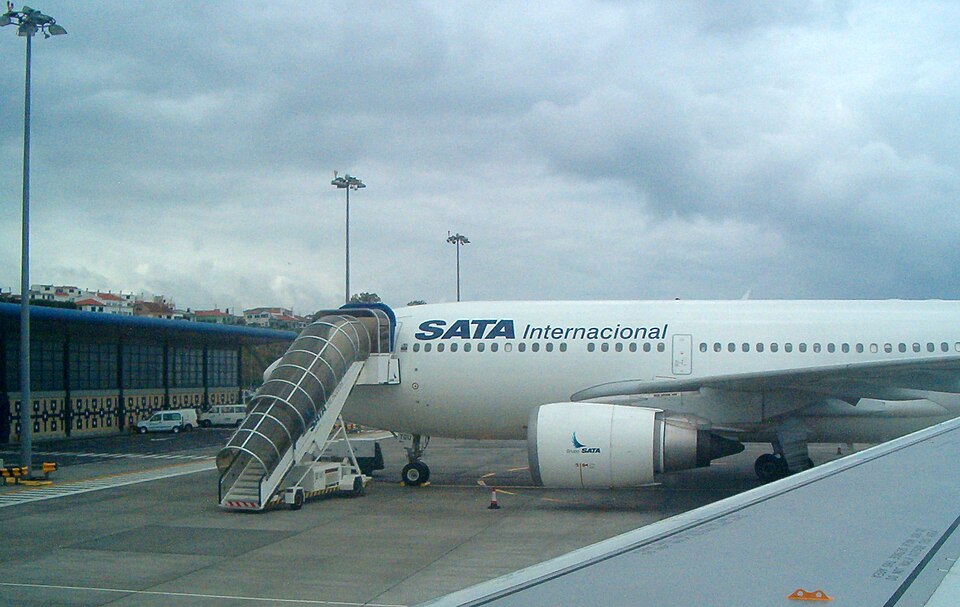
Tailstrike Occurs During Landing at Ponta Delgada Airport

Casualties unknown • Ponta Delgada, PT

An Airbus A310-300 operated by SATA International sustained substantial tail structure damage following an improper recovery from a bounce during landing.

What happened

On March 2, 2013, at 21:10 UTC, an Airbus A310-300, registration CS-TGU, was performing a landing on runway 30 at João Paulo II Airport in Ponta Delgada, Azores. During the landing sequence, the aircraft experienced a hard touchdown followed by a small bounce. In an attempt to smooth the subsequent nosewheel contact, the pilot performed an intentional input on the column. This maneuver resulted in a tailstrike, causing substantial damage to the aircraft's tail structure.

The investigation

The GPIAA investigation examined the flight data, cockpit voice recorder, and aircraft systems. The investigation focused on the crew's handling of the aircraft during the bounce, the environmental conditions at the time of landing, and the operational decisions leading to the choice of runway. The investigators also reviewed the airport's lighting and approach procedures, noting that the crew's decision to land on the wet runway 30 was influenced by the lack of instrument approaches for runway 12 and the difficulties associated with a night circle-to-land maneuver.

Findings

  • The primary cause of the accident was inadequate handling during the recovery from a landing bounce, specifically deviating from recommended piloting techniques.
  • A high descent rate was present both before and during the flare.
  • The aircraft experienced a hard landing followed by a small bounce.
  • The pilot experienced a momentary loss of situational awareness regarding the aircraft's position in the air and made an intentional control input to soften the nosewheel impact.
  • A tailwind component was present during the flare, exceeding the recommended 10-knot limit.
  • The aircraft's center of gravity was slightly aft, though this was a marginal factor.
  • The crew elected to land on the wet runway 30 rather than performing a circle-to-land for runway 12 or executing a go-around, due to the complexities of a night approach to runway 12.
  • Existing training and certification standards, which focused on monitoring approach speeds, made it difficult for the crew to detect the degradation in descent rate and approach speed.

Probable cause

The accident was caused by improper pilot technique while attempting to recover from an aircraft bounce, compounded by a high descent rate and a tailwind exceeding recommended limits.

All Airbus A310 accidents →

Frequently asked questions

What happened in the 2013-03-02 Airbus A310 accident near Ponta Delgada, PT?

An Airbus A310-300 operated by SATA International sustained substantial tail structure damage following an improper recovery from a bounce during landing.

What aircraft was involved and where did it happen?

The accident on 2013-03-02 involved a Airbus A310, registration CS-TGU, at Ponta Delgada, PT.

What was the probable cause of the accident?

The accident was caused by improper pilot technique while attempting to recover from an aircraft bounce, compounded by a high descent rate and a tailwind exceeding recommended limits.

Loading the flight search…