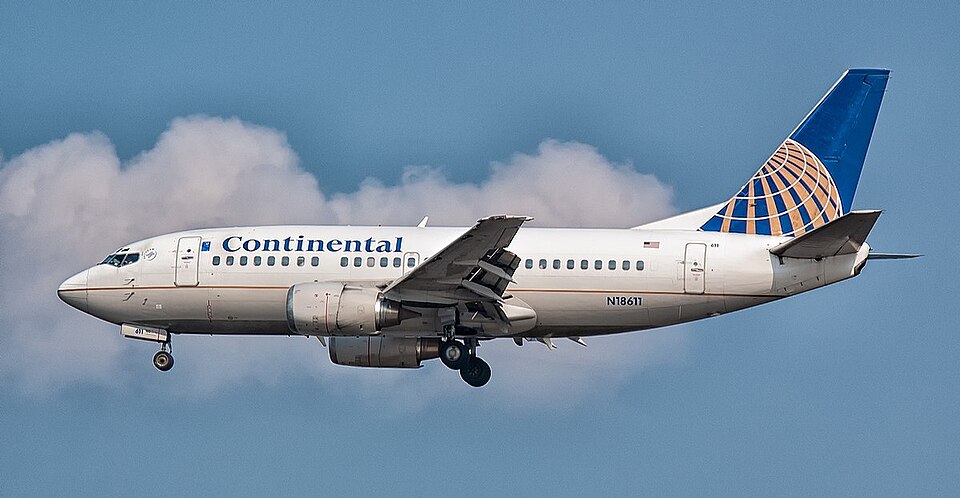
21 Dec 2008: BOEING 737-524 — CONTINENTAL AIRLINES INC

21 Dec 2008: BOEING 737-524 (N18611) — CONTINENTAL AIRLINES INC

No fatalities • Denver, CO, United States

Probable cause

The captain’s cessation of right rudder input, which was needed to maintain directional control of the airplane, about 4 seconds before the excursion, when the airplane encountered a strong and gusty crosswind that exceeded the captain’s training and experience. Contributing to the accident were the following factors: 1) an air traffic control system that did not require or facilitate the dissemination of key, available wind information to the air traffic controllers and pilots; and 2) inadequate crosswind training in the airline industry due to deficient simulator wind gust modeling.

— NTSB Determination

Accident narrative

The Safety Board's full report is available at http://www.ntsb.gov/publictn/A_Acc1.htm. The Aircraft Accident Report number is NTSB/AAR-10/04. On December 20, 2008, about 1818 mountain standard time, Continental Airlines flight 1404, a Boeing 737-500, N18611, departed the left side of runway 34R during takeoff from Denver International Airport (DEN), Denver, Colorado. A postcrash fire ensued. The captain and 5 of the 110 passengers were seriously injured; the first officer, 2 cabin crewmembers, and 38 passengers received minor injuries; and 1 cabin crewmember and 67 passengers (3 of whom were lap-held children) were uninjured. The airplane was substantially damaged. The scheduled, domestic passenger flight, operated under the provisions of 14 Code of Federal Regulations Part 121, was departing DEN and was destined for George Bush Intercontinental Airport, Houston, Texas. At the time of the accident, visual meteorological conditions prevailed, with strong and gusty winds out of the west. The flight operated on an instrument flight rules flight plan.

Contributing factors

  • Directional control — Not attained/maintained
  • Crosswind correction — Not attained/maintained
  • Response/compensation
  • Pilot
  • Pilot
  • Availability of related info
  • ATC
  • Training
  • Damaged/degraded
  • Damaged/degraded

Conditions

Weather
VMC, wind 270/27kt

Loading the flight search…

What you can do on Flight Finder

  • Search flights between any two airports with live fares.
  • By aircraft — pick a plane model (e.g. Boeing 787, Airbus A350) and see every route it flies from your origin.
  • Route map — click any airport worldwide to explore its destinations, or draw a radius to find nearby airports.
  • Global aviation safety — aviation accident database, 5,200+ records since 1980, with map and rankings by aircraft and operator.
  • NTSB safety feed — recent U.S. aviation accidents and incidents from the official NTSB CAROL database, updated daily.

Frequently asked questions

How do I search flights by aircraft type on FlightFinder?

Pick an aircraft model — Boeing 737, Airbus A320, A380, Boeing 787 Dreamliner and more — enter your origin airport, and FlightFinder shows every route that plane flies from there with live fares.

Which aircraft types can I filter by?

We support Boeing 737/747/757/767/777/787, the full Airbus A220/A319/A320/A321/A330/A340/A350/A380 family, Embraer E170/E175/E190/E195, Bombardier CRJ and Dash 8, and the ATR 42/72 turboprops.

Is FlightFinder free to use?

Search and schedules are free. Pro ($4.99/month, $39/year, or $99 one-time lifetime) unlocks the enriched flight card — on-time stats, CO₂ per passenger, amenities, live gate & weather — plus My Trips with push alerts.

Where does the route data come from?

Live schedules come from Amadeus, AeroDataBox and Travelpayouts. Observed routes (which aircraft actually flew a given city pair) are crowdsourced from adsb.lol ADS-B data under the Open Database License.