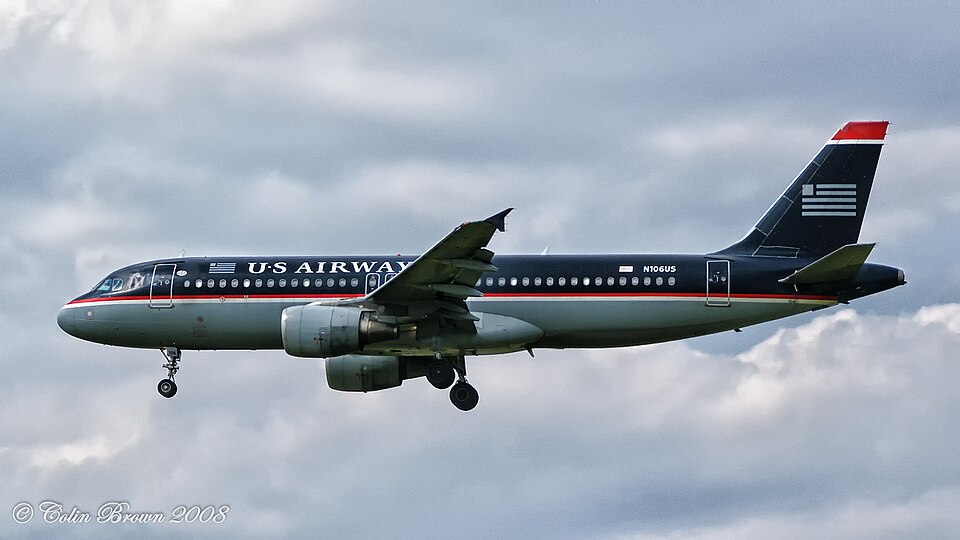
15 Jan 2009: AIRBUS A320 214 — US AIRWAYS INC

15 Jan 2009: AIRBUS A320 214 (N106US) — US AIRWAYS INC

No fatalities • Weehawken, NJ, United States

Probable cause

The ingestion of large birds into each engine, which resulted in an almost total loss of thrust in both engines and the subsequent ditching on the Hudson River. Contributing to the fuselage damage and resulting unavailability of the aft slide/rafts were (1) the Federal Aviation Administration’s approval of ditching certification without determining whether pilots could attain the ditching parameters without engine thrust, (2) the lack of industry flight crew training and guidance on ditching techniques, and (3) the captain’s resulting difficulty maintaining his intended airspeed on final approach due to the task saturation resulting from the emergency situation. Contributing to the survivability of the accident was (1) the decision-making of the flight crewmembers and their crew resource management during the accident sequence; (2) the fortuitous use of an airplane that was equipped for an extended overwater flight, including the availability of the forward slide/rafts, even though it was not required to be so equipped; (3) the performance of the cabin crewmembers while expediting the evacuation of the airplane; and (4) the proximity of the emergency responders to the accident site and their immediate and appropriate response to the accident.

— NTSB Determination

Accident narrative

The Safety Board’s full report is available at http://www.ntsb.gov/publictn/A_Acc1.htm. The Aircraft Accident Report number is NTSB/AAR-10/03.

On January 15, 2009, about 1527 eastern standard time, US Airways flight 1549, an Airbus Industrie A320-214, N106US, experienced an almost complete loss of thrust in both engines after encountering a flock of birds and was subsequently ditched on the Hudson River about 8.5 miles from LaGuardia Airport (LGA), New York City, New York. The flight was en route to Charlotte Douglas International Airport, Charlotte, North Carolina, and had departed LGA about 2 minutes before the in-flight event occurred. The 150 passengers, including a lap held child, and 5 crewmembers evacuated the airplane via the forward and overwing exits. One flight attendant and four passengers were seriously injured, and the airplane was substantially damaged. The scheduled, domestic passenger flight was operating under the provisions of 14 Code of Federal Regulations Part 121 on an instrument flight rules flight plan. Visual meteorological conditions prevailed at the time of the accident.

Contributing factors

  • Effect on equipment
  • FAA/Regulator
  • Related operating info
  • Airspeed — Not attained/maintained
  • Effect on personnel
  • Indicating/recording systems
  • Airport
  • Related operating info
  • Air traffic/operating proc
  • Design
  • Passenger

Loading the flight search…

What you can do on Flight Finder

  • Search flights between any two airports with live fares.
  • By aircraft — pick a plane model (e.g. Boeing 787, Airbus A350) and see every route it flies from your origin.
  • Route map — click any airport worldwide to explore its destinations, or draw a radius to find nearby airports.
  • Global aviation safety — aviation accident database, 5,200+ records since 1980, with map and rankings by aircraft and operator.
  • NTSB safety feed — recent U.S. aviation accidents and incidents from the official NTSB CAROL database, updated daily.

Frequently asked questions

How do I search flights by aircraft type on FlightFinder?

Pick an aircraft model — Boeing 737, Airbus A320, A380, Boeing 787 Dreamliner and more — enter your origin airport, and FlightFinder shows every route that plane flies from there with live fares.

Which aircraft types can I filter by?

We support Boeing 737/747/757/767/777/787, the full Airbus A220/A319/A320/A321/A330/A340/A350/A380 family, Embraer E170/E175/E190/E195, Bombardier CRJ and Dash 8, and the ATR 42/72 turboprops.

Is FlightFinder free to use?

Search and schedules are free. Pro ($4.99/month, $39/year, or $99 one-time lifetime) unlocks the enriched flight card — on-time stats, CO₂ per passenger, amenities, live gate & weather — plus My Trips with push alerts.

Where does the route data come from?

Live schedules come from Amadeus, AeroDataBox and Travelpayouts. Observed routes (which aircraft actually flew a given city pair) are crowdsourced from adsb.lol ADS-B data under the Open Database License.