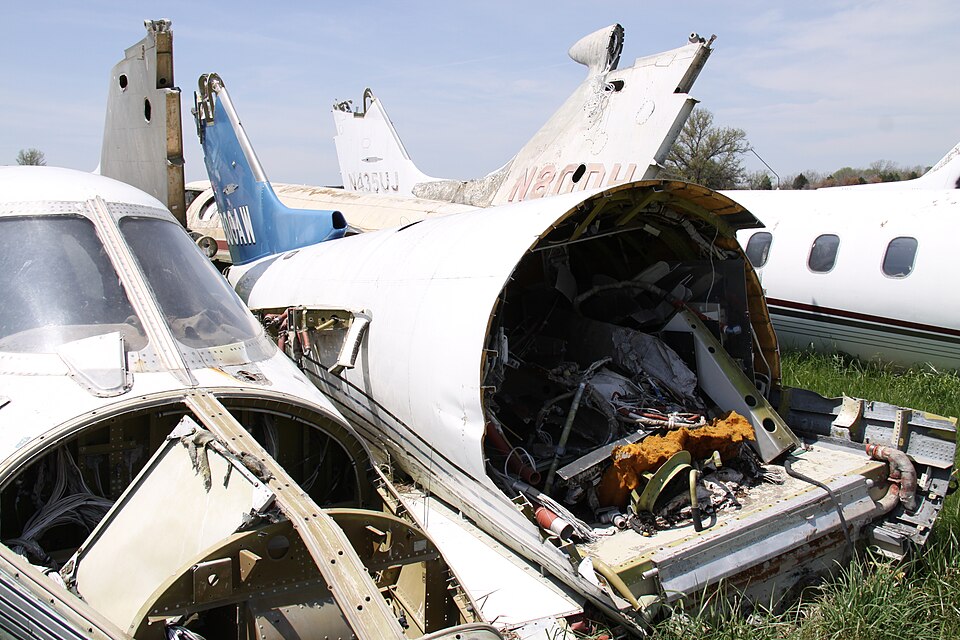
17 Oct 2012: BOMBARDIER INC DHC-8-315 — US DEPARTMENT OF STATE

17 Oct 2012: BOMBARDIER INC DHC-8-315 (N800AW) — US DEPARTMENT OF STATE

No fatalities • Kabul, Afghanistan

Probable cause

the captains ineffective management of the airplanes energy state during final approach and flare that resulted in a hard landing and tail strike at touchdown.

— NTSB Determination

Accident narrative

On October 17, 2012, about 1119 local time, 0649 Coordinated Universal Time (UTC), a Bombardier DHC-8-315, registration N800AW, operated by the United States Department of State, experienced a hard landing on runway 29 at Kabul International Airport (OAKB) Kabul, Afghanistan. There were no injuries to the three passengers or three crewmembers onboard and the aircraft was substantially damaged. Visual meteorological conditions prevailed at the time. The flight had originated from Tarin Kowt Airport (OATN), Tarin Kowt, Afghanistan

According to the flight crew, the takeoff, climb and cruise were uneventful. The captain was the flying pilot. At 11:12 the flight was cleared for the approach and at 11:16 the flight crew selected flaps 35 and initiated a random steep approach in accordance with company task procedures as a result of the airport threat level. According to the flight crew statements, the airplane engine power was reduced to idle for the approach and was not increased prior to landing. Information obtained from Flight Data Recorder (FDR) indicated engine torque was at or near zero for the last 5 minutes of approach and landing.

The aviation routine weather report at 0550 local time indicated wind from 120 degrees at 5 knots, 8000 meters visibility and temperature 17 degrees C. For the two minutes prior to landing, the wind was light and variable. A tactical meteorological observation system on the field reported the wind direction during the two minutes prior to landing as variable from 004 degrees to 137 degrees and the wind speed variable from 1 knot to 7.2 knots. Wind gust recorded during the time period varied from 050 degrees to 079 degrees at 7.0 to 7.2 knots.

Based on FDR data the calculated rate of descent was about 2,000 feet per minute during approach, reducing to about 1,500 feet per minute just prior to landing. The airplane touched down with a nose up pitch attitude of approximately 8 degrees and a peak vertical acceleration of 2.7g. The airplane geometry information provided by the manufacturer indicated that aft fuselage contact will result from a pitch attitude over 11.9 degrees with an extended landing gear oleo strut, and a pitch attitude over 6.8 degrees with a compressed landing gear oleo strut.

In order to avoid nuisance warnings resulting from the random steep approach (i.e. steep angle descent), the flight crew deactivated the ground proximity warning system (GPWS) for approach. As these alerts would be expected by the crew during this type of approach, it is unlikely the alerts would have prompted the crew to take corrective action.

The airplane touched down and contacted the aft fuselage on the runway resulting in substantial damage (including buckled, cracked, and bent frames and stringers).

Contributing factors

  • cause Landing flare — Not attained/maintained
  • cause Pilot

Conditions

Weather
VMC, wind 160/02kt, vis 10sm

Loading the flight search…

What you can do on Flight Finder

  • Search flights between any two airports with live fares.
  • By aircraft — pick a plane model (e.g. Boeing 787, Airbus A350) and see every route it flies from your origin.
  • Route map — click any airport worldwide to explore its destinations, or draw a radius to find nearby airports.
  • Global aviation safety — aviation accident database, 5,200+ records since 1980, with map and rankings by aircraft and operator.
  • NTSB safety feed — recent U.S. aviation accidents and incidents from the official NTSB CAROL database, updated daily.

Frequently asked questions

How do I search flights by aircraft type on FlightFinder?

Pick an aircraft model — Boeing 737, Airbus A320, A380, Boeing 787 Dreamliner and more — enter your origin airport, and FlightFinder shows every route that plane flies from there with live fares.

Which aircraft types can I filter by?

We support Boeing 737/747/757/767/777/787, the full Airbus A220/A319/A320/A321/A330/A340/A350/A380 family, Embraer E170/E175/E190/E195, Bombardier CRJ and Dash 8, and the ATR 42/72 turboprops.

Is FlightFinder free to use?

Search and schedules are free. Pro ($4.99/month, $39/year, or $99 one-time lifetime) unlocks the enriched flight card — on-time stats, CO₂ per passenger, amenities, live gate & weather — plus My Trips with push alerts.

Where does the route data come from?

Live schedules come from Amadeus, AeroDataBox and Travelpayouts. Observed routes (which aircraft actually flew a given city pair) are crowdsourced from adsb.lol ADS-B data under the Open Database License.