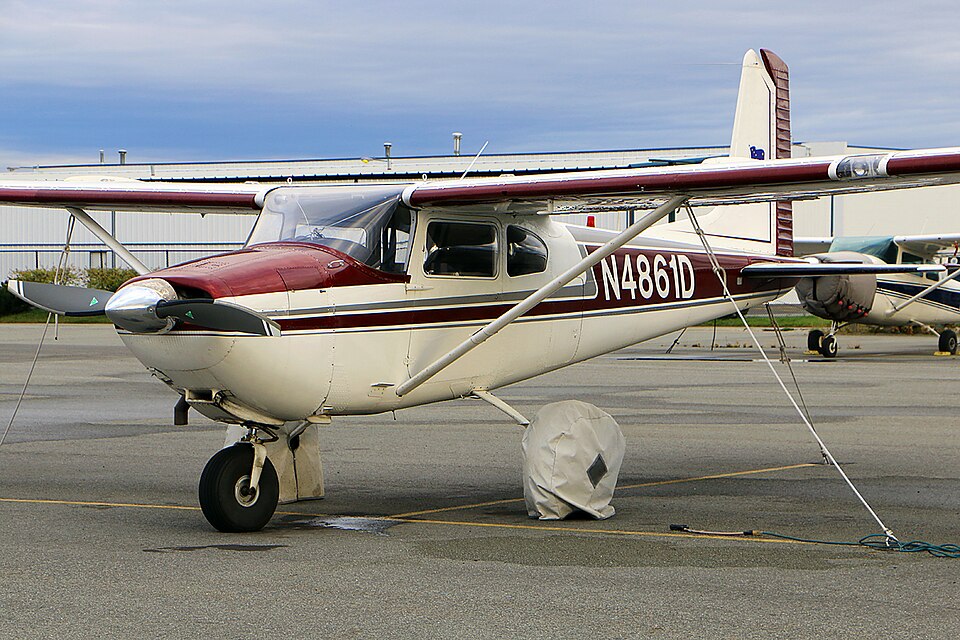
Incident Overview
On July 4, 2014, at approximately 1943 Alaska daylight time, a Cessna 182 airplane, registration N4861D, was forced to land on a highway about 8 nautical miles south of Merrill Field in Anchorage, Alaska. The aircraft was substantially damaged during the landing, but the pilot and two passengers were not injured. The flight was conducted under visual flight rules (VFR) as a personal flight, operating under 14 Code of Federal Regulations Part 91.
Engine Failure and Forced Landing
According to the pilot's statement to the National Transportation Safety Board (NTSB), while flying over the Turnagain Arm, an inland waterway, the engine began to surge. The pilot switched the fuel selector from the right tank to the left tank, but the surging continued and led to a complete loss of engine power. The pilot then executed a forced landing onto a highway, which resulted in substantial damage to the wing.
Post-Accident Examination
Following the accident, the aircraft was moved from the highway to a parking lot. There, the pilot and a mechanic started the engine, which ran smoothly at various power settings. Approximately 15 gallons of fuel were drained from the main fuel tanks before the wings were removed. No damage to the fuel lines was observed during the wing removal. An examination of the wing tanks revealed no anomalies that would have prevented fuel from reaching the engine.
Meteorological Conditions
The nearest weather reporting facility was Merrill Field Airport, located about 8 miles north of the accident site. However, the closest available aviation routine weather report (METAR) was from Kenai Airport at 1953. That report indicated wind from 300 degrees at 3 knots, overcast sky at 7,000 feet, visibility 10 statute miles, temperature 63°F, dew point 52°F, and barometric pressure 30.17 inHg.
The carburetor icing probability chart from Federal Aviation Administration Special Airworthiness Information Bulletin No. CE-09-35, Carburetor Icing Prevention, indicated that at the time of the accident, the airplane was operating in conditions associated with a risk of carburetor ice formation at glide and cruise power settings.
Additional Information
The pilot did not complete the NTSB Form 6120, Pilot/Operator Aircraft Accident/Incident Report, as requested.