History of Flight
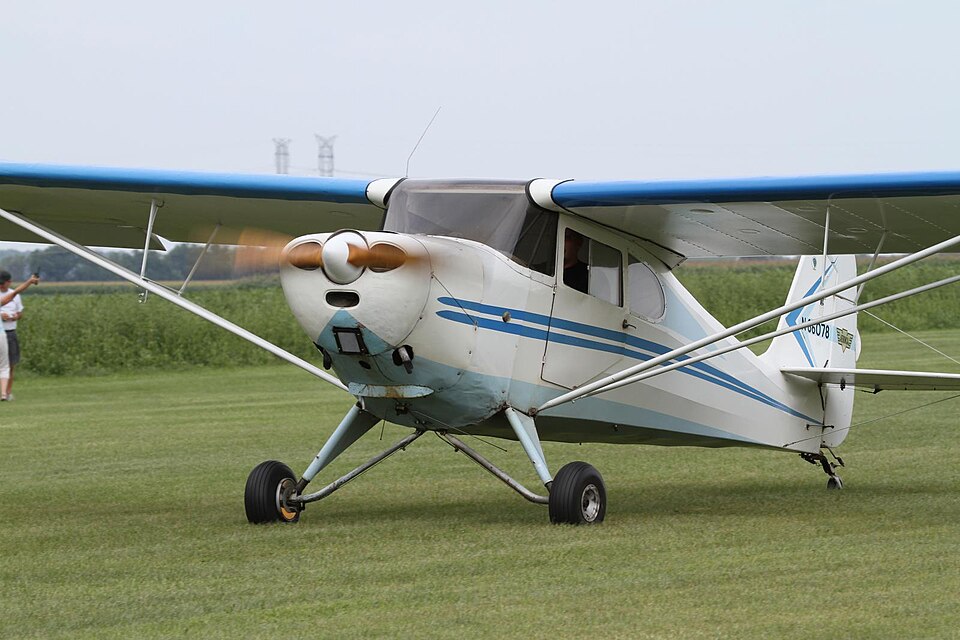
On July 3, 2016, at approximately 1722 eastern daylight time, an Aeronca Chief 11AC, registration N86078, impacted terrain near Frankenmuth, Michigan. The pilot and the passenger sustained fatal injuries, and the airplane was destroyed. The private airplane was operated by an individual under 14 CFR Part 91 as a personal flight. Visual meteorological conditions prevailed, and no flight plan was filed. The flight originated from William 'Tiny' Zehnder Field Airport (66G) in Frankenmuth.
A witness at the airport reported calm winds and observed the pilot conducting touch-and-go landings, departing eastward and landing westward. The witness heard the crash and saw smoke east of the airport.
Personnel Information
The pilot held a private pilot certificate with a single-engine land rating and a third-class medical certificate issued on May 15, 2016, with the limitation: must have glasses available for near vision. At the time of the medical exam, the pilot reported 600 total flight hours and 0 hours in the preceding 6 months. No flight records were found during the investigation.
Aircraft Information
The Aeronca Chief 11AC is a high-wing, single-engine airplane with fixed conventional landing gear. It was powered by a 65-horsepower Continental four-cylinder reciprocating engine and a fixed-pitch propeller. The fuselage comprised thin aluminum skin and welded steel tubes covered with fabric; the wings had fabric covering over wood spars.
Maintenance records showed the last annual inspection was completed on June 12, 2016, at a tachometer time of 553.7 hours and 191.9 hours since engine overhaul. The previous annual inspection was on June 21, 2015, with a tachometer time of 552.29 hours and 190.49 hours since engine overhaul.
Meteorological Information
At 1715, the automated weather observation station at Saginaw County H W Browne Airport, about 10 miles northwest of the accident site, recorded calm wind, 10 miles visibility, clear sky, temperature 80°F, dew point 39°F, and an altimeter setting of 30.05 inches of mercury.
Wreckage and Impact Information
The airplane impacted terrain about a quarter mile east of 66G, in a cornfield with corn 5 to 7 feet tall. A postcrash fire consumed most of the airplane. The right wing sustained extensive thermal damage and heavy impact damage; the left wing showed thermal and fire damage with minor impact damage near the outboard tip. The cabin was consumed by fire, leaving only the tubular frame. The aft fuselage fabric was burned away, exposing the tubular structure. The fabric on the empennage was largely burned off except for a piece on the rudder. The elevators were in the down position, and the trim tab was pushed down past its limit. The tailwheel assembly was twisted, and the tailwheel had separated.
The engine and cowling area had thermal and impact damage. The wooden two-bladed propeller remained attached; outboard sections of both blades were broken off with a splintered appearance.
Aileron control continuity was established except for a melted fastener behind the cabin and a cable at the right aileron bellcrank that appeared to have separated by overload. Rudder and elevator control continuity was confirmed from the control surfaces to the control column.
The engine was separated for further examination. It showed extensive fire damage. Turning the propeller by hand revealed continuity through the valve train and accessory section. The carburetor was broken from its intake flange. The oil screen was free of contaminants. The left magneto had an impulse coupling and would not rotate; both magnetos had thermal damage. Spark plugs showed light colored combustion deposits and normal electrode signatures. No pre-impact abnormalities were noted in the airframe or engine examinations.
Medical and Pathological Information
An autopsy performed by the Saginaw County Medical Examiner's Office determined the pilot's cause of death as "blunt force chest trauma." Toxicological testing by the FAA Bioaeronautical Sciences Research Laboratory was negative for ethanol and tested drugs; cyanide was not tested.
Additional Information
A personal smartphone recovered at the accident site was sent to the NTSB Vehicle Recorder Lab. Photos extracted from the phone showed six images taken from the front seat of the airplane on the day of the accident, with timestamps from 1708:57 to 1709:54.