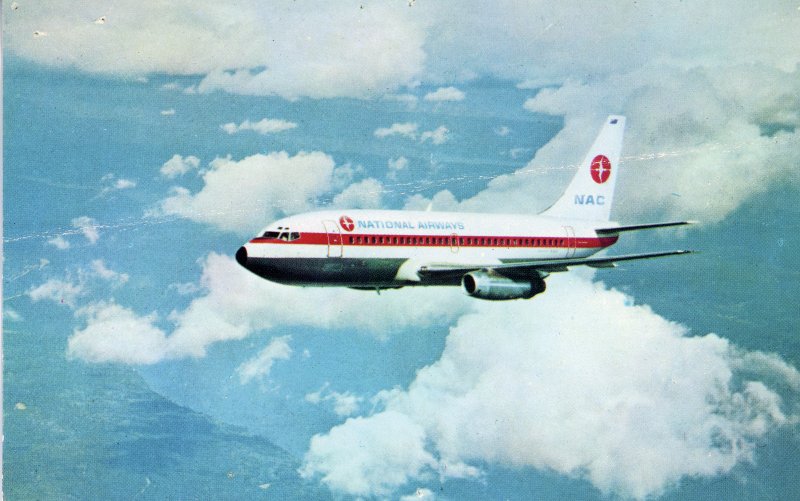
17 Apr 2018: BOEING 737 7H4 7H4 — SOUTHWEST AIRLINES CO

17 Apr 2018: BOEING 737 7H4 7H4 (N772SW) — SOUTHWEST AIRLINES CO

1 fatality • Philadelphia, PA, United States

Probable cause

A low-cycle fatigue crack in the dovetail of fan blade No. 13, which resulted in the fan blade separating in flight and impacting the engine fan case at a location that was critical to the structural integrity and performance of the fan cowl structure. This impact led to the in-flight separation of fan cowl components, including the inboard fan cowl aft latch keeper, which struck the fuselage near a cabin window and caused the window to depart from the airplane, the cabin to rapidly depressurize, and the passenger fatality.

— NTSB Determination

Accident narrative

The NTSB's full report is available at http://www.ntsb.gov/investigations/AccidentReports/Pages/AccidentReports.aspx. The Aircraft Accident Report number is NTSB/AAR-19/03.

On April 17, 2018, about 1103 eastern daylight time, Southwest Airlines flight 1380, a Boeing 737-7H4, N772SW, experienced a left engine failure while climbing through flight level 320 en route to the flight's assigned cruise altitude. The flight had departed from LaGuardia Airport, Queens, New York, about 30 minutes earlier. As a result of the engine failure, the flight crew conducted an emergency descent and diverted to Philadelphia International Airport (PHL), Philadelphia, Pennsylvania. Portions of the left engine inlet and fan cowl separated from the airplane, and fragments from the inlet and fan cowl struck the left wing, the left-side fuselage, and the left horizontal stabilizer. One fan cowl fragment impacted the left-side fuselage near a cabin window, and the window departed the airplane, which resulted in a rapid depressurization. The airplane landed safely at PHL about 17 minutes after the engine failure occurred. Of the 144 passengers and 5 crewmembers aboard the airplane, 1 passenger received fatal injuries, and 8 passengers received minor injuries. The airplane was substantially damaged. The regularly scheduled domestic passenger flight was operating under the provisions of Title 14 Code of Federal Regulations Part 121 with a destination of Dallas Love Field, Dallas, Texas.

Contributing factors

  • Fatigue/wear/corrosion
  • Damaged/degraded
  • Damaged/degraded
  • FAA/Regulator
  • Cabin crew

Conditions

Weather
VMC

Loading the flight search…

What you can do on Flight Finder

  • Search flights between any two airports with live fares.
  • By aircraft — pick a plane model (e.g. Boeing 787, Airbus A350) and see every route it flies from your origin.
  • Route map — click any airport worldwide to explore its destinations, or draw a radius to find nearby airports.
  • Global aviation safety — aviation accident database, 5,200+ records since 1980, with map and rankings by aircraft and operator.
  • NTSB safety feed — recent U.S. aviation accidents and incidents from the official NTSB CAROL database, updated daily.

Frequently asked questions

How do I search flights by aircraft type on FlightFinder?

Pick an aircraft model — Boeing 737, Airbus A320, A380, Boeing 787 Dreamliner and more — enter your origin airport, and FlightFinder shows every route that plane flies from there with live fares.

Which aircraft types can I filter by?

We support Boeing 737/747/757/767/777/787, the full Airbus A220/A319/A320/A321/A330/A340/A350/A380 family, Embraer E170/E175/E190/E195, Bombardier CRJ and Dash 8, and the ATR 42/72 turboprops.

Is FlightFinder free to use?

Search and schedules are free. Pro ($4.99/month, $39/year, or $99 one-time lifetime) unlocks the enriched flight card — on-time stats, CO₂ per passenger, amenities, live gate & weather — plus My Trips with push alerts.

Where does the route data come from?

Live schedules come from Amadeus, AeroDataBox and Travelpayouts. Observed routes (which aircraft actually flew a given city pair) are crowdsourced from adsb.lol ADS-B data under the Open Database License.