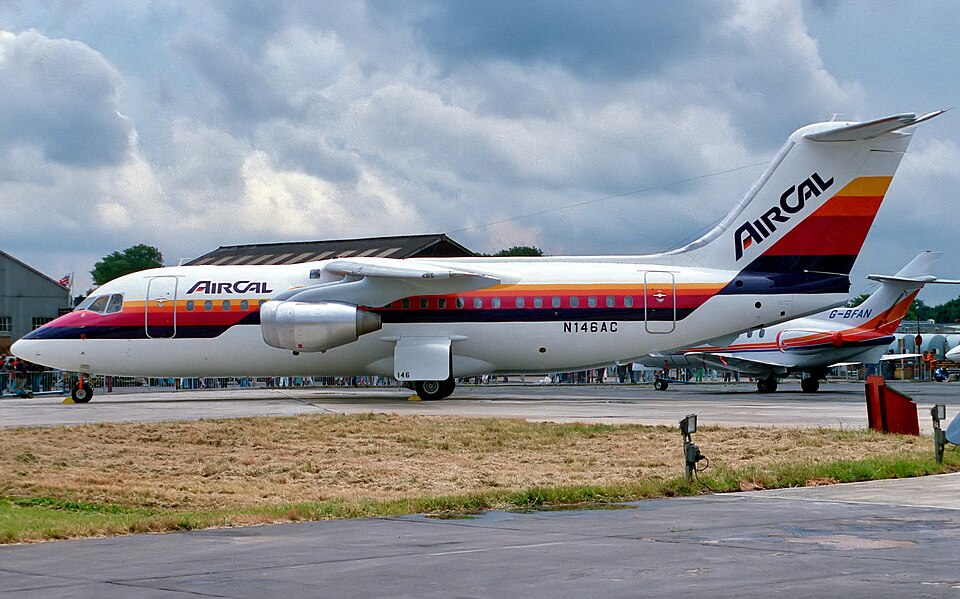
On August 16, 2018, a Cessna R172E (registration N146AC) was involved in an aviation accident near Colorado Springs, CO. No fatalities were reported. Investigators recorded the probable cause as: The airplane’s failure to maintain a climb after takeoff, which resulted in a forced landing on unsuitable terrain; the reason for the airplane’s failure to climb could not be determined based on the available evidence. This summary draws on records from NTSB; 9 related events involving the same aircraft type or operator are linked below.
A Cessna R172E, N146AC, sustained substantial damage during a forced landing after takeoff from the USAF Academy Airfield in Colorado Springs, Colorado, on August 16, 2018. The flight instructor and student pilot were not injured.
Accident Overview and Flight Details On August 16, 2018, at approximately 1100 mountain daylight time, a Cessna R172E, registration N146AC, sustained substantial damage during a forced landing following takeoff from the USAF Academy Airfield (AFF) in Colorado Springs, Colorado. The aircraft was owned and operated by the United States Air Force under Title 14 Code of Federal Regulations Part 91 for an instructional flight. Visual meteorological conditions prevailed, and the flight was not on a flight plan. The flight instructor and student pilot were not injured. The flight was a local departure from AFF, with the instructor intending to remain in the traffic pattern to practice landings. The student pilot was flying the aircraft during takeoff from the 4,480 ft by 75 ft asphalt runway. The engine was operating properly with a fuel flow of about 14 gallons per hour and 2,800–2,900 rpm, and the engine sounded normal. During the takeoff roll, the student pilot rotated at about 60 mph. Initially, the pitch was high, but the student pilot then lowered the nose to the horizon. The aircraft attained about 100 ft of altitude above ground level; however, it was not climbing, and the airspeed was decreasing despite normal fuel flow and rpm. The flight instructor took the controls, lowered the flaps to 10°, and lowered the nose to hold 55–60 mph, hoping that ground effect would enable a speed increase. He turned the aircraft to the right to avoid a tree line and executed a forced landing in a field. The aircraft landed on its main wheels, but the nose landing gear impacted rough terrain, causing the aircraft to nose over and resulting in substantial damage to the wings and fuselage. ## Maintenance and Engine Examination The aircraft's maintenance logbooks indicated that the last annual maintenance inspection was performed on January 7, 2018. The aircraft had a total time of 10,571.8 hours, with the engine hour meter indicating 1,566.6 hours. The engine logbook indicated that the engine had been installed on the aircraft during the last annual maintenance inspection on January 7, 2018. The engine was a 210 horsepower Continental IO-360-DB, serial number 808785-R, with a rated rpm of 2,800 rpm. The engine had 5,680.1 hours total time and 0.0 hours since major overhaul. The tach time on the day of the accident was 1,634.9 hours, and it had operated 68.3 hours since the last annual inspection. The engine was shipped to the manufacturer for examination and an engine run on a test stand. During the initial engine run, the engine was able to reach full rpm and produced rated horsepower; however, during subsequent engine runs, it only reached 2,600 rpm. The fuel system was checked, and it was determined that two fuel nozzles were partially clogged. The fuel nozzles were cleaned, and the engine was run again on the test stand. The engine operated normally and reached approximately 2,830 rpm. The engine power was reduced to idle speed and advanced to full throttle several times. The engine responded without hesitation and reached over 2,800 rpm each time the throttle was advanced to full throttle. The propeller governor was shipped to the manufacturer for bench testing. The examination and bench test of the propeller governor revealed no indications of any type of governor failure or malfunction prior to impact, and the governor met all the tested specifications. ## Pilot Information and Weather The 58-year-old pilot held an airline transport certificate with airplane single-engine land, airplane multi-engine land, and airplane instrument ratings, as well as being a flight instructor pilot with airplane single-engine, airplane multi-engine, and airplane instrument ratings. He had a total of 17,631 flight hours, which included 2,469 hours in single-engine airplanes and 20 hours in the make and model of the accident aircraft. At 1058, the surface weather observation at AFF was: wind 360° at 9 knots; visibility 10 miles; few clouds at 17,000 ft; scattered clouds at 20,000 ft and 22,000 ft; temperature 26° C; dew point 6° C; and altimeter 30.29 inches of mercury.