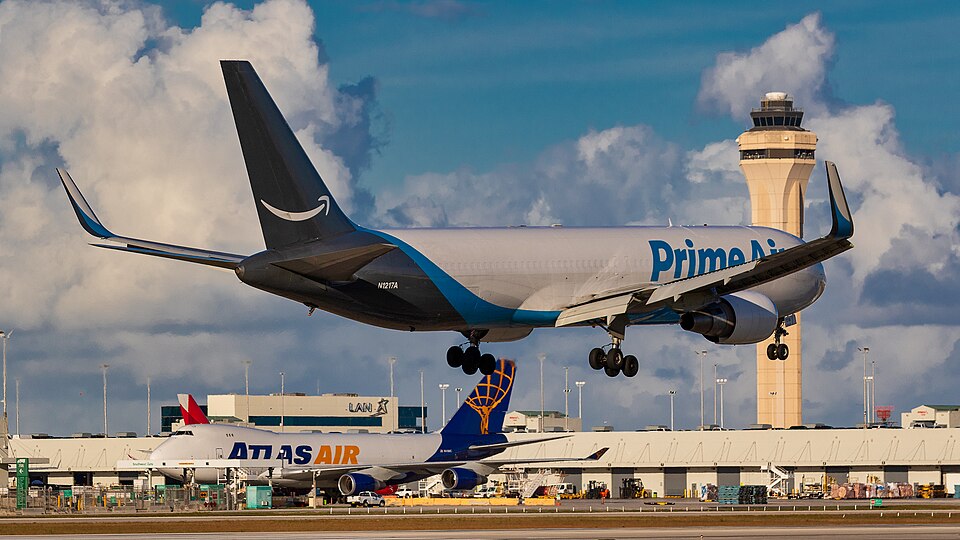
23 Feb 2019: Boeing 767 375 — Atlas Air

23 Feb 2019: Boeing 767 375 (N1217A) — Atlas Air

3 fatalities • Trinity Bay, TX, United States

Probable cause

The inappropriate response by the first officer as the pilot flying to an inadvertent activation of the go-around mode, which led to his spatial disorientation and nose-down control inputs that placed the airplane in a steep descent from which the crew did not recover. Contributing to the accident was the captain's failure to adequately monitor the airplane's flightpath and assume positive control of the airplane to effectively intervene. Also contributing were systemic deficiencies in the aviation industry's selection and performance measurement practices, which failed to address the first officer's aptitude-related deficiencies and maladaptive stress response. Also contributing to the accident was the Federal Aviation Administration's failure to implement the pilot records database in a sufficiently robust and timely manner.

— NTSB Determination

Accident narrative

The Safety Board's full report is available at http://www.ntsb.gov/investigations/AccidentReports/Pages/aviation.aspx. The Aircraft Accident Report number is NTSB/AAR-20/02.

On February 23, 2019, at 1239 central standard time, Atlas Air Inc. flight 3591, a Boeing 767-375BCF, N1217A, was destroyed after it rapidly descended from an altitude of about 6,000 ft mean sea level and crashed into a shallow, muddy marsh area of Trinity Bay, Texas, about 41 miles east-southeast of George Bush Intercontinental/Houston Airport (IAH), Houston, Texas. The captain, first officer, and a nonrevenue pilot riding in the jumpseat died. Atlas operated the airplane as a Title 14 Code of Federal Regulations Part 121 domestic cargo flight for Amazon.com Services LLC, and an instrument flight rules flight plan was filed. The flight departed from Miami International Airport, Miami, Florida, about 1033 (1133 eastern standard time) and was destined for IAH.

Contributing factors

  • Copilot
  • Unintentional use/operation
  • Copilot
  • Personnel records
  • FAA/Regulator
  • Copilot
  • Copilot
  • Copilot
  • Copilot
  • Pilot
  • Design
  • Design

Conditions

Weather
IMC

Loading the flight search…

What you can do on Flight Finder

  • Search flights between any two airports with live fares.
  • By aircraft — pick a plane model (e.g. Boeing 787, Airbus A350) and see every route it flies from your origin.
  • Route map — click any airport worldwide to explore its destinations, or draw a radius to find nearby airports.
  • Global aviation safety — aviation accident database, 5,200+ records since 1980, with map and rankings by aircraft and operator.
  • NTSB safety feed — recent U.S. aviation accidents and incidents from the official NTSB CAROL database, updated daily.

Frequently asked questions

How do I search flights by aircraft type on FlightFinder?

Pick an aircraft model — Boeing 737, Airbus A320, A380, Boeing 787 Dreamliner and more — enter your origin airport, and FlightFinder shows every route that plane flies from there with live fares.

Which aircraft types can I filter by?

We support Boeing 737/747/757/767/777/787, the full Airbus A220/A319/A320/A321/A330/A340/A350/A380 family, Embraer E170/E175/E190/E195, Bombardier CRJ and Dash 8, and the ATR 42/72 turboprops.

Is FlightFinder free to use?

Search and schedules are free. Pro ($4.99/month, $39/year, or $99 one-time lifetime) unlocks the enriched flight card — on-time stats, CO₂ per passenger, amenities, live gate & weather — plus My Trips with push alerts.

Where does the route data come from?

Live schedules come from Amadeus, AeroDataBox and Travelpayouts. Observed routes (which aircraft actually flew a given city pair) are crowdsourced from adsb.lol ADS-B data under the Open Database License.