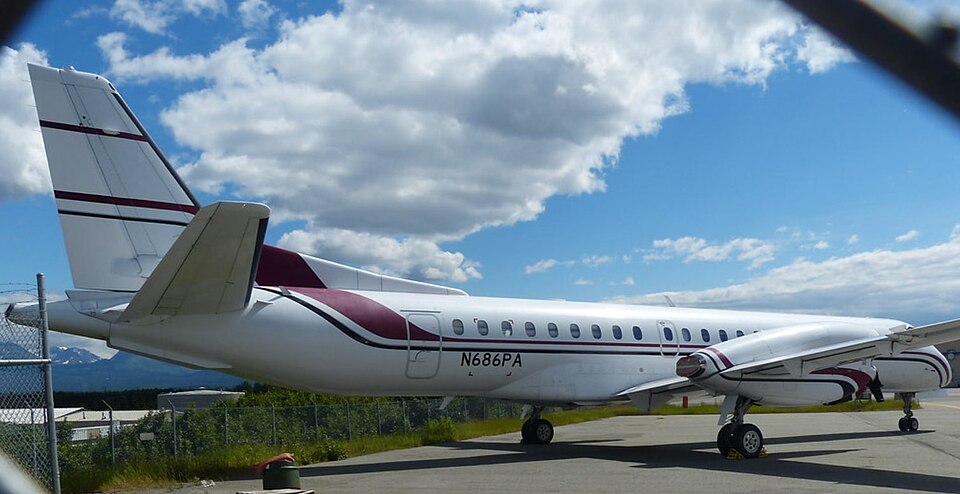
18 Oct 2019: Saab 2000 No Series — PenAir

18 Oct 2019: Saab 2000 No Series (N686PA) — PenAir

1 fatality • Unalaska, AK, United States

Probable cause

The landing gear manufacturer’s incorrect wiring of the wheel speed transducer harnesses on the left main landing gear during overhaul. The incorrect wiring caused the antiskid system not to function as intended, resulting in the failure of the left outboard tire and a significant loss of the airplane’s braking ability, which led to the runway overrun. Contributing to the accident were (1) Saab’s design of the wheel speed transducer wire harnesses, which did not consider and protect against human error during maintenance; (2) the Federal Aviation Administration’s lack of consideration of the runway safety area dimensions at Unalaska Airport during the authorization process that allowed the Saab 2000 to operate at the airport; and (3) the flight crewmembers’ inappropriate decision, due to their plan continuation bias, to land on a runway with a reported tailwind that exceeded the airplane manufacturer’s limit. The safety margin was further reduced because of PenAir’s failure to correctly apply its company-designated pilot-in-command airport qualification policy, which allowed the accident captain to operate at one of the most challenging airports in PenAir’s route system with limited experience at the airport and in the Saab 2000 airplane.

— NTSB Determination

Accident narrative

On October 17, 2019, about 1740 Alaska daylight time, PenAir flight 3296, a Saab 2000, N686PA, overran the runway while landing at the Thomas Madsen Airport (PADU), Unalaska, Alaska. The airplane passed through the airport perimeter fence, crossed a road, and came to rest on shoreline rocks. Of the 42 passengers and crewmembers on board, 1 passenger was fatally injured, and several other passengers sustained serious or minor injuries. The airplane received substantial damage. The regularly scheduled domestic passenger flight was operating under the provisions of 14 Code of Federal Regulations Part 121 from Ted Stevens International Airport (KANC), Anchorage, Alaska, to PADU.

Contributing factors

  • Scheduled/routine maintenance — Other
  • Incorrect service/maintenance
  • Attain/maintain not possible
  • Pilot
  • Decision related to condition
  • Manufacturer
  • Design
  • Operator
  • FAA/Regulator
  • Decision related to condition

Conditions

Weather
VMC

Loading the flight search…

What you can do on Flight Finder

  • Search flights between any two airports with live fares.
  • By aircraft — pick a plane model (e.g. Boeing 787, Airbus A350) and see every route it flies from your origin.
  • Route map — click any airport worldwide to explore its destinations, or draw a radius to find nearby airports.
  • Global aviation safety — aviation accident database, 5,200+ records since 1980, with map and rankings by aircraft and operator.
  • NTSB safety feed — recent U.S. aviation accidents and incidents from the official NTSB CAROL database, updated daily.

Frequently asked questions

How do I search flights by aircraft type on FlightFinder?

Pick an aircraft model — Boeing 737, Airbus A320, A380, Boeing 787 Dreamliner and more — enter your origin airport, and FlightFinder shows every route that plane flies from there with live fares.

Which aircraft types can I filter by?

We support Boeing 737/747/757/767/777/787, the full Airbus A220/A319/A320/A321/A330/A340/A350/A380 family, Embraer E170/E175/E190/E195, Bombardier CRJ and Dash 8, and the ATR 42/72 turboprops.

Is FlightFinder free to use?

Search and schedules are free. Pro ($4.99/month, $39/year, or $99 one-time lifetime) unlocks the enriched flight card — on-time stats, CO₂ per passenger, amenities, live gate & weather — plus My Trips with push alerts.

Where does the route data come from?

Live schedules come from Amadeus, AeroDataBox and Travelpayouts. Observed routes (which aircraft actually flew a given city pair) are crowdsourced from adsb.lol ADS-B data under the Open Database License.