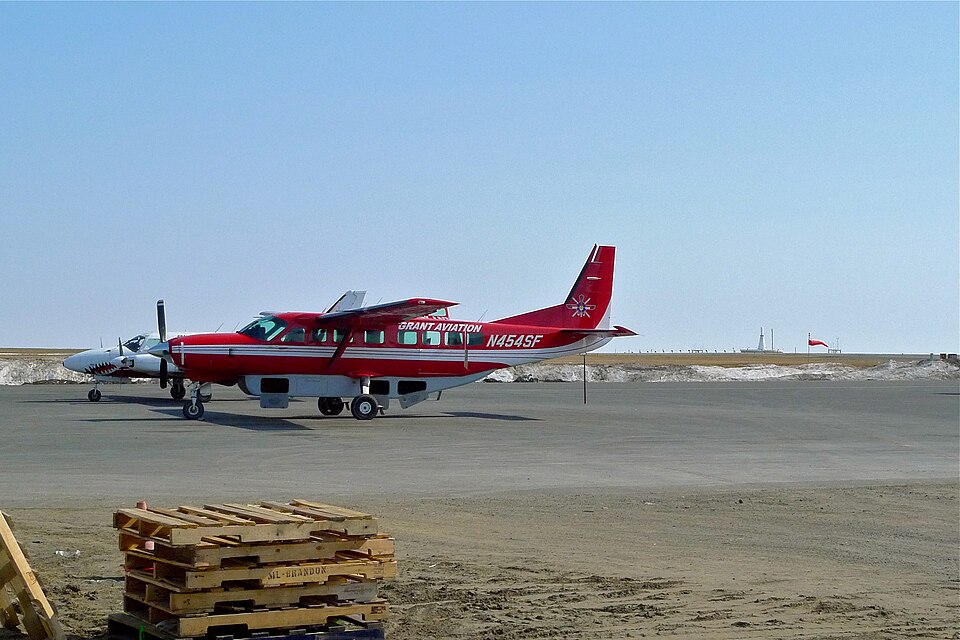
Accident Details
On February 4, 2020, about 1550 Alaska standard time, a Cessna 208B airplane, registration N454SF, sustained substantial damage when it was involved in an accident near Hooper Bay, Alaska. The pilot and seven passengers were not injured. The airplane was operating as a Title 14 Code of Federal Regulations Part 135 scheduled passenger flight.
Flight History
According to the pilot, the departure was delayed about 3 hours due to the weather conditions on the day of the accident, which included snow, low visibility, and flat light. Before departing, the pilot received runway reports from the company dispatch that all destination airport runways were suitable. After performing a risk analysis and gathering more weather information, the pilot departed on the flight.
While en route to the first airport, he chose to cancel the second leg of the flight due to deteriorating weather conditions, and he informed company dispatch that he would return with all of the passengers to the departure airport. After landing and loading the passengers and baggage, the pilot taxied the airplane for departure.
Takeoff and Impact
The pilot stated that flat light conditions prevailed and that it was difficult to see down the runway or have any depth perception. He initiated the takeoff with 20° of flaps selected and noticed no issues during the initial takeoff roll. He then noticed that the airspeed was not increasing fast enough but decided that there was inadequate runway remaining on which to abort the takeoff.
The airplane became airborne, and the stall warning horn activated as the airplane cleared the departure end of the runway. The pilot attempted to maneuver the airplane in ground effect, but the airplane settled, and the main landing gear impacted the snow-covered terrain. The nose wheel impacted the snow, and the airplane came to rest upright about 150 ft from the end of the runway. The engine mount sustained substantial damage.
The pilot reported no preimpact mechanical malfunctions or failures that would have precluded normal operation.
Weather and Runway Conditions
The pilot added that there was about 3 to 5 inches of wet, heavy snow on the runway at the time of departure. The Chart Supplement Alaska discussed the airport information for HPB effective January 30, 2020, and stated under airport remarks: "Unattended. Runway condition not monitored; recommend visual inspection prior to using."