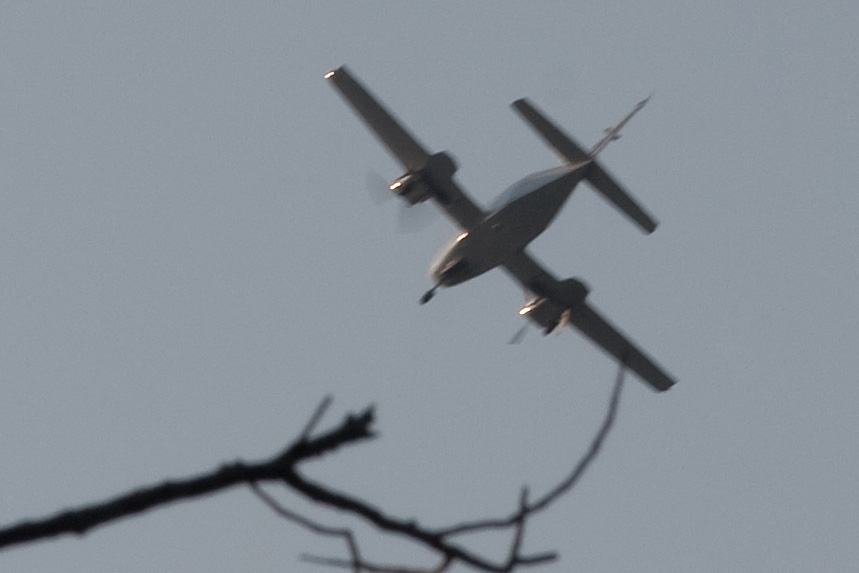
10 Jul 2021: CESSNA 421C

10 Jul 2021: CESSNA 421C (N66NC) — Unknown operator

No fatalities • Longmont, CO, United States

Probable cause

The loss of performance for reasons that could not be determined.

— NTSB Determination

Accident narrative

On July 10, 2021, about 0845 mountain daylight time, a Cessna 421C airplane, N66NC, was substantially damaged when it was involved in an accident near Longmont, Colorado. The pilot and three passengers received minor injuries. The airplane was operated as a Title 14 Code of Federal Regulations Part 91 personal flight. The pilot reported that he performed the “before starting engine” and “starting engine” checklists and everything was normal. He performed an engine runup and then started his takeoff roll. The pilot reported that about halfway down the runway he sensed the airplane was not accelerating as fast as it should. He attempted to rotate; however, “the airplane mushed off the runway.” The airplane settled back onto the runway, then exited off the departure end of the runway. The airplane came to rest upright, and a post-crash fire ensued. The airplane sustained substantial damage to both wings and the fuselage. The airplane was equipped with a JPI EDM 760 engine monitor. The unit was retrieved from the airplane and the NVM (nonvolatile memory) downloaded. According to the engine manufacturer, the data indicated the airplane’s engines were operating consistent with each other at takeoff power until power was reduced for the rejected takeoff. Referring to the Cessna 421C Pilot’s Operating Handbook, for the conditions at the time of the accident, the airplane’s normal takeoff distance would have been about 2,700 ft to clear a 50 ft obstacle. Density altitude at the time of the accident was 7,170 ft.

Contributing factors

  • Pilot
  • Pilot
  • Effect on equipment
  • Attain/maintain not possible

Conditions

Weather
VMC, wind 140/03kt, vis 10sm

Loading the flight search…

What you can do on Flight Finder

  • Search flights between any two airports with live fares.
  • By aircraft — pick a plane model (e.g. Boeing 787, Airbus A350) and see every route it flies from your origin.
  • Route map — click any airport worldwide to explore its destinations, or draw a radius to find nearby airports.
  • Global aviation safety — aviation accident database, 5,200+ records since 1980, with map and rankings by aircraft and operator.
  • NTSB safety feed — recent U.S. aviation accidents and incidents from the official NTSB CAROL database, updated daily.

Frequently asked questions

How do I search flights by aircraft type on FlightFinder?

Pick an aircraft model — Boeing 737, Airbus A320, A380, Boeing 787 Dreamliner and more — enter your origin airport, and FlightFinder shows every route that plane flies from there with live fares.

Which aircraft types can I filter by?

We support Boeing 737/747/757/767/777/787, the full Airbus A220/A319/A320/A321/A330/A340/A350/A380 family, Embraer E170/E175/E190/E195, Bombardier CRJ and Dash 8, and the ATR 42/72 turboprops.

Is FlightFinder free to use?

Search and schedules are free. Pro ($4.99/month, $39/year, or $99 one-time lifetime) unlocks the enriched flight card — on-time stats, CO₂ per passenger, amenities, live gate & weather — plus My Trips with push alerts.

Where does the route data come from?

Live schedules come from Amadeus, AeroDataBox and Travelpayouts. Observed routes (which aircraft actually flew a given city pair) are crowdsourced from adsb.lol ADS-B data under the Open Database License.