Accident Details
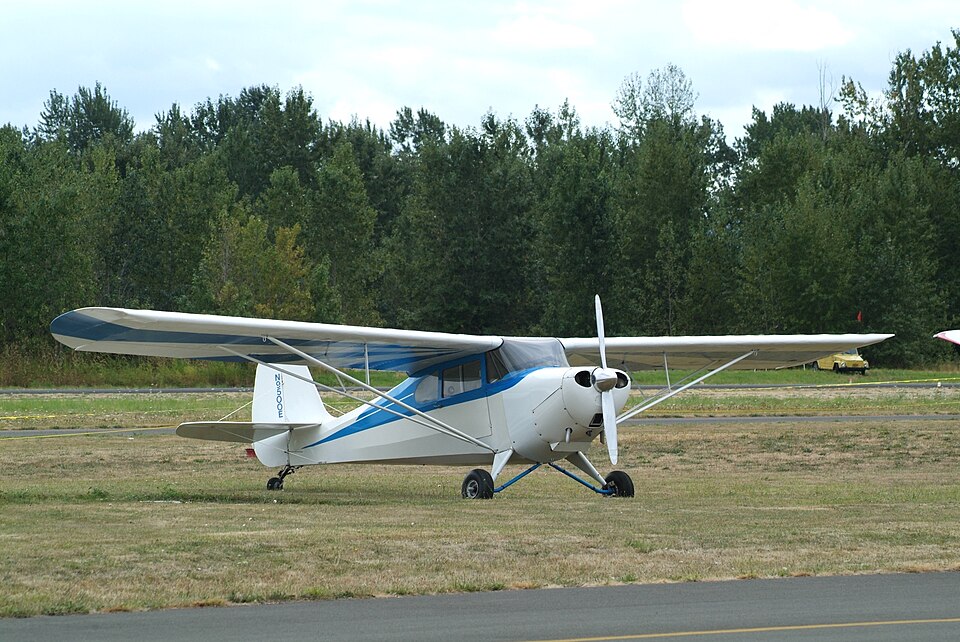
On February 8, 2022, at approximately 0845 Pacific standard time, an Aeronca 11AC Chief, registration N9500E, was substantially damaged during a forced landing near Napa, California. The pilot, who was the sole occupant, was not injured. The flight was conducted under Title 14 Code of Federal Regulations Part 91 as a personal flight.
Pilot Actions
The pilot reported departing University Airport (EDU) in Davis, California, en route to Sonoma County Airport (STS) in Santa Rosa, California. About 30 minutes into the flight, approximately 20 nautical miles north of Napa, the engine lost all power. The pilot noted that the engine “got quiet” and the tachometer dropped, and the airplane could not maintain altitude. He verified the throttle was full forward and pulled the carburetor heat to the OPEN position, but the airplane continued to descend. The pilot made mayday calls and executed a forced landing to a field, during which the airplane sustained substantial damage to the fuselage tubular frame.
Postaccident Examination
A postaccident examination of the airframe revealed no preimpact mechanical anomalies. Examination of the engine cylinders and case showed no indications of catastrophic engine failure. Mechanical continuity was established throughout the rotating group, valvetrain, and accessory section as the crankshaft was manually rotated at the propeller. Thumb compression was achieved at all four cylinders, and the valves displayed normal lift. When the propeller was rotated by hand, spark was produced on all ignition leads, but it was described as “extremely weak.” Both magnetos were removed for further examination.
Magneto Conditions
The right magneto was found to be unmaintained and in poor overall condition. The point cover screws were stripped and cross threaded but still safety-wired. The distributor axle set screw and bushing were worn and loose. The distributor gear had six gear teeth damaged and partially missing. Despite these issues, the right magneto functioned within manufacturer standards during its bench test.
In contrast, the left magneto was also unmaintained and in poor overall condition. The axle set screw was displaced and found at the bottom of the magneto housing. The distributor gear had over half of its teeth worn or missing. The distributor axle bushing was loose and worn, and the distributor axle bearing had failed. The left magneto functioned outside manufacturer standards during its bench test.
Engine Maintenance
A review of the engine logbook showed that the engine was last overhauled in 2007, approximately 400.7 hours before the accident. Subsequent log entries did not indicate that either magneto had been overhauled or inspected more recently.