Occurrence
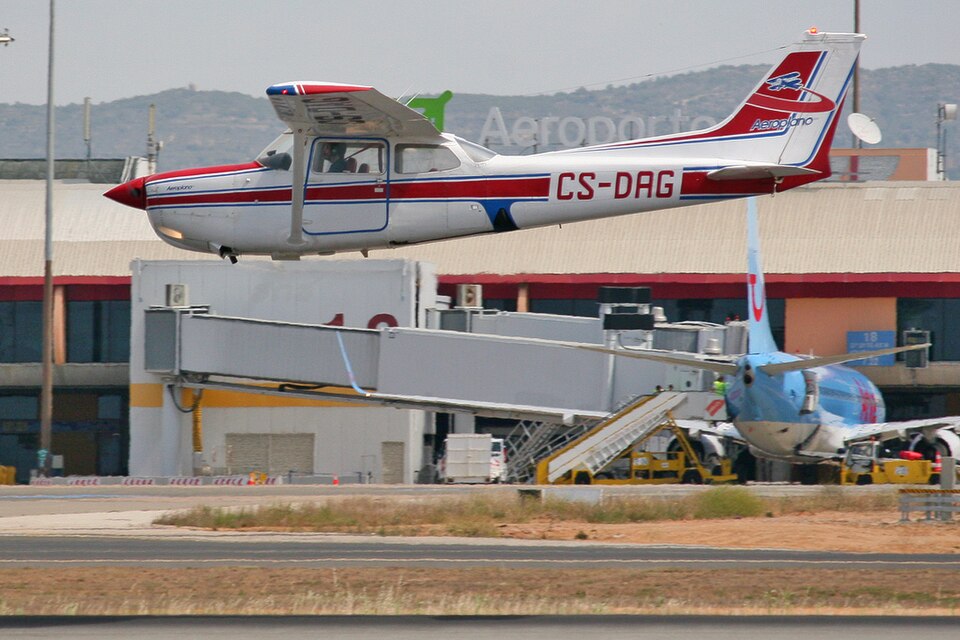
On July 18, 2022, at 10:54 UTC, a Cessna 172 RG (registration CS-DAG) operated by OATC was on a navigation training flight from Cascais (LPCS) to Évora and back. The crew consisted of an instructor pilot and a student pilot. Upon arrival at Cascais at 10:45, the student pilot requested the VOR procedure but was not authorized due to excessive traffic in the circuit. The crew decided to proceed with a final landing.
The visual approach was described as normal, with the first flap selection occurring in tailwind. The landing gear was selected down, the green light confirmed, and each pilot visually verified the gear was down. Landing on runway 17 with full flaps (30°) and an estimated speed of 65 knots, the aircraft touched down on the main landing gear followed by the nose gear. After rolling a few meters, the right main landing gear leg began to retract, causing the aircraft to veer right. The crew applied left pedal and brake to counteract. At a relatively low speed, the left main landing gear leg also retracted, immobilizing the aircraft a few meters ahead along the runway edge. The wind reported was 200/09 knots, variable 170–230°.
Both occupants left the aircraft unharmed. The aircraft suffered significant damage to the right horizontal stabilizer and rudder, and light damage to the right wing tip. The belly was practically intact with no signs of ground contact except the tail mooring eye.
Aircraft Information
The event aircraft was a Cessna 172 RG, a four-seat, high-wing, single-engine airplane with retractable tricycle landing gear. The landing gear extension and retraction are accomplished by a dedicated hydraulic system with an electrically driven pump. In case of pump or electrical failure, a hand pump provides hydraulic pressure. The landing gear control and warning system provides visual indications (green for down and locked, orange for retracted) and an aural intermittent horn if the gear is not locked with flaps extended 20° or more and/or throttle back.
The aircraft was authorized to operate under a lease agreement, and maintenance records showed no anomalies.
Crew Information
The instructor pilot had approximately 2200 total flight hours, including 1573 hours as an instructor and 42.15 hours on the accident aircraft. The student pilot had 125:40 hours and 206 landings. There was no evidence of any medical condition negatively influencing the occurrence.
Post-Event Findings
Post-event analysis included bilateral communications between the aircraft and air traffic control. The audible warning of the landing gear not locked was heard during landing authorization communications and after landing with the aircraft immobilized. The "GEAR PUMP" circuit breaker was found in the open (out) position. Neither crew member recalled this condition and stated they did not intentionally pull it.
The landing gear actuation and indication systems were tested; the source does not specify the results of those tests.