Incident Overview
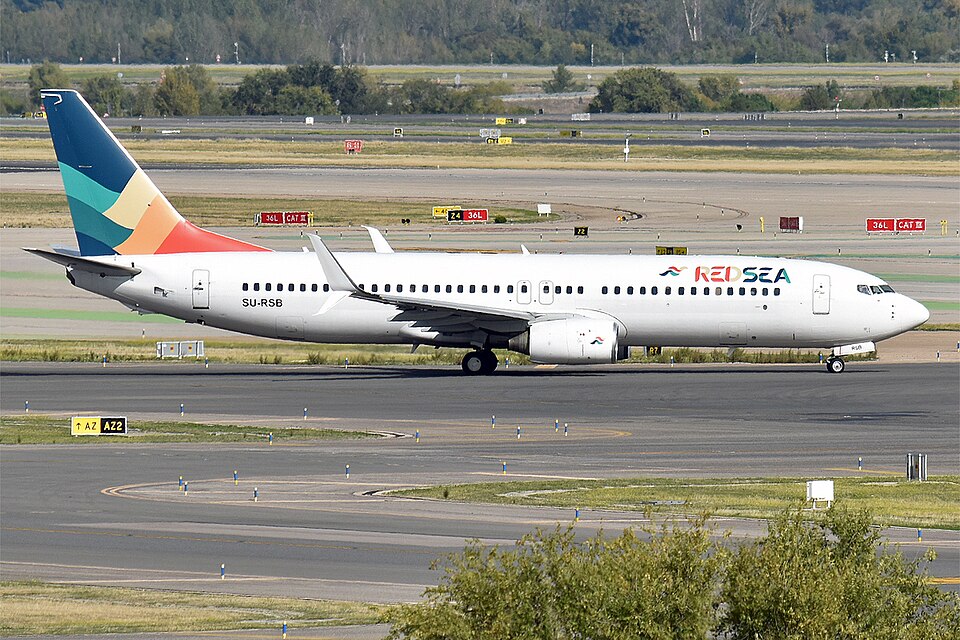
On August 7, 2023, a Red Sea Airlines Boeing 737-8Q8, registration SU-RSB, was operating charter flight RSX3501 from Hurghada International Airport (HEGN), Egypt, to Porto Airport (LPPR), Portugal. The aircraft carried 179 occupants (crew and passengers). The flight was initially scheduled to depart at 06:00 UTC but experienced several delays, eventually taking off at 17:07 UTC.
Sequence of Events
At 22:15 UTC, while flying at flight level 370 near Zamora, Spain, approximately 200 miles (30 minutes) from the destination, the crew received a master caution auto-fail indication for the aircraft's pressurization control system. The crew were unable to manually control cabin pressure and subsequently received a cabin altitude alert.
At 22:20 UTC, while passing flight level 324, the crew contacted Portuguese air traffic control (ATC) to request a descent. The crew donned oxygen masks, which hampered communication with ATC. At 22:23 UTC, while passing flight level 200 during the descent, the crew declared an emergency (Mayday) and requested descent to flight level 100 due to pressurization problems.
Crew Actions
At 22:25 UTC, at 10,000 feet, the flight commander contacted the purser to check on passengers and crew, receiving confirmation that everyone on board was well. The flight continued depressurized at low altitude (flight level 100) until the final descent to Porto Airport, landing at 22:48 UTC without further issues.
Aftermath
After landing, the commander requested medical assistance for passengers. The return flight to Hurghada was cancelled. The operator positioned another aircraft (SU-RSA) to Porto the following day, departing at 19:35 UTC with the affected passengers. The incident aircraft performed a ferry flight to Cairo for maintenance on August 8, 2023, at 21:50 UTC, after being deemed airworthy by the operator's maintenance services. The details of the return flight are unknown due to lack of operator response and supplemental data.
Medical Assistance
According to Porto airport medical centre records, five passengers and two crew members received assistance upon arrival. Passengers showed signs of indisposition, ear and chest pain. One cabin crew member showed signs of fatigue, anxiety, and mild diastolic hypertension; another suffered from otalgia (ear pain). Both were advised to go to the hospital but stated they could only do so with the commander's permission. All left the airport by their own means, some declining additional medical care. The following afternoon, three crew members of the incident flight showed signs of fatigue, one with a nosebleed originating in the middle ear, and again refused hospital care, boarding the return flight to Egypt.
Aircraft Damage
The aircraft sustained substantial damage. According to the tech-log, the only damaged component was the cabin pressure controller (CPC#1 PN: 21933-01AD). Maintenance entries on August 8 before the ferry flight included: CPC#1 deactivated and dispatched per MEL 21-14-03; all oxygen generators and masks used; three depleted portable oxygen bottles (0 psi); and a note that crew oxygen pressure was sufficient.
Other Findings
The operator stated that the crew was duly authorised and trained. The GPIAAF was informed and initiated evidence collection, analyzing ATC communications and operational and medical reports. The operator did not report the event as required by European legislation. GPIAAF contacted the Egyptian Aircraft Accident Investigation Directorate for additional information, but sufficient detailed information was not provided.