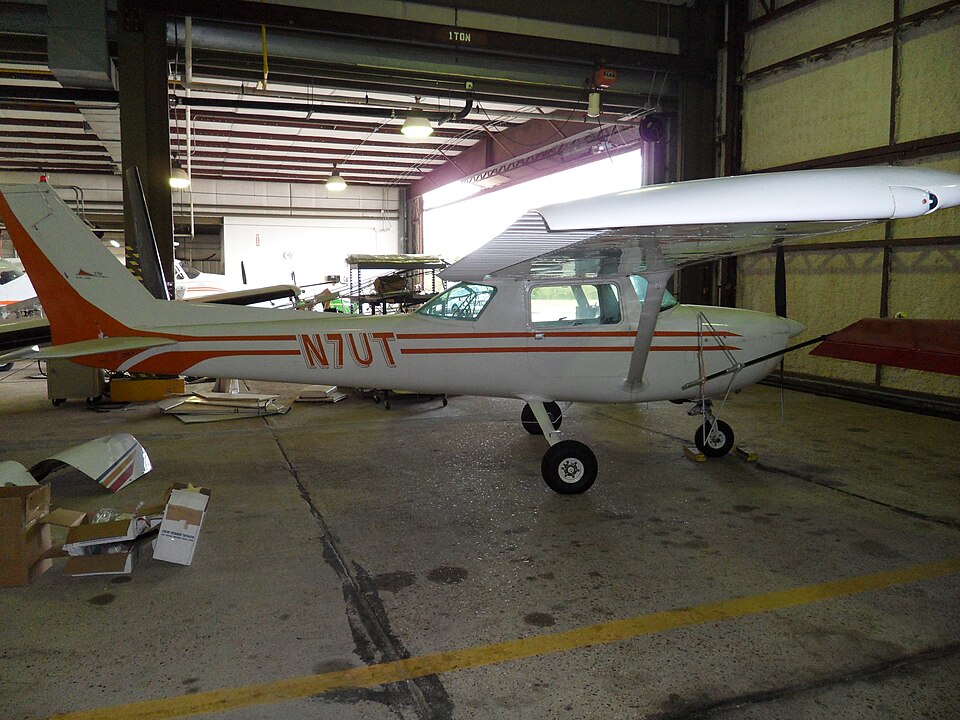
Incident Overview
On January 10, 2024, about 0815 central standard time, a Cessna 150M, registration N7UT, was substantially damaged during a runway excursion at Paul Bridges Field Airport (0M3) in Hohenwald, Tennessee. The student pilot, who was the sole occupant, was not injured. The airplane was operated as a Title 14 Code of Federal Regulations Part 91 instructional flight.
Flight Details
The student pilot reported that she was conducting a solo cross-country flight. The first leg was planned from Tullahoma Regional Airport/William Northern Field (THA) in Tullahoma, Tennessee, to Hassell Field Airport (M29) in Clifton, Tennessee, a distance of about 90 nautical miles. After receiving a weather briefing and flight instructor signoff, the pilot ensured the fuel was topped off. The preflight inspection and engine run-up were normal with no irregularities found. The subsequent takeoff and climb to cruising altitude were normal.
Troubleshooting
About 80 nautical miles into the flight, while cruising at 2,500 ft mean sea level and 2,400 rpm, the engine began to run rough. The pilot moved the throttle to full, confirmed that the mixture was full rich, and checked the fuel selector valve. The pilot did not report using carburetor heat at any point during her troubleshooting efforts. The engine continued to progressively operate rougher with a subsequent decrease in rpm, and the pilot was unable to maintain altitude.
Accident Sequence
The pilot elected to divert to Paul Bridges Field Airport (0M3) in Hohenwald. While on final approach, the airplane was high and fast; however, the pilot did not believe the airplane was high enough to bleed off airspeed and make a 180° turn to lose altitude, so she continued the approach and landed long down the runway. Unable to stop on the remaining runway using full brakes, the airplane exited the paved surface and struck a fence, resulting in substantial damage to the wings and elevator.
Post-Accident Examination
A visual inspection of the engine was conducted at the accident scene, and a visual inspection of fuel samples from the engine and wing drains found no sign of water or obstructions. A postaccident engine run was conducted and revealed no anomalies that would have prevented normal operation. According to the FAA carburetor icing chart, the temperature, 2°C, and dew point, -2°C, recorded at the weather reporting station closest to the accident site, were conducive to “serious icing” at cruise power settings.