Synopsis
On 21 October 2025, Malaysia Airlines Berhad Boeing 737-800, registration 9M-MXR, operating flight MH2742 from Kuala Lumpur International Airport (KUL) to Bintulu Airport (BTU), experienced an abnormal cabin pressurisation event while in cruise at Flight Level 350 (FL350), approximately 40 NM prior to Top of Descent. The cabin rate of climb increased and cabin altitude rose, leading to the activation of the Cabin Altitude Warning and an emergency descent to 10,000 ft. Post flight maintenance and data analysis showed no structural damage to the aircraft. The investigation is ongoing; detailed analysis, conclusions and safety recommendations will be included in the Final Report.
History of the Flight
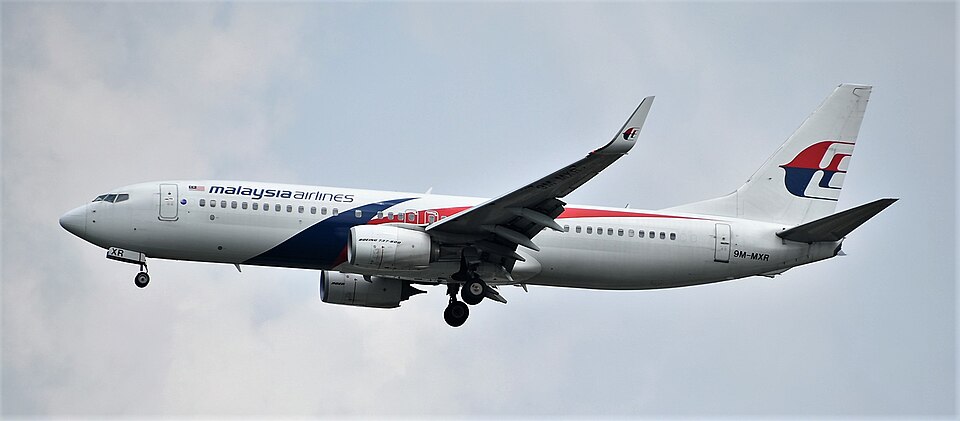
Malaysia Airlines Flight MH2742 was a scheduled domestic service operating on Tuesday, 21 October 2025, from Kuala Lumpur International Airport (KUL) to Bintulu Airport (BTU) in Sarawak. The flight was operated by a Boeing 737-800, registration 9M-MXR, and carried a total of 117 people, comprising 109 passengers and 8 crew members. The flight deck crew consisted of three pilots: a Pilot in Command (PIC), a Pilot in Training serving as the Second-in-Command (SIC), and a Safety Co-Pilot (SO), whose primary responsibility was to monitor the Pilot in Training and provide guidance during any emergency situations.
Approximately 2 hours and 15 minutes into the flight, while cruising at Flight Level 350 (FL350) and about 40 nautical miles prior to the planned top of descent (TOD), the PIC noticed the aircraft experienced an abnormal cabin pressurization event. The cabin rate of climb increased to approximately 1,200 feet per minute, leading to a rise in cabin altitude.
In response to the abnormal pressurization event, the PIC promptly selected the pressurization mode to “MANUAL” and fully closed the outflow valve according to emergency procedures; however, the cabin altitude continued to rise. Simultaneously, the “BLEED TRIP OFF (2)” annunciator illuminated, indicating a high temperature or pressure condition and resulting in the isolation of the No. 2 engine bleed air supply. Recognizing the seriousness of the situation, the PIC initiated a precautionary descent.
As the cabin altitude exceeded 10,000 feet, triggering the cabin altitude warning, the PIC and SIC followed the non-normal checklist, and the SO immediately deployed the passenger oxygen masks manually, with the cabin altitude peaking at approximately 15,000 feet. The situation was stabilized at an intermediate altitude of 10,000 feet, allowing the crew to reset the tripped bleed system and extinguish the warning light. The aircraft subsequently continued to its destination at Bintulu Airport (BTU), where all crew members and passengers landed safely without any injuries.
Injuries to Persons
According to the report, there were no fatal, serious, or minor injuries. All 8 crew and 109 passengers were uninjured.
Damage to Aircraft
The report states "Not applicable" for damage to aircraft, indicating no damage occurred.
Other Damage
No other damage reported.
Personnel Information
The flight crew consisted of three pilots: a 53-year-old male PIC with an Airline Transport Pilot License (ATPL) valid until 28 February 2026; a 32-year-old male Safety Co-Pilot with a Commercial Pilot License (CPL) valid until 31 January 2026; and a 30-year-old male Pilot in Training serving as SIC with a CPL valid until 31 March 2026. All pilots were Malaysian and held valid medical certificates.
Aircraft Information
The aircraft, a Boeing 737-800 (MSN 40155), manufactured in 2014, was owned and operated by Malaysia Airlines. It had a valid Certificate of Registration (valid until 24/01/2027) and Certificate of Airworthiness (valid until 30/01/2026). The aircraft was powered by two CFM56-7B26E engines. Total airframe hours were 33,766. The maintenance records indicated the aircraft was equipped and maintained in accordance with existing regulations and approved procedures.
Meteorological Information
To be included in the Final Report.
Aids to Navigation
Not applicable.
Communications
All communication frequencies were operating normally.
Aerodrome Information
Not applicable.
Flight Recorders
The aircraft was equipped with a Flight Data Recorder (FDR) and a Cockpit Voice Recorder (CVR).
Wreckage and Impact Information
Not applicable.
Medical and Pathological Information
The pilot underwent a urine drug test, which was negative for substance abuse. Blood alcohol screening was negative for alcohol abuse.
Fire
Not applicable.
Survival Aspects
To be included in the Final Report.
Tests and Research
To be included in the Final Report.
Organisational and Management Information
Malaysia Airlines Berhad (MAB), the national flag carrier and core entity of the Malaysia Aviation Group (MAG), anchors its operations at its main hub, Kuala Lumpur International Airport (KUL), while maintaining significant domestic connectivity through focus cities like Kota Kinabalu and Kuching to serve East Malaysia. The airline operates a network of approximately 70 destinations across Asia, Oceania, and Europe. The active fleet of MAB comprised approximately 89 aircraft as of late 2025.
Additional Information
To be included in Final Report.
Useful or Effective Investigation Techniques
To be included in the Final Report.
Conclusions
The investigation is ongoing. The probable cause has not been determined and will be included in the Final Report.
Immediate Safety Actions
The operator’s Engineering department has implemented interim safety measures in coordination with the manufacturer.