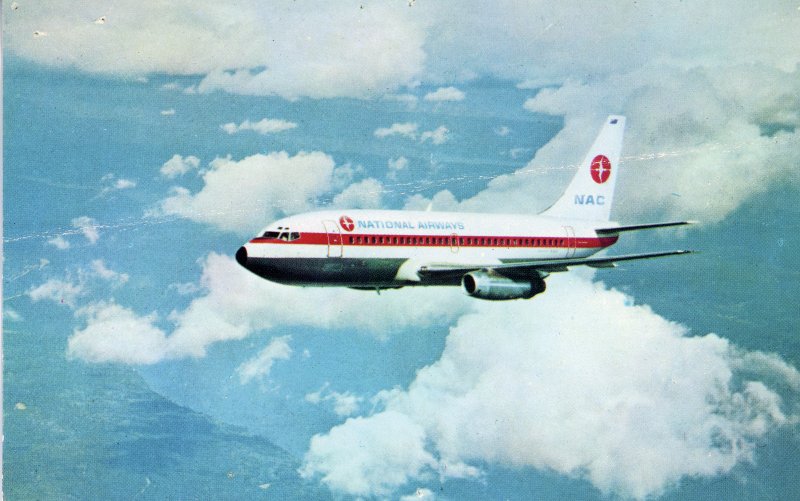
On May 22, 2008, a Boeing 737-217, C-GKCP operated by Canadian North Inc. was involved in an aviation accident near Saskatoon, Saskatchewan, CA. No fatalities were reported. Investigators recorded the probable cause as: The wear of the number 4.5 roller bearing reduced the radial constraint of the low pressure turbine (LPT) shaft, which flexed and contacted the high-pressure compressor (HPC) sealing tube aft fitting. This summary draws on records from the Transportation Safety Board of Canada (TSB).
A Canadian North Boeing 737-217 (C-GKCP) experienced a right engine failure during approach to Saskatoon. The crew landed safely, and an evacuation was completed without injuries. The TSB attributed the failure to a fractured low-pressure turbine shaft.
Incident Overview and Emergency Response Canadian North Inc. flight MPE1714, a Boeing 737-217 with registration C-GKCP, was en route from Fort MacKay, Alberta, to Saskatoon, Saskatchewan. During the final approach to Runway 15 at approximately 0120 central standard time, the crew heard a high-pitched noise and vibration from the right engine, followed by two short popping sounds. The right Pratt & Whitney JT8D 17A engine subsequently lost power. The first officer was the pilot flying when the aircraft was about 1,000 feet above ground level and five nautical miles from the runway. Upon recognizing the emergency, the captain took control and reconfigured the flaps to 15 degrees, in accordance with the operator's standard operating procedures for a single-engine landing. The aircraft landed and stopped on Runway 15. Both engines were shut down, and the Saskatoon Airport Aircraft Rescue and Fire Fighting service extinguished a fire in the right engine. The crew and passengers rapidly evacuated via the forward (L1) air stairs without injury. Sparks and flames were observed from the rear of the engine, but no cockpit fire indication was present, and the fire bottles were not discharged. Firefighters applied suppressant to the front and rear of the engine, using thermal imaging to identify hot spots. The aircraft was maintained according to the operator's approved maintenance control system, and the crew met all certification, qualification, and rest requirements. Weather and runway conditions were not factors in the occurrence. ## Technical Investigation and Findings On-site inspection revealed full containment of the engine and no external fire. The fire warning detection harness was not breached. Further inspection indicated independent rotation of the low-pressure compressor and low-pressure turbine (LPT), pointing to a mechanical disconnect. The engine was removed and shipped to an overhaul facility for teardown. The JT8D is an axial-flow front turbofan with a split thirteen-stage compressor and a split four-stage reaction turbine. The low-pressure system consists of a front compressor rotor (stages one to six) driven by the second, third, and fourth stage turbine rotors. The high-pressure system consists of a rear compressor rotor (stages seven to thirteen) driven by the first stage turbine rotor. The low-pressure and high-pressure systems are mechanically independent. At the time of power loss, the estimated low-rotor and high-rotor speeds were 7,500 rpm and 10,285 rpm, respectively. Maintenance records showed the right engine had 44,548 hours and 25,513 cycles since new. Teardown revealed a fractured LPT shaft in the area immediately surrounded by the high-pressure compressor (HPC) sealing tube aft fitting. The number 4.5 bearing stack was found binding against the LPT shaft fracture, and the HPC sealing tube was fractured at three locations. The LPT shaft exhibited a twist and localized heat distress at the fracture area. Analysis of the untouched fracture surface indicated a ductile shear overload failure. The most likely scenario was that wear of the 4.5 roller bearing began within the previous two hours of engine operation. This wear reduced radial constraint of the LPT shaft, causing it to flex. Peak deflection occurred at approximately mid-span, where the shaft contacted the HPC seal aft fitting, inducing a local, elevated heat-distressed area. The elevated heat and wear compromised the physical properties of the LPT shaft, resulting in a ductile fracture from torsional shear overload. The LPT shaft then rubbed the inside of the HPC seal tube, causing elevated temperatures and ductile fractures of the tube. After the LPT shaft failure, reduced engine power at about ground idle level was sustained by the high-pressure system. The fracture of the LPT shaft aft of the #2 ball bearing allowed the aft shaft section to shift rearward due to turbine reaction forces. The fractured end oscillated about the engine centreline, causing the 4.5 bearing retainer nut to bind against the 4.5 bearing spacer. This binding resulted in the sudden rotation of the 4.5 retainer nut, inducing the lock washer tabs to climb the threads of the LPT shaft slots and unwinding the nut. This relieved the remainder of the bearing stack of its clamping force. The retainer nut continued to rotate and wore off the peaks of its threads. It was determined that the unwinding of the 4.5 retainer nut was subsequent to the LPT shaft failure. High-cycle fatigue striations found on the No. 6 scavenge pump spur gear were most likely the result of the LPT failure and did not contribute to the occurrence. Damage to the No. 6 scavenge pump drive, spur gear, lock tab, and oil shield was considered secondary to the rearward movement of the LPT shaft. After the failure of the No. 6 scavenge pump, the scavenge housing filled with oil, which leaked onto the exhaust nozzle. Elevated temperatures in this area ignited the oil. The rearward movement of the fractured LPT shaft brought the turbine rotor in contact with the turbine nozzles, producing heat and an emission of sparks. The fire was contained within the engine, and the fire warning detection system was not compromised. Because the fire warning harness was not breached, there was no warning in the cockpit of an engine fire, and the crew did not discharge the fire bottles. The Transportation Safety Board of Canada (TSB) completed Engineering Laboratory reports LP 066/2008 (DFDR Analysis) and LP 084/2008 (JT8D Component Analysis). The cockpit voice recorder (CVR) was overwritten and contained audio recorded approximately one hour after the occurrence. ## Safety Actions The operator instituted amendments to its maintenance schedule, including the installation of temperature stickers onto the number 4 bearing scavenge line as part of its engine build specifications, and daily inspection of these stickers. A company safety bulletin board item was also issued relating to the monitoring and troubleshooting of engine oil consumption and temperature decals. The TSB authorized the release of this report on 29 April 2009.
Probable cause
The wear of the number 4.5 roller bearing reduced the radial constraint of the low pressure turbine (LPT) shaft, which flexed and contacted the high-pressure compressor (HPC) sealing tube aft fitting. Localized heat and wear compromised the physical properties of the LPT shaft, causing it to fracture and leading to a loss of engine power.