Background
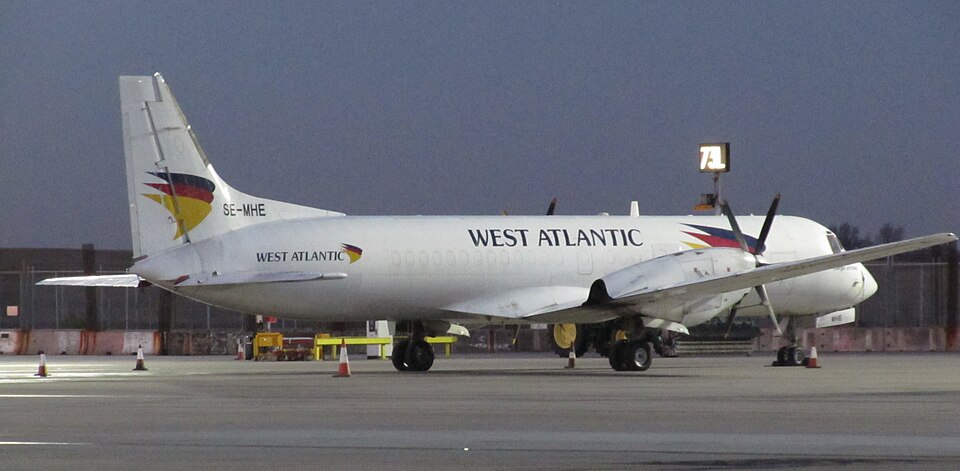
On 14 February 2018, a BAE Systems ATP, registration SE-MHE, operated a commercial air transport cargo flight from East Midlands Airport to Guernsey Airport. The crew consisted of a pilot under training (left seat) and a line training captain (right seat). The aircraft had two Pratt & Whitney Canada PW126 turboprop engines and was manufactured in 1989. No passengers were on board, and no injuries or damage occurred.
Flight History
The flight departed East Midlands at 0551 hrs UTC. The crew engaged the autopilot at 1,000 ft and climbed to FL180. During the cruise, no visible icing was observed; the total air temperature was -14°C and outside air temperature -22°C. Prior to the top of descent, control was transferred to the pilot under training to give him experience with a strong crosswind at Guernsey.
Incident
As the aircraft descended, the slip indicator ball moved left, as expected. The pilot under training attempted to trim the aircraft back to balanced flight using rudder trim, but the ball remained offset. The trim caution light illuminated, and shortly thereafter the autopilot disconnected automatically. The aircraft banked left approximately 45° and pitched nose-down.
The commander took control, closed the power levers, and levelled the wings. He found the rudder and aileron controls stiff, and the power levers would not advance. Believing the controls had frozen due to ice, the crew transmitted a MAYDAY and reported control problems and inability to increase power. ATC offered alternative airfields, but the crew elected to continue to Guernsey.
Aftermath
Approximately three minutes later, the power levers became movable, initially with notchy movements, then normally. All flight controls returned to normal. The crew conducted an ILS approach to Runway 09 at Guernsey and landed uneventfully at 0701 hrs. The commander estimated that with a glide airspeed of 150 kt, the aircraft could cover 46 nm; Guernsey was 43 nm away.
Investigation
The AAIB examined flight data and cockpit voice recordings. The data showed the use of trim before the autopilot disconnection. The investigation noted that the initial upset may have resulted from the crew applying aileron trim instead of rudder trim while attempting to correct yaw. The cause of the jammed power levers could not be definitively established, but it was possible that the left power lever was restricted due to wear in the roll-over lever locking mechanism. This would not explain the reported locking of the right power lever. The manufacturer subsequently took action to improve the effectiveness of existing service bulletins and information leaflets regarding moisture purging from engine control cables and locking mechanism wear.