History of the Flight
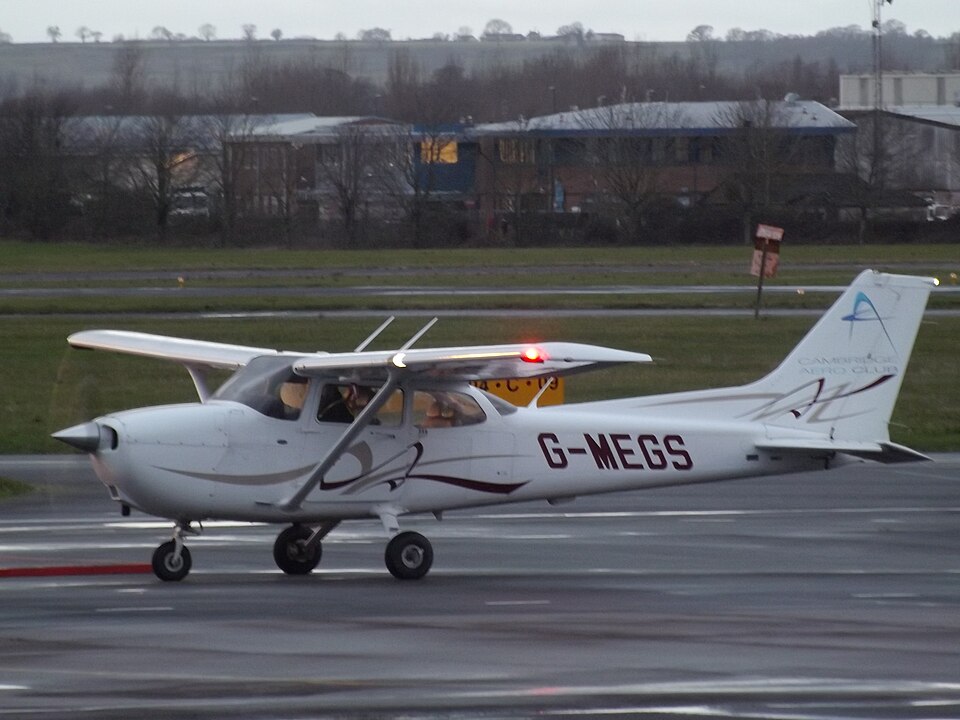
On 16 May 2015, the pilot of Cessna 172S G-MEGS, flying from Cambridge Airport, arrived over Perranporth Airfield ten minutes before its scheduled closing time. Unable to contact Perranporth Radio, the pilot communicated via Newquay Airport ATC, which relayed that Runway 05 was in use with a surface wind from 320° at 15 kt. Feeling under time pressure, the pilot proceeded with an approach to Runway 05 with full flap (Flap 30).
During the approach, the airspeed was approximately 75 kt, 10 kt faster than intended. In the landing flare, the aircraft ballooned, and the pilot held the attitude, resulting in a heavy landing. A loud bang was heard, which the pilot attributed to the landing gear.
After the landing, the pilot did not notice any abnormalities and flew the aircraft back to Cambridge Airport four days later, on 20 May. A pre-flight inspection on that day focused on the landing gear and revealed no defects.
Weather and Operational Information
Before departure, the pilot reviewed the Terminal Aerodrome Forecast (TAF) for Newquay Airport, valid from 0900 to 1800 hrs, which forecast wind from 320° at 16 kt, visibility greater than 10 km, and few clouds at 3,000 ft.
The Cessna 172S Pilot Operating Handbook states that the maximum demonstrated crosswind is 15 kt. It recommends using the minimum flap setting required for field length when landing in a strong crosswind and notes that maximum allowable crosswind velocity depends on pilot capability and airplane limitations.
CAA Safety Sense Leaflet 1 advises pilots to know the maximum demonstrated crosswind for their aircraft, factor it for their experience and recency, and be ready to divert if wind approaches personal limits. It also suggests that full flap may not be optimal for crosswind landings and that using a more into-wind runway should be considered if available.
Aircraft Damage
On 21 May, a pre-flight inspection by another pilot revealed damage to the propeller blade tips. The aircraft was withdrawn from service, and a subsequent maintenance inspection found significant damage to the skin and frames, including deformed lower skin and structural damage to fuselage frames and bulkheads, consistent with a heavy landing. The aircraft had not operated since its return from Perranporth.
Safety Actions
Following the incident, the flying club that hired G-MEGS implemented stricter weather and currency requirements for pilots with fewer than 100 hours as pilot-in-command. A cross-country checklist was introduced to monitor flight planning, requiring pilots to complete details of their intended flight and obtain authorization from an appropriate staff member.