History of the Flight
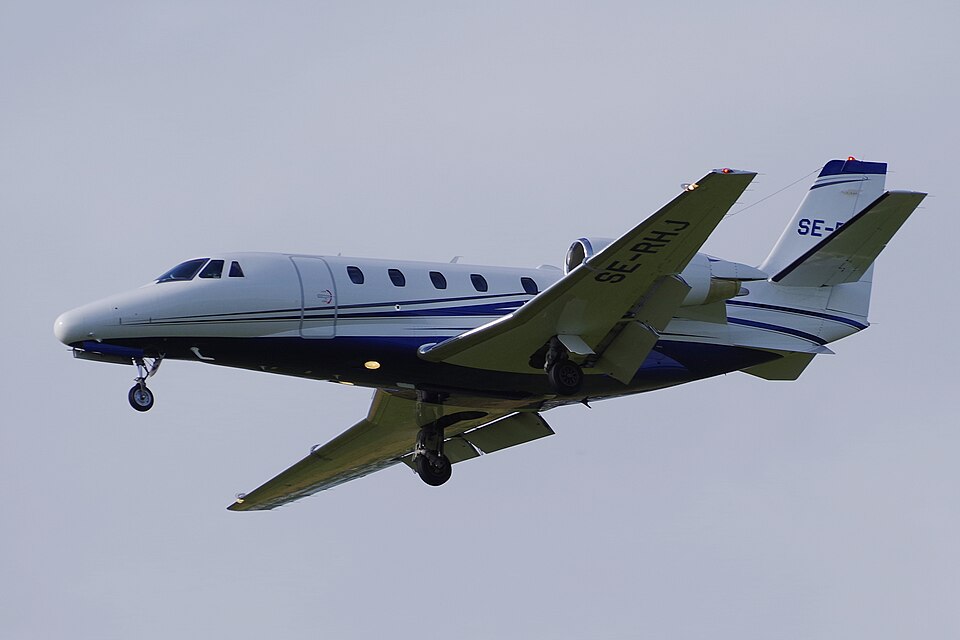
On 29 November 2015, the Cessna Citation 560XL, registration SE-RHJ, was descending into Farnborough Airport, Hampshire, after departing Göteborg City Airport, Sweden. At approximately FL200, the crew heard a sudden bang and the aircraft began to vibrate. They reduced speed, disengaged the autopilot, and observed normal engine parameters. The aircraft remained in trim. Unable to see damage from the cabin windows, they configured for landing and opted not to use thrust reverse. The landing was uneventful.
Investigation
The aircraft was recovered to a maintenance facility, where the majority of the right engine upper cowling was found missing. Damage to the leading edges of the vertical and horizontal stabilisers was consistent with debris impact.
The upper cowling is secured to the engine by 19 quick-release fasteners (10 on the leading edge, 9 on the trailing edge). The fasteners lock by a quarter-turn clockwise, engaging a cross pin that drops into a detent. A spring maintains preload and prevents loosening from vibration.
Examination showed that the remaining cowling remnants had been pulled from the fasteners; except for four, all fasteners remained locked. Three fasteners were missing from the inboard leading edge and one from the inboard trailing edge. The empty receptacles were serviceable, and the surrounding structure lacked damage.
Aircraft History
The aircraft had been leased to the operator six days before the incident. It was on its fourth flight after maintenance, with approximately five total flight hours since work was performed. During maintenance, the cowlings had been removed and refitted several times for engine troubleshooting. Fasteners were removed for a periodic inspection of retention hole wear; no anomalies were found, and original fasteners were refitted. Two mechanics installed the cowlings about two weeks before the event, signing off that they were closed and attachments tightened. The cowlings were not disturbed after the aircraft left the maintenance organisation.
Previous Occurrences
In April 2008, Cessna Citation 560XL SE-RCL experienced left engine cowling detachment during approach to Bromma. The investigation found unsecured cowlings. In June 2008, Cessna Citation 560XL G-OROO suffered approximately 75% detachment of the left engine upper cowling post-maintenance, damaging the vertical stabiliser and elevator. The AAIB determined that fasteners had not been secured, and the mechanic had been interrupted. Both events led to procedural changes by the maintenance organisations.
The aircraft manufacturer reviewed service records and confirmed that the only known cowling loss events on the Citation 560XL series were those mentioned, with no emergent trends.
Conclusion
The AAIB concluded that the cowling probably detached because a number of fasteners had not been securely fastened during maintenance.
Safety Action
The maintenance organisation revised inspection procedures to require an independent mechanic to verify cowling security after installation. The manufacturer referred the events to its Continued Operational Safety group to explore options, including a proposed video for maintenance agencies emphasising proper fastener security.