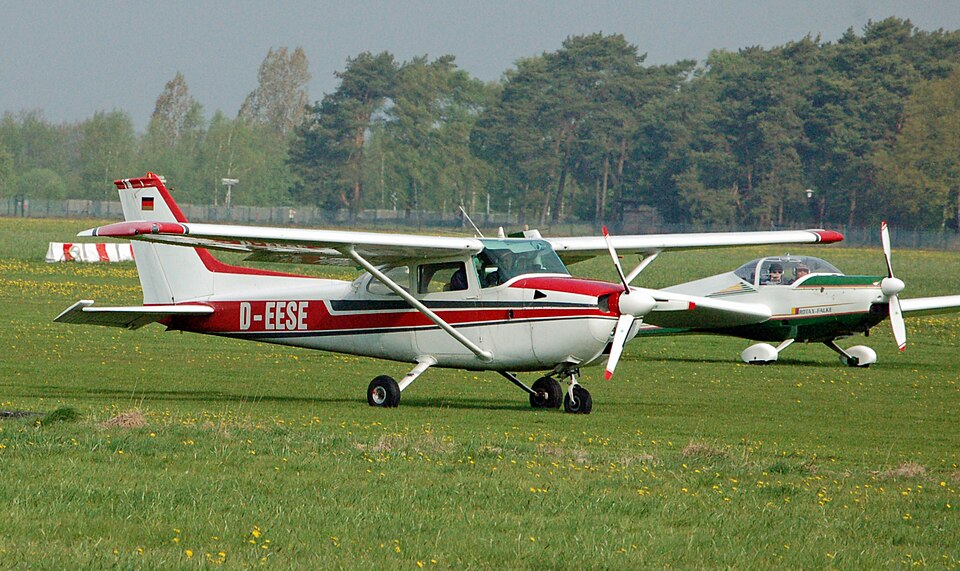
Overview
On 15 November 2013, a Cessna F172M (registration D-EESE) operated as an aerial work flight was forced to ditch in Lower Lough Erne, County Fermanagh, Northern Ireland. The aircraft, originally equipped with a Lycoming O-320 engine, had been retrofitted with a Thielert TAE 125-01 diesel engine (Centurion 1.7). The pilot, aged 32 and holding a Commercial Pilot’s Licence, had 809 hours total flying experience, with 783 hours on type. The sole passenger was uninjured; the aircraft was destroyed.
History of the Flight
The flight departed at 1030 hrs for a photographic task over Counties Westmeath and Cavan. After completing the task at approximately 1625 hrs, the pilot selected climb power (100% load, 2,300 rpm) to cruise-climb back to 2,000 ft. He noticed the engine load gauge read 74-79% instead of the expected 100%, but no other warnings or cautions were present. He reduced load to 60% and levelled at about 1,200 ft. Minutes later, oil pressure dropped from green to amber; the pilot transmitted a PAN call. As oil pressure entered the red, airspeed and altitude decreased, prompting a MAYDAY call. Deciding that terrestrial landing options were unsuitable, the pilot chose to ditch in Lower Lough Erne. During the descent, blue smoke was observed passing both doors, though the occupants could not confirm if the propeller was still turning. The ditching was successful; the aircraft remained upright. Unable to open doors due to water pressure, the pilot and passenger evacuated through the left window and swam ashore, where they were assisted by local people and emergency services.
Engine Examination
The engine had accumulated 694 hours since new and 91 hours since its last shop visit. The FADEC non-volatile memory indicated oil pressure began decreasing approximately 15 minutes before the ditching, reaching nearly zero at impact, with a roughly linear reduction rate. A tear-down inspection by the manufacturer revealed the turbocharger main bearing was badly degraded. Additionally, one bolt securing the oil pump in the engine sump to the integrated oil pressure gallery was found significantly backed off, while an adjacent bolt had very little residual torque. The ‘O’ ring seal associated with the loose bolt was broken. Either or both defects could have caused loss of oil delivery and pressure to the turbocharger. The manufacturer could not determine whether the broken seal caused the bolt to loosen or vice versa.