History of the Flight
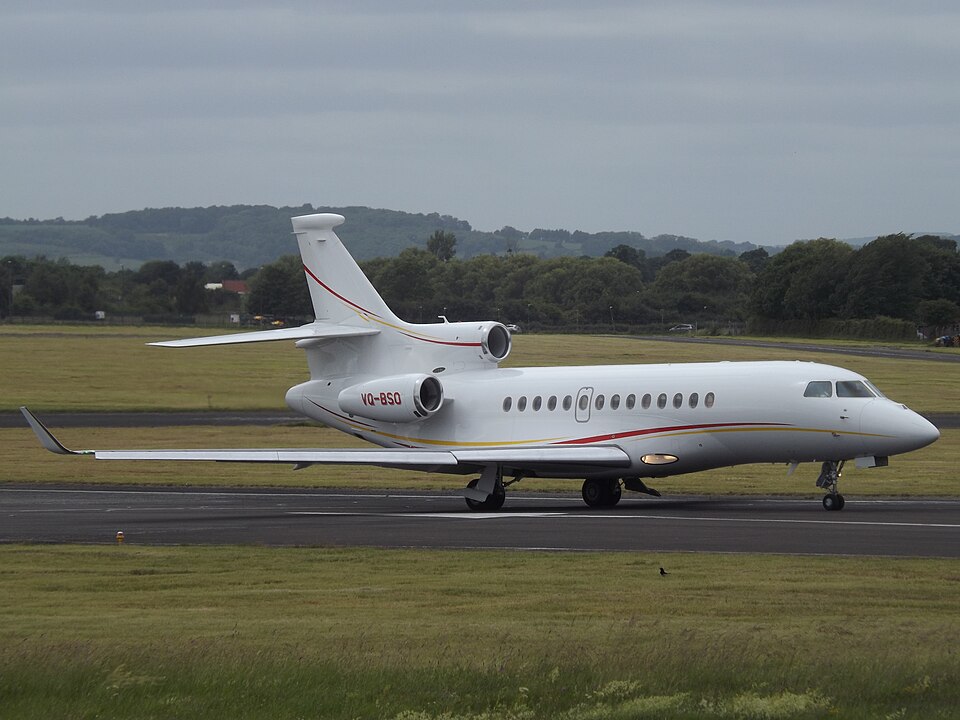
The Dassault Falcon 7X, registration VQ-BSO, had arrived from Rotterdam on a private flight. The weather was good and the apron surface dry. Ground handling staff intended to park the aircraft nose-in to the Jet Centre terminal on the General Aviation (GA) apron. A marshaller and two wing walkers guided VQ-BSO between parked aircraft.
The commander occupied the right pilot's seat, while the copilot, as handling pilot, taxied from the left seat. The copilot followed the taxi line, then the marshaller's signals. The aircraft was marshalled ahead until clear of a parked aircraft on its left, beyond what the copilot thought was the normal turning point. The marshaller then indicated a left turn, followed by a tighter left turn. As the turn tightened, the right wing tip speed increased. The right wing walker realised insufficient clearance and gave a STOP signal by crossing his arms in front of his chest, but this was not seen by the marshaller, who was looking to his right. The right winglet of VQ-BSO struck the nose of a parked Falcon 7X (VQ-BSF). The flight crew felt the impact and stopped the aircraft.
Damage and Injuries
The winglet of VQ-BSO suffered minor abrasions and required no maintenance action. The radome and radar antenna of VQ-BSF were significantly damaged. There were no injuries to persons on board either aircraft or on the ground.
Organisational Information
London City Airport's GA apron has no ground markings for parking or taxiing except the apron entry line and Stand 15. Pilots are instructed to follow marshaller's instructions. The airport is certified under EU Regulation (EU.139/2014). For a Code C aircraft like the Falcon 7X (wingspan 26.21m), minimum clearance distance is 4.5m.
The London City Jet Centre Ramp Instructions require precise signals, use of wing tip marshallers, and attention to wing growth during turns. All ground handling staff were trained and qualified.
Recorded Information
Airport CCTV recorded the incident, showing the increase in speed of the right winglet during the tightened turn.
Contributing Factors
The airport operator assessed the cause as the marshaller's failure to observe the non-standard STOP signals from the right wing walker. Contributory factors included: parking of two large aircraft leaving limited space; late initiation of left turn; marshaller focusing on left wing; right wing walker not providing clear ICAO signals; and no equipment used as additional control measure.