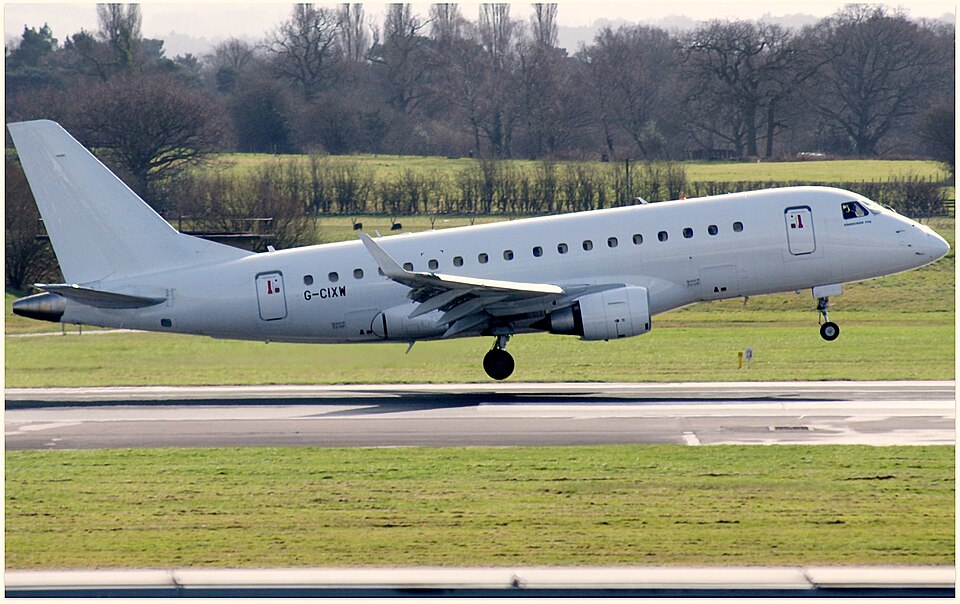
Synopsis
The pilots of G-CIXW, an ERJ 170-100 LR, received a pitch trim failure caution during descent, which was accompanied by an autopilot failure. This resulted in greater nose-down control forces in pitch, requiring the pilot flying to use both hands on the yoke to control the aircraft. A stable approach was flown and a safe landing was made. On landing, a steering system fault was indicated. No injuries or damage were reported.
History of the Flight
The aircraft was operating a commercial passenger flight from Gibraltar to Birmingham Airport. During the descent from FL380, approximately 90 nm from landing, an amber pitch trim fail caution illuminated on the EICAS. The pilot flying disconnected the autopilot to counter the potential threat of a pitch trim runaway. Shortly after, the autopilot fail caution appeared. The pilots continued the descent, actioned the pitch trim fail checklist from the QRH, and determined that both primary and secondary trim systems and the autopilot were inoperative. They did not declare an emergency and continued the descent with ATC vectoring them for the ILS approach to Runway 15. On final approach, the pilot flying required more than normal effort to control pitch. The pilots decided the pilot flying would use both hands on the yoke while the pilot monitoring guarded the throttles (autothrottle remained engaged). On landing, a steer fail caution and a flt ctrl no dispatch caution illuminated. The commander, who had been pilot monitoring, took control and stopped the aircraft on the runway. The crew completed the steer fail checklist and taxied to stand using differential braking and asymmetric power. The commander reported the failures to maintenance.
Aircraft Examination
Maintenance replaced the horizontal stabiliser actuator control electronics unit (HS-ACE) and performed an operational test on the horizontal stabiliser. A defective sensor on the nosewheel steering system was also replaced.
Recorded Information
The event was reported nine days after occurrence, so the cockpit voice recorder was not available. Flight data showed that prior to descent, the autopilot was engaged with pitch trim at -2.4° (nose up). During descent, increasing pitch-down control inputs were recorded with no trim change until a jump to 0° at FL307. About 23 seconds later the master caution triggered, and 24 seconds after that the autopilot was disengaged and remained off. The autopilot system failure parameter became active except for two brief periods when trim position switched back to -2.4°. The last reasonable trim value was -2.4°, indicating less than normal pitch up trim during approach and landing. Flight data monitoring showed the aircraft was speed stable and within 0.6 dots of glideslope.
Aircraft Information
The pitch control system uses a fly-by-wire system with an electro-mechanical horizontal stabiliser. The HS-ACE has dual channels. Failure of both channels causes a pitch trim fail caution. The nosewheel steering system has three modes; freewheel mode allows steering by differential braking and asymmetric thrust.
Tests and Research
Manufacturer analysis of the fault history database suggested that the pitch trim fail symptom was possibly related to degraded performance of the horizontal stabiliser mechanism. It stated that a jam condition of the horizontal stabiliser actuator, due to water ingression from condensation, was the root cause. The manufacturer noted that this aircraft had been parked for some time due to the pandemic, which may have affected lubrication. The actuator ball nut jamming likely caused the pitch trim failure. The steering system fault was due to an unrelated sensor failure.