History of the Flight
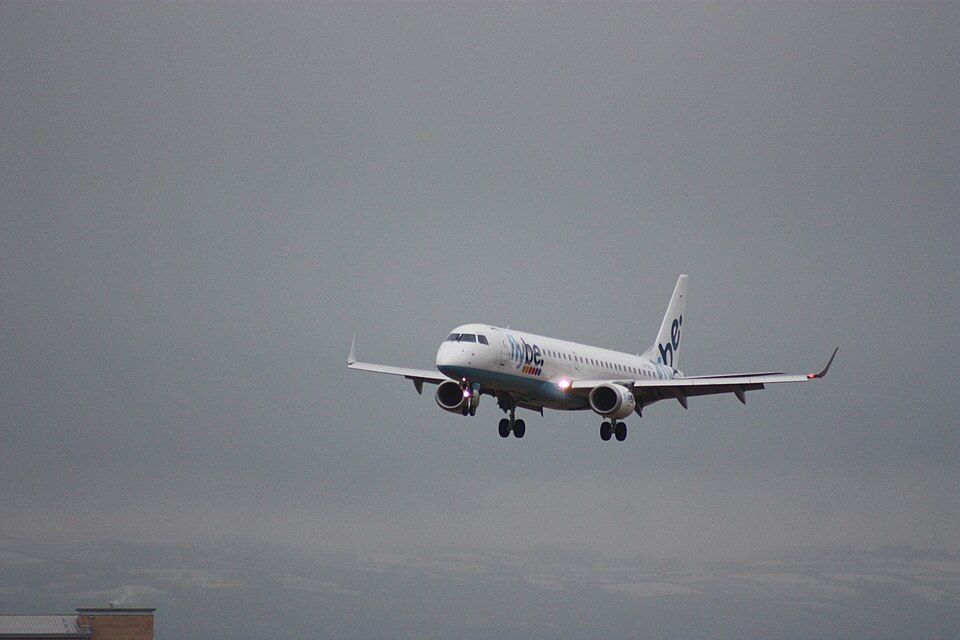
The aircraft, an ERJ 190-200 LR (Embraer 195) registered G-FBEJ, was operating the first sector of the day from Exeter Airport, UK, to Alicante Airport, Spain. While the aircraft was being prepared, both pilots noticed a sweet-smelling odour after the APU and APU bleed were turned on to heat the cabin. They considered such odours not unusual after APU start.
After passenger boarding, the aircraft pushed back and taxied. It was daylight, visibility over 10 km, wind from 210° at 5 kt. The APU was shut down as the aircraft entered Runway 26 for back-track and line-up. Shortly after, while back-tracking, both pilots detected fumes with a different odour, described as like paint or white spirit. They initially thought it might be exhaust gas ingestion due to the wind behind. Upon lining up, they briefly discussed the fumes and decided they were decreasing.
After receiving takeoff clearance, the co-pilot advanced the thrust levers to 40% while holding the brakes, checking normal engine indications. Slowly advancing the thrust levers towards takeoff setting, at about 55% power, he saw what he believed to be a puff of smoke from an air conditioning vent. He immediately retarded the thrust levers to idle. The smell of fumes had worsened and smoke was visibly entering the flight deck.
The commander set the parking brake and asked the co-pilot to turn off engine bleeds and air conditioning packs; flight deck windows were opened for ventilation. No EICAS messages or warnings appeared. The commander contacted the senior cabin crew member (SCCM), who reported smoke and fumes in the cabin but could not identify the source.
Emergency Evacuation
The commander decided to evacuate. The co-pilot selected flap 5, notified ATC of the evacuation intention, and requested assistance. Both pilots performed the Emergency Evacuation vital actions. After the commander ordered evacuation over the passenger address system, they followed the QRH checklist.
The aircraft had six emergency exits: four doors with inflatable slides and two Type III overwing exits. Cabin crew opened their allocated doors; all four slides inflated automatically. Passengers opened the overwing exits.
Passengers reported calm conditions. Most heard and followed announcements. Some attempted to take baggage but most left belongings. Cabin crew were noted as calm and professional.
Overwing Exit Issues
Passengers evacuating via overwing exits experienced confusion once on the wing. They were unsure how to get down to the ground, causing a bottle-neck. Two passengers from the left overwing exit jumped down and assisted others. Many commented on the long drop and slippery wing surface, leading to minor injuries. Some re-entered the cabin to find alternative exits. A 61 cm-wide walkway demarcated in black paint on the wing root was not noticed by passengers, who also reported lack of instructions or guidance on the wing.
Escape Slide Issues
Several passengers found the rear slides very steep and were surprised by the speed; the slides did not round out at the bottom. This, and attempts to slow down, caused injuries. Two passengers assisted others at the bottom of rear slides. One elderly passenger broke an ankle after exiting via D2R (right rear door). Two cabin crew members exiting via rear slides also had difficulty slowing down, one sustaining an ankle injury.
Cabin crew noted some passengers hesitated when instructed to jump and slide; they advised sitting and sliding instead.
Post-Evacuation
When cabin crew believed all passengers had left, they found several standing on the wings unwilling to jump due to height. These were escorted back into the cabin and exited via rear slides. The commander left the flight deck after completing the checklist, confirmed with the SCCM that all evacuated, and left via the forward left slide with the co-pilot and SCCM.
Out of 100 passengers, 93 completed AAIB questionnaires. Figure 2 in the report correlated exit usage by seat position.
The Airport Rescue Fire Fighting Services (ARFFS) entered the aircraft with protective breathing equipment and a thermal imaging camera but could not identify the smoke source. The commander later noted that the slat/flap selector was set to flap 5 but EICAS showed incomplete deployment, concluding insufficient time between selection and engine shutdown.
The flap 5 selection was intended to facilitate evacuation via overwing exits by allowing passengers to slide down extended flaps. The operator later measured the height of the wing trailing edge above ground with flaps not deployed; it exceeded 2 m depending on aircraft weight and fuel load. Figure 3 showed the drop to ground from the wing with flaps in flap 1 setting.
Cause of Smoke and Fumes
The smoke and fumes were subsequently attributed to an incorrectly performed engine compressor wash procedure, carried out by maintenance personnel the night before the occurrence flight.
Safety Actions
As a result, the European Union Aviation Safety Agency (EASA) undertook two safety actions regarding certification requirements for overwing emergency exits. The operator also undertook several safety actions: passenger safety briefings, maintenance planning processes, engineer training, competency and welfare, and monitoring of ground equipment. Four Safety Recommendations were made relating to overwing exit markings and height requirements for assisted means of escape.