Flight History
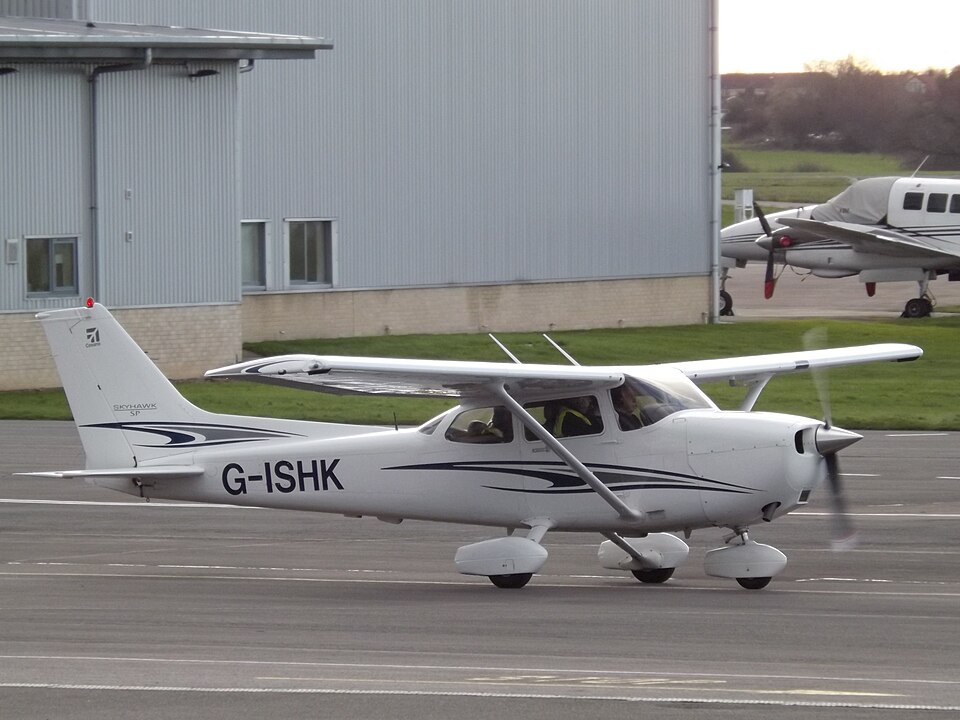
On 19 July 2016 at approximately 13:50 local time, a Cessna 172 SP registered G-ISHK was landing at Angers-Marcé airfield (France) after a flight from Jersey (United Kingdom). The aircraft was operated by an aero club and the flight was for personal convenience. On board were the pilot and two passengers.
The pilot was cleared by air traffic control to join a left-hand circuit for runway 08. He selected landing flap configuration (30°) on final. The approach speed was 75 to 80 knots, while the aircraft flight manual recommends 60 to 70 knots. The pilot considered the approach path correct.
During the flare, the pilot was surprised by a slower than expected response from the aircraft. The aircraft contacted the ground in a nose-down attitude. The propeller and nose gear struck the runway, and the aircraft bounced three times before the pilot managed to complete the landing.
Additional Information
The pilot, a British national, held a valid Private Pilot License (PPL) issued by UK authorities. He had accumulated 308 flight hours but this was his first flight on a Cessna 172. He had not completed a familiarization flight with an instructor on this type. The pilot reported that he was scheduled to fly with an instructor on the day of the accident, but a misunderstanding in the allocation of pilots and instructors among the four club aircraft participating in the trip resulted in him flying solo.
The weather station at Angers-Marcé recorded wind from 100° at 8 knots, with a maximum gust of 15 knots in the previous hour.
Findings
The investigation determined that the pilot's lack of familiarization with the Cessna 172 did not allow him to adapt to its handling characteristics before his first flight as pilot-in-command. He had an excessive approach speed and failed to control the flare, resulting in a landing on the nose gear and subsequent bounces. The nose gear was damaged.