History of the Flight
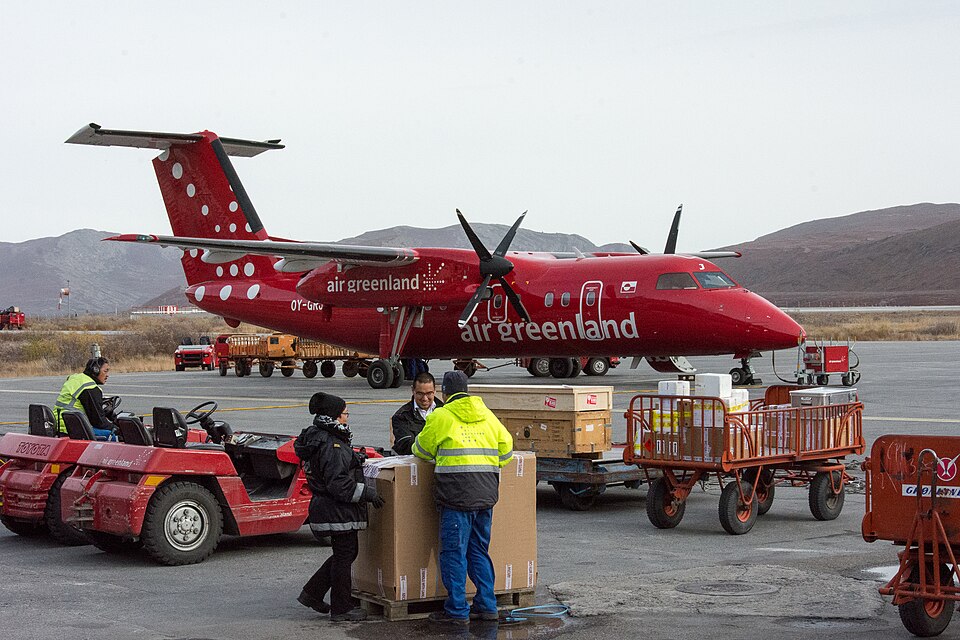
On 30 May 2019, a De Havilland Canada DHC-8-202, registration OY-GRJ, was operating a scheduled domestic passenger flight from Nuuk (BGGH) to Kangerlussuaq (BGSF) under instrument flight rules. The aircraft carried three crew members and 29 passengers. Before departure, an off-duty crew member moved from the cockpit jump seat to a passenger seat to mitigate a forward center of gravity issue. The commander served as pilot monitoring, while the first officer was pilot flying.
During the take-off roll on runway 05, the first officer applied normal backpressure to the elevator at the rotation callout but received no positive response. Full aft backpressure was then applied, but the aircraft did not rotate. The first officer aborted the take-off by retarding power levers to DISC and applying maximum anti-skid braking. The aircraft stopped approximately 50 meters before the runway end. After discussing the situation, the crew taxied back to the apron and requested an external inspection of the wheel brakes. The commander briefed the passengers.
Meteorological and Runway Information
The incident occurred during daylight in visual meteorological conditions. Nuuk Aerodrome Flight Information Service reported runway 05 in use, wind 330° at 5 knots, QNH 1014, temperature 10°C, dry runway, and visibility greater than 10 km. Before engine start, wind was reported as 330° at 3 knots.
Mass and Balance Analysis
Pre-flight mass and balance calculations using standard masses for crew, passengers, and carry-on baggage indicated the center of gravity was within aircraft limitations. However, post-flight calculations using actual masses showed the center of gravity was forward of the operational forward CG limitation. This exceeded the allowable limit and reduced the aircraft's ability to rotate during the take-off roll.
Conclusion
The serious incident resulted from the aircraft being loaded beyond its forward center of gravity operational limitation, which prevented normal rotation and led to an aborted take-off. No injuries or aircraft damage occurred.