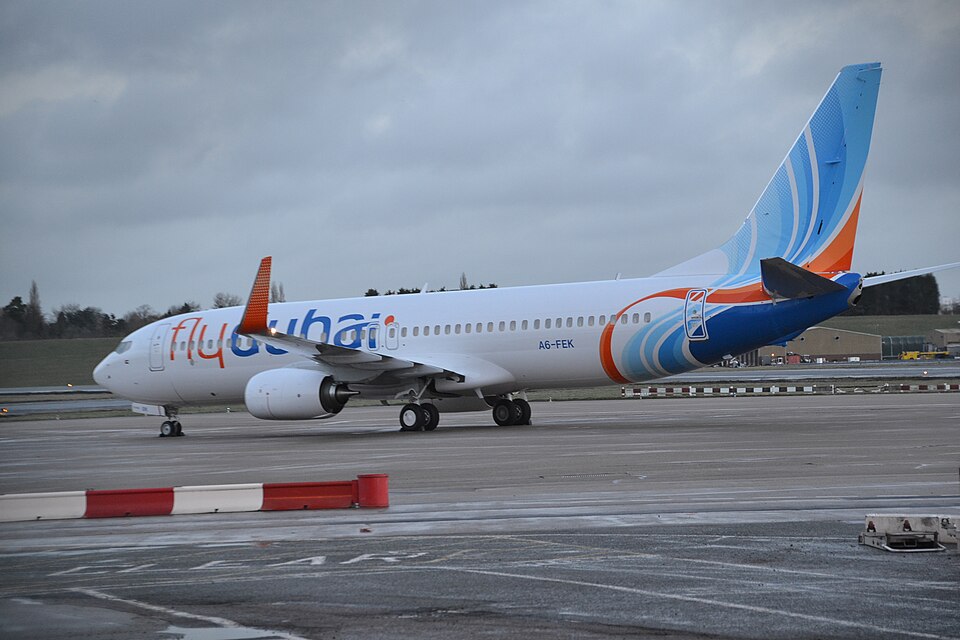
Incident Summary
On 19 April 2014, a Flydubai Boeing 737-800, registration A6-FEK, was en route from Dubai to Kiev. During descent at approximately 15,000 feet, the video display unit (VDU) of the in-flight entertainment (IFE) system at seat 9A began to emit smoke. Cabin crew relocated passengers seated in rows 9A, 9B, and 9C to other seats. The cabin supervisor deactivated power to the IFE system and informed the flight crew via interphone. Another crew member retrieved a fire extinguisher and smoke hood from the forward cabin and discharged the extinguisher in multiple applications until the smoke subsided.
The captain, serving as Pilot Monitoring (PM), declared a mayday with Kiev Air Traffic Control and initiated the 'Smoke, Fire, Fumes' checklist from the Quick Reference Handbook (QRH). While executing the checklist, the cabin supervisor reported that the smoke had ceased and dissipated. The captain resumed PM duties and communicated with ATC until the aircraft landed without further incident. No injuries were reported among the 66 persons on board.
Investigation Findings
The Air Accident Investigation Sector (AAIS) conducted a teardown analysis of the affected VDU. The examination identified that the backlight inverter board's printed circuit board (PCB) emitted gases due to overheating. The overheating resulted from increased current demand following a break in the secondary coil of the transformer, which led to failure of the primary side transistor components. Additionally, the fuse failed to open quickly enough to isolate the circuit, attributed to its inappropriate rating for the VDU application. The investigation noted that the fuse's material may have contributed to heat transfer through conduction between the fuse and the PCB.
Causes
The causes of the smoke emission were determined to be: gases emitted from the PCB of the VDU backlight inverter board; heat generated by increased current demand after a break in the transformer's secondary coil and subsequent failure of primary side transistor components; and the fuse's failure to open promptly due to its inappropriate rating. A contributing factor was that the fuse material may have facilitated heat conduction.
Safety Recommendations
The report includes four safety recommendations. Two are directed to the operator, Flydubai: to ship any removed VDU to the manufacturer for replacement of the fiberglass substrate material fuse with a ceramic body, suspended-in-air filament fuse; and for future orders of aircraft equipped with similar VDU part numbers, to ensure the VDU is of the modified LED backlight or modified open-to-air fuse standard. Two recommendations are addressed to the General Civil Aviation Authority (GCAA) of the United Arab Emirates: to ensure that any future Supplemental Type Certificate (STC) for IFE installation on UAE-registered aircraft references the modified VDU in the materials section; and to disseminate the report's information to all UAE operators for proactive action regarding existing affected VDUs or future aircraft additions with similar VDU part numbers.