Flight History
The flight conducted two instrument approaches to minimums, executing missed approaches both times. The crew then elected to land approximately 25 miles south of the destination and wait for the low ceiling conditions to improve. After refueling and confirming via telephone that the destination weather was improving, the flight re-launched to its original destination.
Approach and Maneuver
The crew executed a GPS-A (circling) instrument approach. They broke out of instrument conditions at about 100 feet above minimums (600 feet above ground level) and approximately one mile from the runway. The pilot began a right downwind turn to enter a left base leg for landing on runway 30. During the turn to final approach, the crew extended the landing gear and flaps. According to the copilot, the pilot flew through the extended runway centerline, requiring a teardrop turn back toward the runway. In the turn, the bank angle reached about 45 degrees, and the descent rate increased rapidly. A faint stall warning sounded, then the nose pitched down. The pilot-in-command screamed as he shoved both throttles full forward and pulled back on the yoke with both hands. As the nose came above the horizon, the aircraft impacted the ground. The wings were fairly level, and the main landing gear struck first, with the aircraft paralleling the runway about fifty feet to the right.
Impact and Injuries
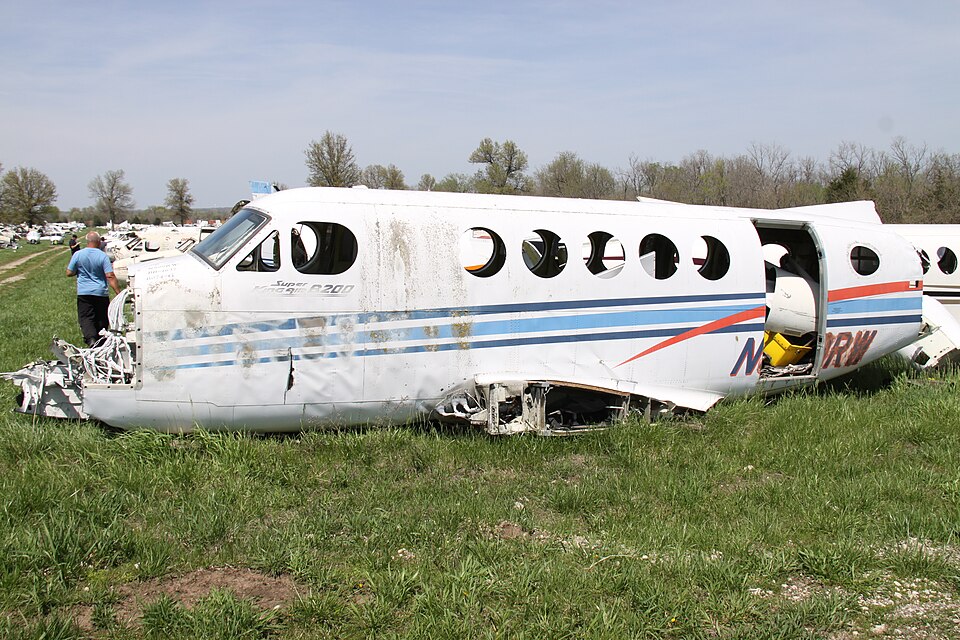
The impact sheared off the landing gear, shed the propellers, broke the engines from their mounts, started a fire in the left engine, and broke open the fuselage three feet aft of the cabin pressure bulkhead. The two pilots and three of the four passengers sustained minor injuries; one passenger received serious injuries.
Cockpit Voice Recorder Data
The cockpit voice recorder was sent to the NTSB Vehicle Recorders Laboratory. Readout of the cockpit area microphone revealed that 6.4 seconds before impact, the stall warning sounded; 4.4 seconds before impact, the altitude alerter sounded.