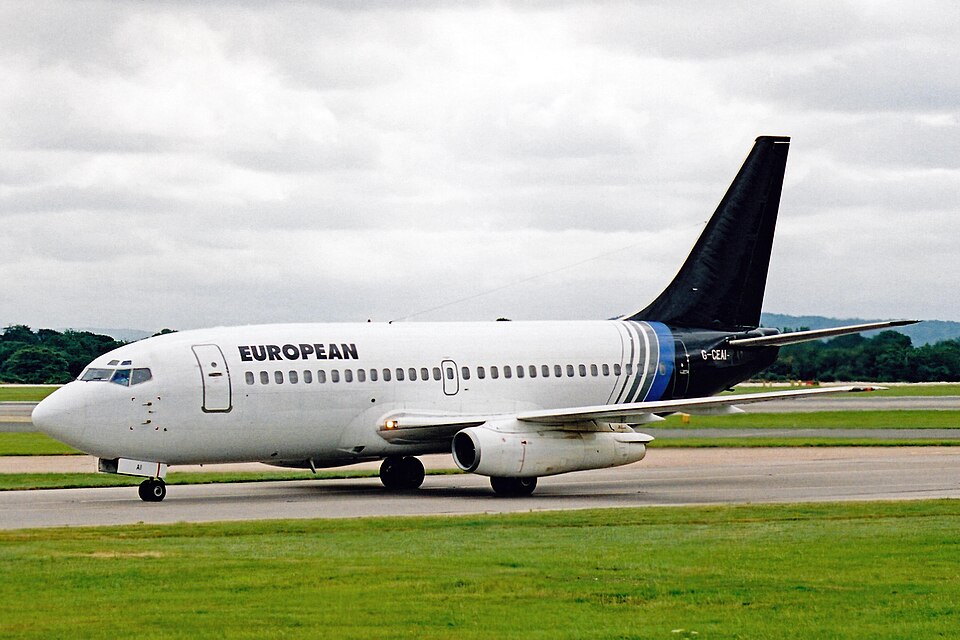
History of the Flight
The aircraft, a Boeing 737-229 registered G-CEAI, was departing Bournemouth International Airport on a positioning flight to London Gatwick. During initial taxi, the first officer's instantaneous vertical speed indicator (IVSI) and the weather radar transmitter/receiver failed, and the antiskid inoperative captions illuminated. The aircraft returned to stand, where engineers replaced the IVSI and radar and rectified the anti-skid problem by reconnecting a loose terminal block. The aircraft then taxied and took off.
Shortly after being cleared from flight level 70 to 80 by London Area Control Centre, the first officer selected ALT SEL on the autopilot mode control panel. The ALT ACQUIRE caption illuminated instead of the expected ALT SEL. The crew reselected but got the same result. The antiskid failure captions then illuminated brightly, despite having been set to dim. As the pilots discussed returning to Bournemouth because of these anomalies, all remaining captions illuminated, accompanied by a distinct smell of electrical burning. The crew immediately declared a MAYDAY, donned emergency oxygen masks, and began a descent. After landing, the crew shut down the aircraft with the fire service in attendance. No fumes were detected inside, so the aircraft was evacuated via a fire ladder at the front left passenger door. Both pilots received oxygen because they were suffering from light-headedness and tingling in the fingers.
Technical Examination
After the crew left, ground engineers disconnected the battery and towed the aircraft to the hangar. Initial visual examination revealed no evidence of burning. Subsequent tests involved the battery, auxiliary power unit, and both engines running with generators connected, but no smoke or fumes were detected. When the altitude alert unit (AAU) was checked, the warning lights flickered and the circuit breaker for Zone 6 popped. Examination of the AAU control unit showed no fault, but the co-pilot's annunciator connector exhibited evidence of burning. With the annunciator disconnected, the system functioned without disturbing the circuit breaker.
The burning appeared to have been caused by water ingress into the flight deck. A test with a hose pipe playing water over the windscreen area (with power off) showed a slight leak from the co-pilot's windscreen and a larger leak from the windscreen wiper sealing boot. After resealing the windscreen and replacing the boot, subsequent leak checks were satisfactory. The aircraft maintenance company considered that the earlier IVSI failure was also likely due to water ingress, as it is the only electrical unit in that area with cooling holes. The company decided to inspect for water ingress behind the instrument panel at the next hangar visit for the remaining Boeing 737 fleet and to repeat the inspection at each C check.