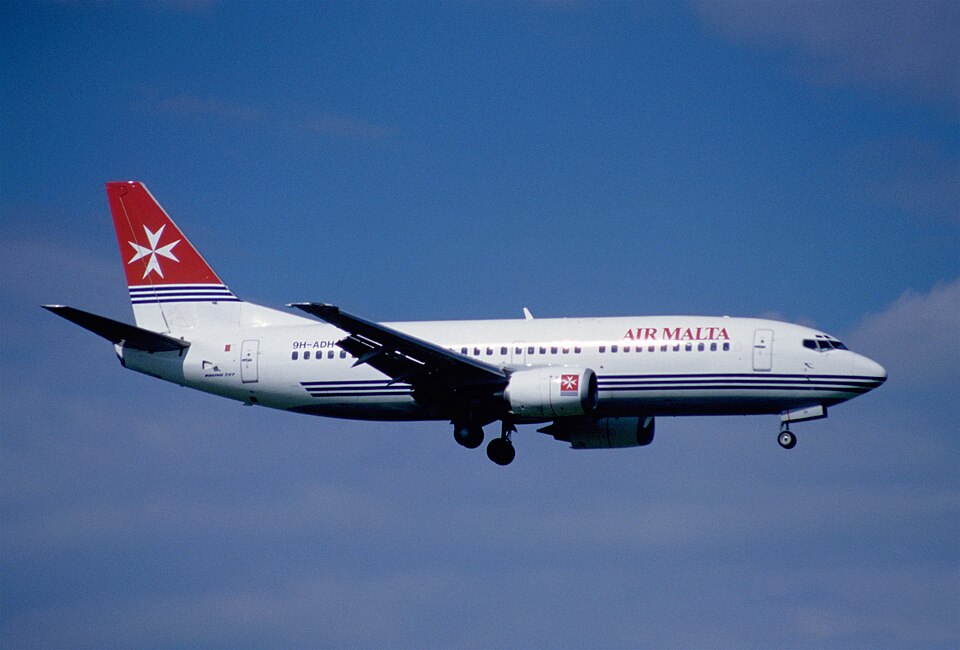
History of Flight
The flight was scheduled from Glasgow to Malta. Pre-flight preparations were normal, and the aircraft taxied to Runway 23. During the takeoff roll, the crew sensed nothing unusual, but shortly after becoming airborne, the first officer observed a rapid decrease in A system hydraulic quantity. Simultaneously, the commander selected the landing gear lever to UP; the gear failed to retract, all three red gear unsafe warning lights illuminated, two green down-and-locked lights illuminated (except the left main landing gear light), and the HYD master caution light activated. The aircraft was levelled at 3,000 feet, and air traffic control (ATC) was informed. ATC offered an immediate return, but the crew declined due to weight considerations. They decided to hold to burn off fuel.
Ground movement control at Glasgow noticed a white stream from the aircraft about five seconds after takeoff. This information was relayed to the crew, who confirmed the loss of the A hydraulic system. The runway was closed after a recently landed Boeing 757 crew reported tyre debris on the runway. The debris was cleared, and the runway reopened.
Meanwhile, the crew attempted to ascertain the condition of the left main landing gear (MLG), as no green down-and-locked indication was present. Using a gear viewer in the cabin floor, they confirmed the gear appeared down but could not see the wheel or tyre. A flypast of the tower was arranged, during which an engineer visually confirmed that the left inboard main wheel (No 2) tyre was damaged or missing and that the left MLG was down. The aircraft continued holding to burn fuel. Approximately three hours later, it landed safely at Glasgow.
Aircraft Examination
Post-flight examination revealed that the No 2 tyre had shed its tread, deflated, and become detached from the wheel rim. Tyre debris was found lodged against the left rear spar near aileron and spoiler control cables, and wrapped around the left MLG actuator. Hydraulic lines supplying the MLG transfer unit (part of the A hydraulic system) were damaged, causing fluid leakage and subsequent failure of the No 1 engine hydraulic pump. The left inboard trailing edge flap, mid flap, and fore flap were also damaged by debris. There was evidence of debris striking the fuselage above the wing and the lower surface of the left horizontal stabiliser.
The left MLG side stay lock link was bent by debris impact, preventing insertion of the ground lock pin and misaligning the proximity sensor, which precluded illumination of the left MLG green down-and-locked light.
Tyre Examination and Findings
The tyre was a H40 x 14.5 x 19, 24-ply rating, manufactured in 2000. It had been retreaded for the sixth time (R-6) on 5 February 2004, the maximum allowable retread. Shoulder-to-shoulder Shearography after retread showed no anomalies. The tyre was fitted to the aircraft on 22 July 2004 and had completed 230 cycles. Tyre pressure checks every 24 hours were within 5% of required values.
The tyre was sent to the manufacturer for detailed examination. It exhibited full shoulder-to-shoulder tread loss, separation at the outermost fabric layer, and was close to its wear limit. There were two sidewall ruptures and severe inner liner damage, consistent with running with little or no pressure. Nylon cords in several plies were broken, attributed to fatigue. No foreign object damage or manufacturing defects were found. The manufacturer concluded that the probable cause of tread loss was fatigue in the nylon cords of the lower sidewall. This allowed the inner liner to split, air to pressurise the carcass, leading to sidewall rupture and deflation. It could not be determined if tread loss occurred before or after pressure loss. The wheel assembly and companion tyre tested with no leaks; the companion tyre showed signs of overload damage consistent with the failure.
Operator Actions Taken
In response, the operator implemented several safety measures: a new retread limit of R-3 on all Boeing 737-300 tyres; full bead-to-bead Shearography after retreads instead of shoulder-to-shoulder; a maintenance instruction clarifying correct tyre pressures; removal of tyres manufactured in 2000 or with retread level 4 or above; for flights from Malta, takeoff with flaps 5 only; and briefing flight crews on tyre condition vigilance during pre-flight inspection. No recommendations were made in this report.
Probable Cause
The probable cause of the tyre tread loss was fatigue in the nylon cords of the lower sidewall.