History of the Event
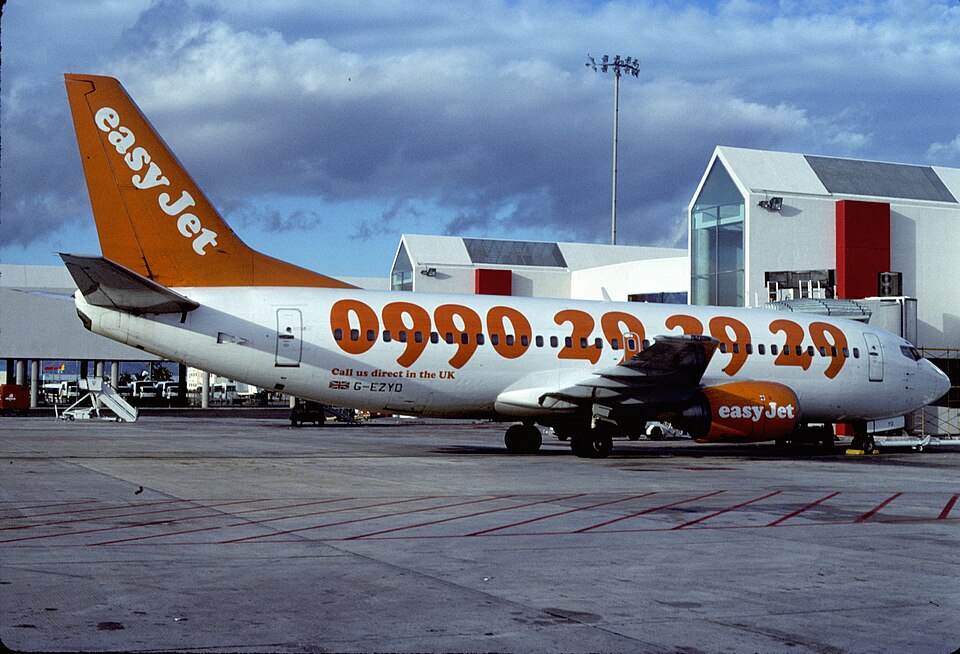
The aircraft, a Boeing 737-3M8 registered G-EZYD, had flown from Luton to Edinburgh and parked at Stand 7 at 1425 hrs on a southerly heading. After passengers disembarked, the crew completed shut-down checks. The commander instructed the crew to secure the aircraft as the next crew was not due for some time. Company procedure for unattended aircraft required all doors closed with airstairs retracted. The crew assembled at the foot of the forward left (L1) door airstairs. The commander climbed the stairs to close the door. While shutting it, he lost his balance and fell head first through the gap in the right-hand rails onto the tarmac approximately 2 metres below.
Injuries and Response
The commander suffered a fractured skull. Immediate first aid was given by the senior cabin crew member. Emergency services arrived three minutes later. Additional medical assistance came from the on-coming cabin crew and two doctors and a nurse who responded to public address requests. Paramedics arrived at 1455 hrs and an ambulance at 1500 hrs.
Meteorological Conditions
Surface conditions were dry. A strong wind warning was in force with westerly winds forecast at 15 kt, gusting to 27 kt. The recorded wind at the time was 230°/15 kt. With the aircraft parked on a southerly heading, the wind could pass over the nose and blow down the side of the cabin. The First Officer suggested wind might have been a factor, but the proximity of buildings and structures made local wind velocity difficult to define.
Security Regulations
Heightened security measures mandated by the Department for Transport required that aircraft in restricted zones, when unattended, have doors closed, steps removed, and air bridges withdrawn. The main apron was part of the restricted zone.
Door and Airstairs Inspection
Police and Health and Safety Executive conducted an initial investigation. The aircraft was released at 1930 hrs, and the operator inspected the airstairs. They were fully deployed and locked, with no evidence of contamination or damage to non-slip covering or handrails. The L1 door operated normally throughout its full range with no malfunction. No defects had been entered in the aircraft technical log.
Closing the door from outside required the handrails to be stowed, leaving a gap of approximately 0.75 metres on each side to allow door movement. To close the door, a person stands on step four or five, releases the gust lock, and swings the door 180° using both hands, then stands on the top step to operate the external locking handle.
Previous Incidents
Boeing data indicated no reports of injury to flight crew during L1 door operation from forward airstairs. However, three reports involved other people falling from airstairs: a cleaner probably operating the door, another cleaner during heavy rain, and a mechanic found unconscious near airstairs with the door partially opened.
Subsequent Actions
The operator issued an Aircrew Notice describing the event and reminding crews to take care when closing the L1 door from airstairs. There was no guidance in Boeing or operator manuals on closing the door from outside with airstairs deployed. Training for ab-initio pilots included opening and closing the door and extending/retracting airstairs during an aircraft visit, but type-rated pilots did not receive formal training. Line training provided opportunity on a 'need to' basis.
The operator revised the procedure: the L1 door is now secured from inside the aircraft by cabin crew, who are fully trained, and the crew leave via the rear steps, which are then removed.