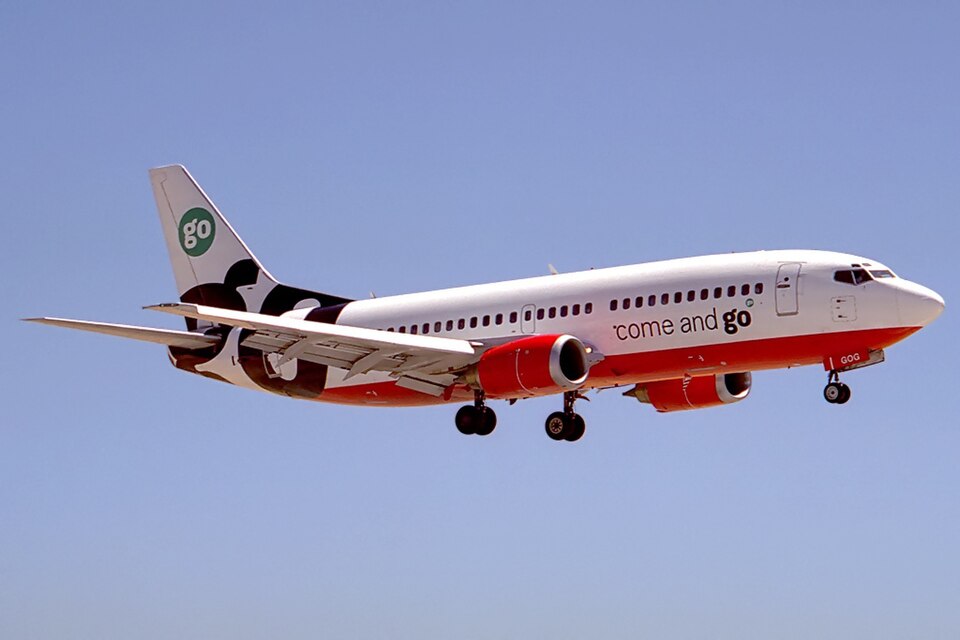
First Incident on 25 May 2000
The aircraft, a Boeing 737-3Y0 registered G-IGOG, was operating a scheduled passenger flight from Venice to London Stansted. While cruising at Flight Level 350 in the vicinity of Brussels, the commander noticed his ears popping and observed the cabin altitude rate of climb indicating nearly 2,000 feet per minute. The pressurization system automatically reverted to standby mode before the first officer could select it manually, but this did not arrest the climb. The first officer then selected manual operation to close the main outflow valve, yet the cabin altitude continued to rise.
The flight crew donned oxygen masks and initiated an emergency descent. The commander manually deployed the passenger oxygen masks. Air traffic control at Maastricht provided radar vectoring to keep the aircraft clear of other traffic. During the descent, the crew experienced difficulty communicating because the intercom volume button had not been pressed down. The first officer set the transponder to code 7700. The descent was stopped at Flight Level 100.
In the passenger cabin, four cabin crew members were conducting in-flight service when the oxygen masks deployed. They immediately sat down, fastened seat belts, and put on masks. The senior cabin crew member (SCCM) observed some passengers swapping masks, which he attributed to them not sensing oxygen flow and assuming the masks were faulty. He made a public address announcement reassuring passengers that the masks were working and instructed them to keep their current masks. Although some concern existed, passengers remained controlled and followed instructions. The cabin and galleys were secured, and the SCCM relayed information from the flight deck to passengers. As an emergency diversion was not necessary and sufficient fuel remained, the flight continued to Stansted.
The operator, with assistance from the manufacturer, conducted an engineering investigation. A fault was identified in the feedback loop between the pressure controller and the outflow valve. The outflow valve was replaced, and after ground and air testing, the aircraft returned to service.
Second Incident on 27 May 2000
On 27 May 2000, the same aircraft flew from Stansted to Alicante without issue. However, on the return sector to Stansted, at the top of the descent, engine power was reduced and the cabin altitude began climbing at 4,000 feet per minute. A PAN call was transmitted, and the aircraft descended. The pressurization system automatically reverted to standby mode, which controlled the pressurization sufficiently to prevent the oxygen masks from deploying. Since there were no ill effects, the flight continued to Stansted at Flight Level 100.
A further engineering investigation traced the cause to two separate system failures. One was an intermittent fault in the Number One Transfer Relay in the electrical system, which caused the cabin pressurization controller to enter a 'Hold' mode (as referenced in Boeing In-Service Activity Report No 9816). In this mode, the cabin outflow valve 'froze' in the cruise position and did not automatically fail to standby. A strip report for the relay confirmed evidence of arcing or shorting. The second issue was an intermittent pneumatic defect: a sluggish High Pressure Shut-off Valve (HPSOV) on Number 1 engine, which reduced air supply to the cabin when the thrust levers were retarded. Either failure occurring alone would not have resulted in cabin depressurization, but together they caused insufficient airflow to maintain cabin altitude.