History of Flight
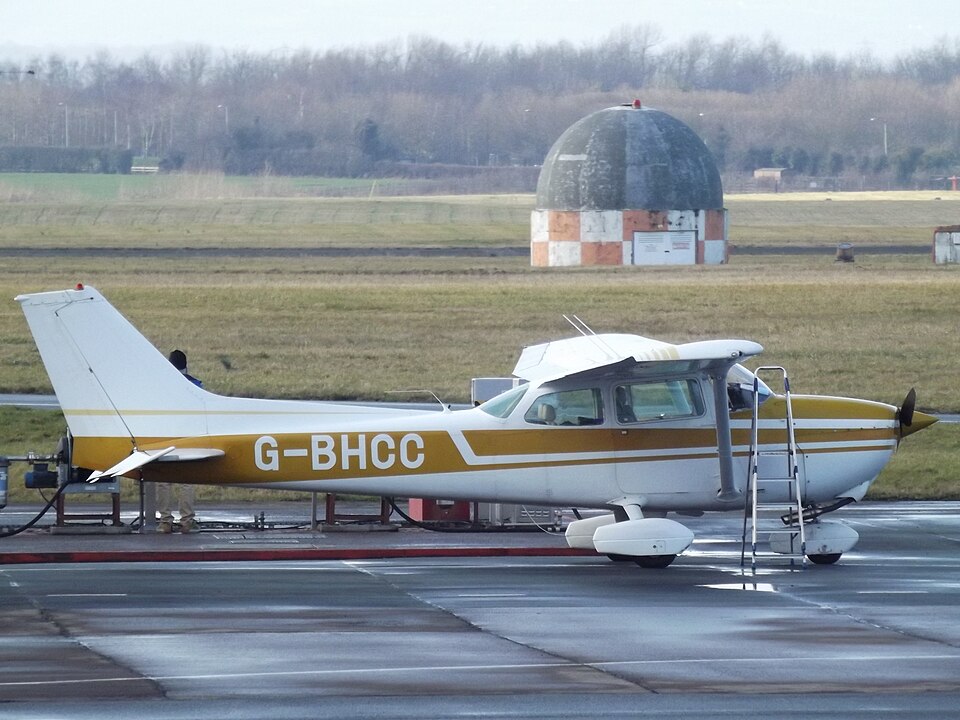
On 24 January 2006, a Cessna 172M Skyhawk (registration G-BHCC) was on a solo training flight from Gloucestershire Airport. The pilot, aged 49 with 52 total flying hours (21 on type), had recently completed the JAA Private Pilot's Licence syllabus and skills test. The weather was hazy with visibility of 7 km and no cloud below 3,500 ft; winds were light.
After takeoff, at approximately 200 ft above ground level, a red warning light illuminated on the instrument panel. The pilot assumed it was the STARTER warning light and declared an emergency, requesting a priority landing from air traffic control. He commenced a left turn downwind from about 500 ft.
Approach and Landing
While on the downwind leg for Runway 09, the pilot realised he was too close to the runway for a proper finals turn. ATC advised that due to light winds, any runway was available. The pilot attempted to position for Runway 04 but again found himself too close. ATC then suggested Runway 27, which he accepted.
On final approach for Runway 27, the pilot was too high and too fast. Reluctant to go around for fear of aggravating a perceived engine problem, he continued. The aircraft touched down heavily at least halfway along the 1,419 m runway (landing distance available 997 m), bounced two or three times, and came to a stop near the threshold of Runway 09.
Warning Light Misidentification
After shutting down the engine, the pilot realised he had misidentified the warning light. It was actually the LOW VOLTAGE light, not the STARTER light. He had misread the placard because the LOW VOLTAGE light in the Cessna 172 is the same size, shape, and position as the STARTER warning light in the Piper Warrior, the aircraft in which he had most of his training.
Damage and Cause
Inspection revealed damage to the nose wheel, bent nose leg fork, creased firewall, and buckled floor panelling behind the firewall. The LOW VOLTAGE light had illuminated due to an alternator drive problem.
The pilot's instructor debriefed him extensively, and the flying school modified its training practices to improve understanding of warning light indications and appropriate actions.
Conclusion
A misidentified warning light soon after takeoff led the inexperienced pilot to become anxious. In his effort to land quickly, he repeatedly misjudged his circuit positioning and final approach, resulting in a firm landing that damaged the aircraft.