Accident Overview
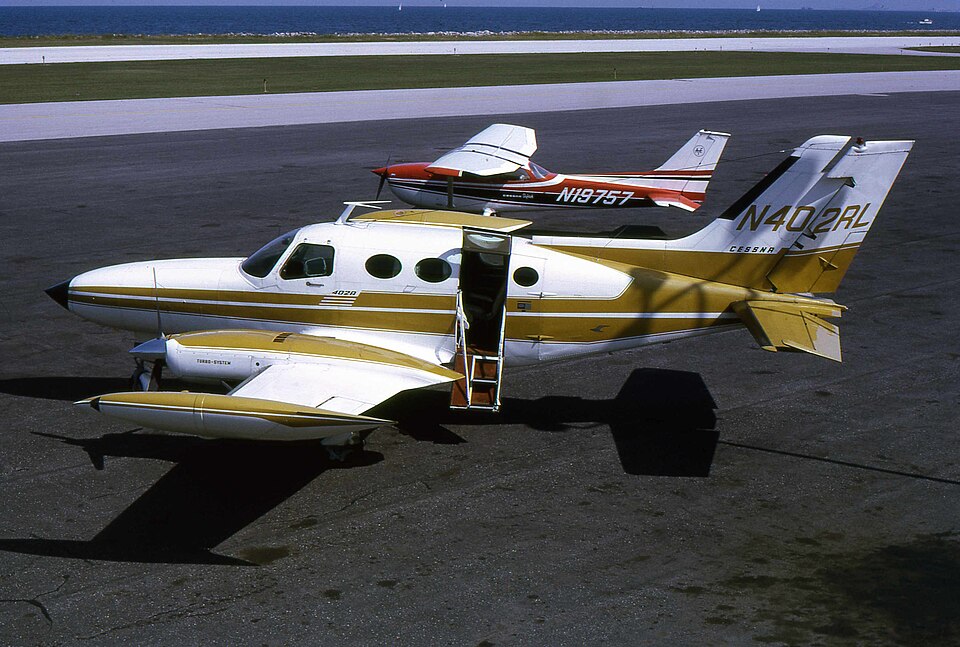
On a foggy dawn, shortly after takeoff, the aircraft collided with electrical transmission wires approximately one mile from the departure end of the runway. The collision occurred on an extended line about 50 degrees left of the extended runway centerline. The left wing tip fuel tank (left main) was partially severed, breaching the tank. Additionally, the top of the vertical stabilizer and rudder were severed, and a portion of the windscreen separated.
Sequence of Events
Following the wire strike, the aircraft continued to fly for about 20 minutes before impacting terrain in a steep right wing down attitude into a densely wooded area surrounded by open terrain. The post-impact fire precluded determination of engine malfunction, systems discrepancies, or wire-strike damage to the left propeller. No determination of pilot incapacitation was possible due to the fire.
Witness Statements and Findings
Based on a ground witness statement, the left engine was probably inoperative after the wire strike. The impact attitude was inconsistent with a decreasing-speed loss of control with the left engine inoperative. However, the flight control trim settings, left main fuel tank selection, and throttle quadrant settings may have been indicative of pilot incapacitation that precluded proper emergency procedure response. The operator suggested that the autopilot trim may have been improperly set, precipitating a nose pitch down upon engagement of the autopilot during the climb.
Probable Cause
The official probable cause was the failure of the pilot to maintain the proper climb rate and direction of flight following takeoff, resulting in a collision with obstacles. The reason for the loss of control and subsequent unusual attitude ground impact was not determined.