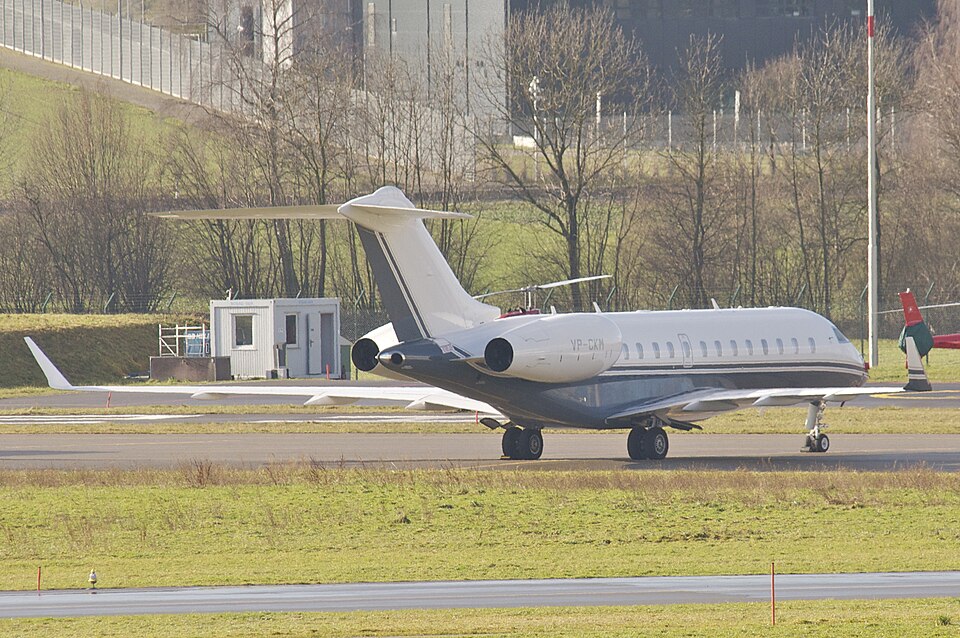
Background
The aircraft registered VP-CKM departed Sheffield at 0622 hours, destined for Fairoaks Airport with London Heathrow as an alternate. At 0650 hours, the crew contacted the Fairoaks Aerodrome Flight Information Service Officer (AFISO), who advised them not to land until the normal operating time at 0700 hours, when fire cover would be available. The reported weather included clear sky, mist with a visibility of 1,200 meters, surface wind from 060° at less than 5 knots, QNH 1002 mb, and QFE 1005 mb.
Approach and Landing
The commander, acting as handling pilot, initially approached Runway 06 at 1,000 feet agl using the Fairoaks Non-directional Radio Beacon and the Flight Management System. Neither pilot saw the airfield until overhead, so they decided to approach Runway 24 due to better visibility in that direction, with AFISO approval. The AFISO activated the Abbreviated Precision Approach Path Indicators (APAPIs) for Runway 24. The commander flew a teardrop pattern east of the airfield and established the aircraft on a track of 240°. During the pattern, landing gear was extended and flaps set to an intermediate position.
At 1.8 nm DME, the co-pilot observed the APAPIs slightly left of the nose, showing 'two whites', at 1,000 feet agl and 124 knots indicated airspeed. The crew was then advised to land at their discretion with calm wind. Full flap was selected, and the commander noted the speed on short finals as 104 knots. As the aircraft approached the threshold, the commander called for speedbrake deployment; the co-pilot deployed them at 0.5 nm DME, noting the FMS indicated a tailwind of 5 knots.
The commander assessed the touchdown as positive and just beyond the threshold; the co-pilot believed it was just past the APAPIs. Immediately after touchdown, the commander selected full thrust reverse on both engines and applied moderate wheel braking. Initially, retardation seemed adequate but then reduced. The co-pilot, not aware of retardation, applied maximum brake pedal pressure, noticing the runway was damp and appeared 'shiny'.
Overrun and Evacuation
Realizing the aircraft would not stop before the runway end, the commander stowed the thrust reversers and attempted to close down the engines. During the landing roll, the co-pilot heard a call of 'going round' and saw the commander stow the reversers. After leaving the paved surface, the aircraft traveled 250 meters before coming to rest. The passenger evacuated through the cabin escape hatch, followed by the co-pilot, who then opened the cabin door from outside and assisted the commander in leaving. The commander sustained back injuries; the co-pilot received cuts and bruises.
Probable Cause
The investigation indicated no technical reason for the overrun. The APAPIs were not set at the glideslope angle described in the Jeppesen approach charts, but the error of one-quarter degree should not have affected the touchdown point. The commander was likely flying to land close to the threshold. Before departure, he calculated landing distance for the expected weight with zero wind, which was 30 to 40 meters longer than required for Runway 24. However, the initial approach was for Runway 06, which has 53 meters less landing distance than Runway 24, making it insufficient by at least 13 meters. The commander could not land on Runway 06 due to sun visibility and opted for Runway 24.
The landing distance available on Runway 24 was more than required on a dry runway with no wind. However, the reported calm wind and FMS-indicated tailwind of 5 knots, combined with the damp runway surface, reduced braking effectiveness. The commander did not apply recommended safety factors and the touchdown point was farther down the runway than intended, as corroborated by outside observers and recorded data. The premature deselection of thrust reverse approximately 6 seconds before leaving the runway reduced deceleration and resulted in a longer overrun. The Flight Manual warns against attempting a go-around once thrust reverse has been selected; the commander deselected reverse in preparation for a go-around but did not advance power, later stating he did so to shut down engines and reduce fire risk.