History of the Flight
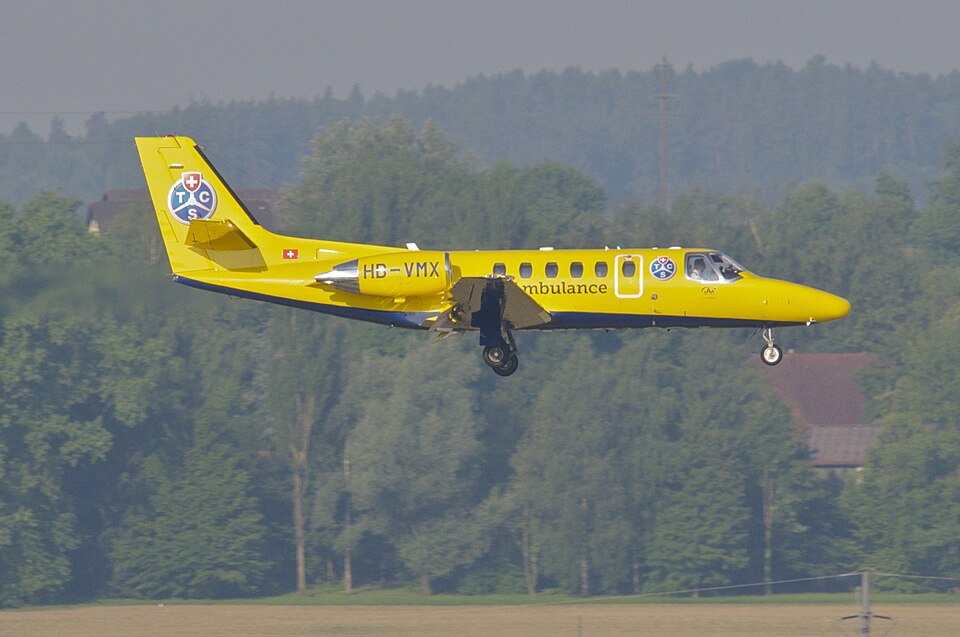
The aircraft, a Cessna Citation 550 registered HB-VMX, departed from Zurich and made a standard visual approach to runway 20 at Oxford Airport. The crew performed a short field landing. After touchdown, the brakes were applied, followed by thrust reverser deployment and speed brake extension. Shortly thereafter, the landing gear warning horn sounded, the landing gear warning light illuminated, and the nose landing gear green light extinguished. The nose landing gear then collapsed, and the aircraft slid to a halt on the runway.
Evacuation and Damage
The crew conducted an emergency shut down, and all five occupants evacuated the aircraft without injuries. The airport fire service attended but found no fire. Damage was limited to the nose landing gear and the forward fuselage area. Photographs of the scene were provided by Oxford Air Traffic Control. The aircraft was recovered from the runway and, after local repairs, flown back to its base in Switzerland.
Manufacturer's Investigation
Cessna reported that six similar occurrences had been noted, prompting an engineering investigation. Through testing, the manufacturer determined that a check (non-return) valve in the landing gear hydraulic system return circuit could, under certain conditions, allow a pressure spike to travel back through the valve and unlock the nose landing gear actuator downlock. Such pressure spikes could be generated by activating either the speed brakes or thrust reversers upon landing. The manufacturer concluded that simultaneously activating these systems with nose wheel touchdown could cause the nose landing gear to retract.
Safety Actions Taken
As an interim measure, Cessna issued a revision to the Airplane Flight Manual, cautioning crews not to operate the speed brakes or thrust reversers until the nose wheel is in firm contact with the ground. For a permanent solution, Cessna, in cooperation with the Federal Aviation Administration and a vendor, began working to certify a new check valve.