Pilot misidentifies landing surface during training flight in Uruguay

Casualties unknown • UY

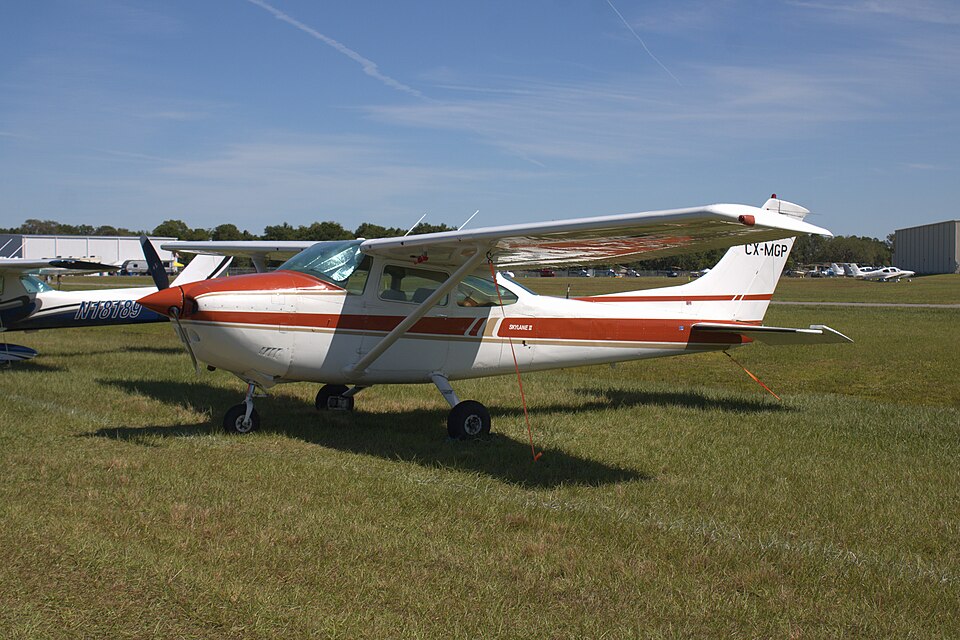
A Cessna 182Q sustained significant damage after the pilot mistakenly landed on an adjacent field instead of the active runway at Florida Aerodrome.

What happened

On June 28, 2018, a Cessna 182Q, registration CX-MGP, was conducting a training and pleasure flight from Angel Adami International Airport to Florida Aerodrome (SUFL). The flight was operated by a pilot in command accompanied by a second pilot.

As the aircraft approached runway 36, the pilot observed a patch of vibrant green terrain. Believing this surface to be the active runway, the pilot proceeded with the landing. Upon touchdown, the pilot experienced an unusual sensation as the surface transitioned abruptly. While attempting to apply brakes, the aircraft began to skid, and the nose gear struck a ditch. This impact fractured the nose gear support and caused the left wingtip to strike the irregular ground. The aircraft eventually came to a halt against a perimeter fence. Both occupants exited the aircraft unharmed, and no fire occurred.

The investigation

The CIAIA investigation examined the operational procedures, the aircraft's technical condition, and the environmental factors at the time of the accident. The investigation noted that the pilot had operated at Florida Aerodrome a few times previously, but the most recent visit was three months prior.

Investigators analyzed the visual environment, noting that the pilot likely experienced a visual illusion. The adjacent field, due to its intense green color, appeared to be a suitable landing strip from the final approach. The investigation also reviewed the airfield's documentation, finding that official aeronautical information for the site had not been updated by the national authority (DINACIA) since 1997, leading pilots to rely on unofficial satellite imagery for reference.

Findings

  • The primary cause of the accident was the confusion of the landing site.
  • The pilot failed to follow standard operational procedures for landing at uncontrolled airfields, specifically regarding the verification of runway boundaries and obstacles.
  • A visual illusion contributed to the error, as the pilot misidentified a contiguous plot of land as the runway.
  • The aircraft's nose gear sustained a fracture, and the propeller, engine cowlings, and left wing were damaged.
  • The aircraft was operating within weight and balance limits, and all required documentation and airworthiness certificates were valid.
  • Meteorological conditions were optimal, with calm winds and good visibility.

Probable cause

The accident was caused by the pilot misidentifying an adjacent field as the active runway due to visual illusions, compounded by a failure to follow established operational procedures for landing on unpaved or uncontrolled strips.

Frequently asked questions

What happened in the null aircraft accident near UY?

A Cessna 182Q sustained significant damage after the pilot mistakenly landed on an adjacent field instead of the active runway at Florida Aerodrome.

What aircraft was involved and where did it happen?

The accident on null involved a aircraft, registration CX-MGP, at UY.

What was the probable cause of the accident?

The accident was caused by the pilot misidentifying an adjacent field as the active runway due to visual illusions, compounded by a failure to follow established operational procedures for landing on unpaved or uncontrolled strips.

Loading the flight search…