Flight and Crew
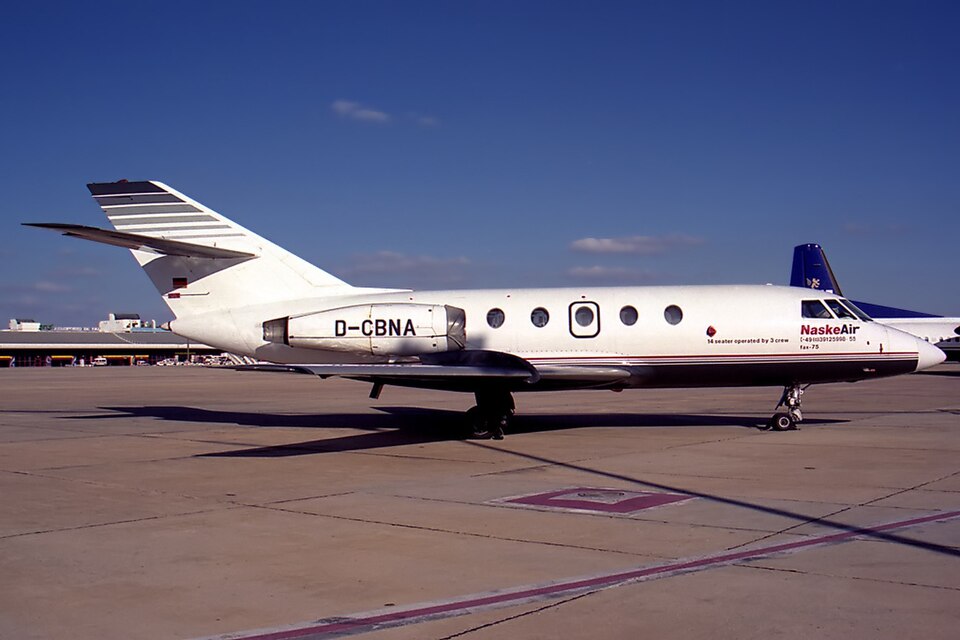
The accident occurred during a non-scheduled international cargo flight from Gdansk, Poland (EPGD) to Louisville, Kentucky (KSDF). The flight crew had previously positioned the aircraft from Hanover to Palma de Mallorca and then to Gdansk. The flight was chartered by a cargo courier to depart Gdansk at 2000 hrs on August 4, 2001, and arrive at Louisville at 0900 hrs on August 5, 2001. Technical landings for fuel uplift were planned at Copenhagen, Denmark (EKCH); Keflavik, Iceland (BIKF); Narsarsuaq (BGBW); and Sept-Îles, Canada (CYZV).
Due to a slot delay at Palma de Mallorca, the aircraft arrived at Gdansk at 2106 hrs, two hours late. After refueling and loading cargo by the flight crew, the aircraft departed Gdansk at 2218 hrs, arriving at Copenhagen at 2238 hrs. Departing Copenhagen at 2313 hrs, it reached Keflavik at 0202 hrs on August 5.
At Keflavik, the aircraft was refueled with 1034 USG of JET A1. The commander filed an ATC flight plan for Narsarsuaq with Kangerlussuaq (BGSF) as alternate. No valid weather reports for Narsarsuaq were available at Keflavik. The handling agent noted the commander seemed stressed but appeared unconcerned about the lack of updated weather data.
Descent and Approach
The aircraft departed Keflavik at 0300 hrs, cleared to Narsarsuaq via EMBLA, 63N 30W, 62N 40W, and NA at FL 240 with cruise Mach 0.76, later cleared to FL 260 inbound. The first officer was pilot flying; the commander was pilot non-flying.
At 0423:24 hrs, the commander contacted Narsarsuaq Flight Information Service (FIS) on 121.300 MHz, reporting an estimated overhead NA at 0438 hrs. The aircraft was at FL 260 on a magnetic track of 280°, about 50 nm east of the aerodrome. Narsarsuaq FIS, via link to Gander ATC, cleared the aircraft to descend out of controlled airspace on QNH 1004 and to report FL 195 descending. The commander became pilot flying; the first officer became pilot non-flying. The commander had experience flying to Narsarsuaq.
Leaving FL 260, at 0434:27 hrs the first officer reported passing FL 195. Narsarsuaq FIS requested a report 10 nm from the aerodrome. During descent, the crew briefed the NDB/DME approach to runway 07. At 0437:00 hrs, the first officer reported 10 nm from NA. Narsarsuaq FIS directed them to contact Narsarsuaq AFIS on 119.100 MHz.
At 0437:17 hrs, the crew contacted AFIS, reporting passing FL 130. The AFIS operator reported no traffic in the TIZ and cleared the crew to approach at their own discretion. Weather: wind 080° at 24 knots, visibility 10 km, broken clouds at 6000 ft, overcast at 9000 ft, light rain, temperature +14°C, dew point +3°C, QNH 1004 hPa.
At 0440:26 and 0440:52 hrs, cockpit call outs recorded 6 nm and 8 nm outbound from NA. At 0441:45 hrs, a call out noted the aircraft on base. The commander ordered landing gear extension. According to CVR readout, no audible call outs for checklists, altitude checks, or SOPs were made during descent and approach.
At 0442:29 hrs, the first officer reported the aircraft on final to runway 07. The AFIS operator reported threshold wind 070° at 22 knots gusting 29 knots and the runway clear. The operator visually scanned the approach but did not see the aircraft, as normally possible at night in similar conditions.
Impact
At approximately 0443:07 hrs, the aircraft, in landing configuration, impacted mountainous terrain at about 700 ft msl, 4.5 nm southwest of the aerodrome. No audible call outs were recorded immediately before impact. Between 0452 and 0459 hrs, Narsarsuaq AFIS attempted radio contact without reply.