Background
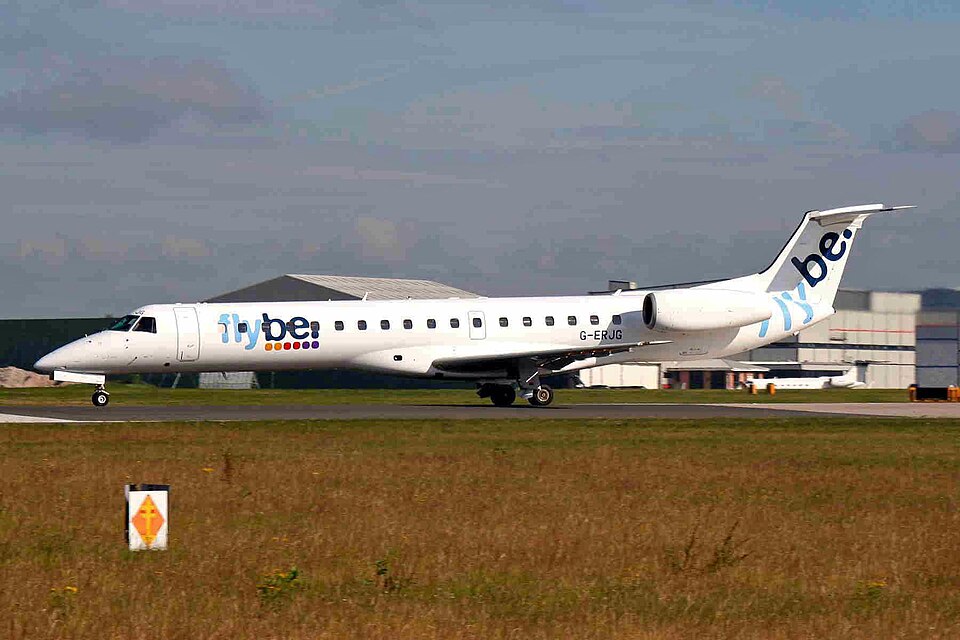
The incident involved an Embraer EMB-145EP, registration G-ERJG, operated on a scheduled passenger flight from Manchester to Venice. The aircraft was manufactured in 2001 and powered by two Allison AE 3007/A1/1 turbofan engines. On board were 4 crew and 28 passengers; no injuries were reported. The flight experienced a technical problem during climb, resulting in heat damage to an electrical component.
Flight History
While climbing through FL100, the autopilot disengaged but was successfully re-engaged by the co-pilot. As the aircraft passed FL200, the autopilot disengaged again and could not be re-engaged, restricting the aircraft to flight below airspace requiring Reduced Vertical Separation Minima. Later, at FL270 west of the Coulommiers VOR Beacon, an unusual smell became apparent in the flight deck. The senior cabin crew member reported the smell as nail varnish, but both pilots considered it similar to electrical burning.
Shortly afterwards, smoke was seen beneath the commander's seat. Simultaneously, the commander's Primary Flight Display, Multi-function Display (MFD), Radio Management Unit, and Engine Instrument and Crew Alerting System (EICAS) all failed. The pilots donned oxygen masks and smoke goggles, declared a MAYDAY, and requested a diversion to Paris Charles de Gaulle Airport. Smoke was briefly evident in the passenger cabin, though the pilots were not made aware of this at the time.
During the descent through FL090, the co-pilot deployed speed brakes to reduce speed below 250 kt. The speed brakes remained deployed through the approach and landing on Runway 27L, and the commander noticed they stayed deployed after shutdown. However, the speed brakes are designed to stow automatically when flaps are extended by 22° or more, or when thrust levers are advanced, both conditions met during approach. On the ground with flaps up and thrust levers retarded, the speed brakes redeployed.
After landing, the pilots received lengthy taxi instructions to a remote stand in an unfamiliar area of the airport. Disembarkation began five minutes after touchdown, despite ATC advising the aircraft could stop at any time if disembarkation became necessary.
Engineering Investigation
Maintenance personnel identified the source of the smoke as the number 1 IC-600 avionics integrated computer. This computer collates data from various aircraft systems and presents them on the number 1 cockpit displays. Subsequent investigation by the manufacturer found that a transistor on the A5 Autopilot Circuit Card Assembly had failed. This failure caused the Yaw Damper Clutch line to short to ground, resulting in excessive current flow, overheating, and charring of the circuit card and nearby components. The computer manufacturer concluded it was an isolated incident, and the aircraft manufacturer noted the IC-600 had a mean time between failures of over 100,000 flight hours.
Reversionary Procedures
In normal operation, the number 1 IC-600 presents information on the commander's displays and EICAS. In the event of an IC-600 failure, pressing the "SG" pushbutton on the reversionary panel restores information from the other IC-600 to both sets of displays. This procedure had been omitted from the Quick Reference Handbook (QRH) during a previous revision. The commander reported that no reversionary attempt was made due to high workload, and had an attempt been made, the crew could not have identified the appropriate procedure from the QRH. The co-pilot made a reversionary selection to display EICAS on his MFD, but this did not affect screens driven by the failed IC-600.
Recorded Information
The cockpit voice recorder was successfully replayed. Two solid-state flight recorders captured data, but after 0837 hrs, parameters associated with the number 1 IC-600 were no longer recorded on the flight data recorder (FDR). Other parameters, such as accelerometer and control positions, continued recording. The architecture routed all missing parameters through the failed IC-600, with no reversion to alternative data sources.
Follow-up Action
The QRH at the time lacked a procedure for IC-600 failure. The aircraft manufacturer discovered that the procedure had been included in an earlier QRH revision but was subsequently omitted. The aircraft operating manual contains advice on reversionary procedures, and the operator distributed this advice via a pilot notice. The manufacturer has undertaken to reinstate the procedure in the QRH. One safety recommendation was made concerning restoration of the appropriate procedure.