Introduction
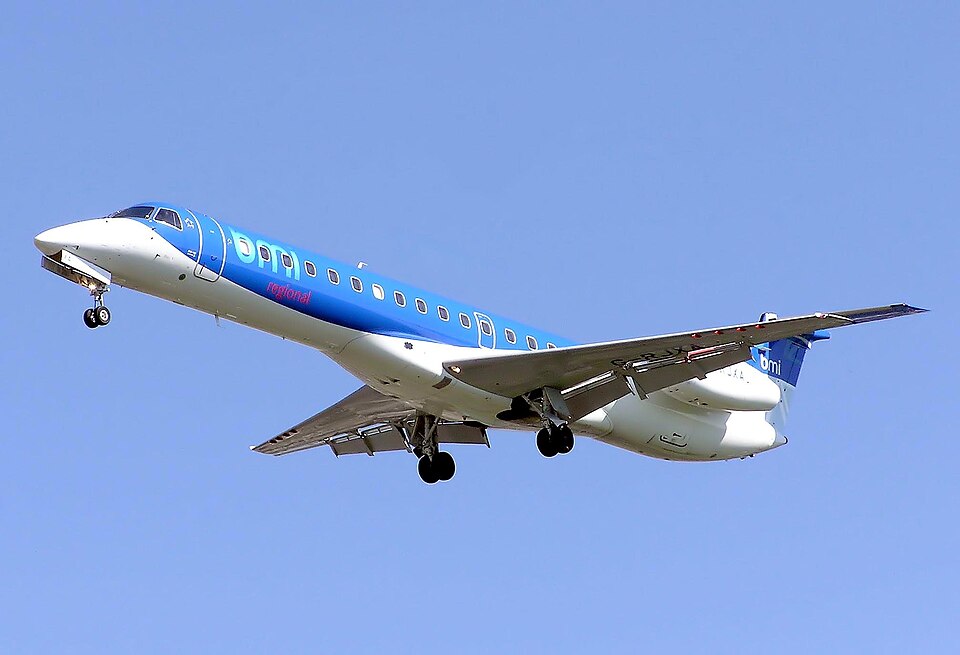
On 16 January 2003, at 1710 UTC, an Embraer EMB-145EP, registration G-RJXA, was involved in an incident at Manchester Airport while preparing for departure. The aircraft was operating a public transport passenger flight with 4 crew and 47 passengers on board. No injuries occurred, but the right nose gear door sustained damage.
Sequence of Events
The aircraft was parked on Stand 16 with an unserviceable Auxiliary Power Unit (APU). The flight crew prepared to start the engines using an external ground air supply (aircart). The aircart was reluctant to start, causing a delay. The crew initiated the start of the No 2 (right) engine, noting a slower-than-normal start sequence, and suspected low pressure from the aircart. They then attempted to start the No 1 (left) engine, but it did not accelerate beyond 25% N2, with no N1 or fuel flow indications. The start was aborted.
The crew decided to perform a cross-bleed start using air from the No 2 engine. Due to the delay, the aircraft was running late, so the crew opted to be pushed back off the stand and start the No 1 engine while the tug was pulling the aircraft forward onto the taxiway centreline. The aircraft was pushed back with the No 2 engine at idle thrust. As the tug began pulling forward, the ground crew cleared the flight crew to start the No 1 engine. The commander disengaged the elevator gust lock and advanced the right thrust lever to achieve 81% N2 on the No 2 engine. The aircraft was still moving forward, and the increased thrust caused the tug to jack-knife rapidly to the right. The commander immediately retarded the thrust lever and applied the brakes, but the towbar had already broken, and the right nose gear door struck the tug. A new towbar was attached, and the aircraft was pushed clear of the tug and towed back onto the stand.
Operator's Procedure
At the time of the incident, the Operator's Operations Manual did not specify a procedure for an engine start assisted by the opposite engine (cross-bleed start). The commander recalled carrying out such a procedure during training three years prior. The Manufacturer's Airplane Operations Manual does include this procedure, and the Operator has since adopted it. The Operator also amplified the Manufacturer's procedure with an instruction cautioning crews that cross-bleed starts require a relatively high thrust setting on the running engine, must be used with caution and only when absolutely necessary, and must only be carried out on stand with the park brake applied or after completion of the pushback with the tug disconnected and the park brake applied. Under no circumstances must thrust on any engine be advanced beyond ground idle during pushback.
Outcome
The aircraft sustained damage to the right nose gear door. The crew and passengers were unharmed. The incident highlighted the need for clear procedures regarding cross-bleed starts during pushback, leading to updates in the Operator's manual.