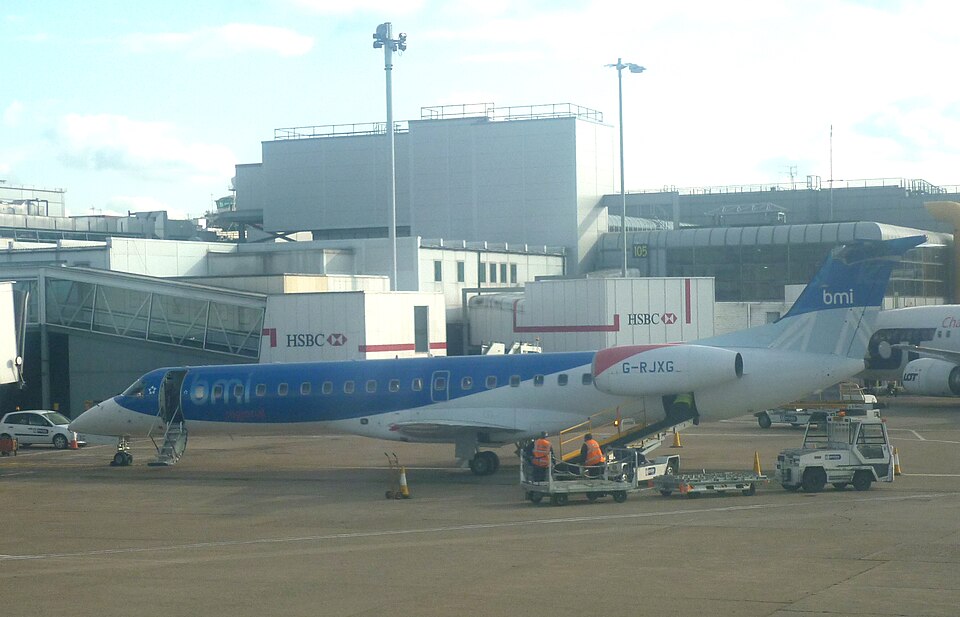
Incident Overview
On 25 September 2001, an Embraer EMB-145EP, registration G-RJXG, was conducting a scheduled flight from Aberdeen to Manchester. During the approach, the aircraft entered cloud and was struck by lightning. The commander, who was handling the flight, had been maneuvering to avoid cumulonimbus activity visually. The weather radar showed weak returns, and there was no reported turbulence or significant precipitation at the time of the strike.
Crew Actions
The first officer observed a left engine over-temperature indication. Within seconds, both engines' parameters decreased rapidly. No warning or caution indications were noted initially. The crew broadcast a distress call and executed checklist procedures for both engine failure and single-engine approach. An uneventful single-engine landing occurred at 1415 UTC.
Aircraft Damage
Examination revealed evidence of lightning strike damage on the left fuselage, extending from aft of the flight-deck windshields to above the wing trailing edge, with marks on skin joints and rivet burns. Significant damage was found on the composite right wing tip fairing.
Engine and FADEC Examination
The left engine underwent a borescope examination and the two Full Authority Digital Engine Control (FADEC) units were replaced. Engine ground runs were satisfactory, and subsequent flights were normal. The FADEC units were tested by the manufacturer and found undamaged, with no recorded fault codes. They operated within specifications and were returned to service.
Flight Data Recorder Analysis
FDR data showed that the left engine thrust lever remained steady. A slight drop in N1 and N2 occurred, followed by a sharp rise in fuel flow and inter-turbine temperature (ITT) while spool speeds decayed. The FADEC logic attempted to control the surge, but the ITT peaked at 965°C. The engine eventually shut down automatically when N2 fell below 53.5%. FADEC 1A was in control and detected no internal faults. Post-incident testing found no mechanical damage that would predispose the engine to surging; the initial reduction in N1 was attributed to disruption of intake airflow due to the lightning strike.
FADEC System Description
The EMB-145 uses dual FADECs per engine, with one active and one in standby. They communicate via cross-channel data links and an inter-nacelle data bus. The FADEC contains surge avoidance logic and an auto re-light function, but no active surge recovery. The system also includes engine protection logic to initiate shutdown if N2 drops below 53.5%.