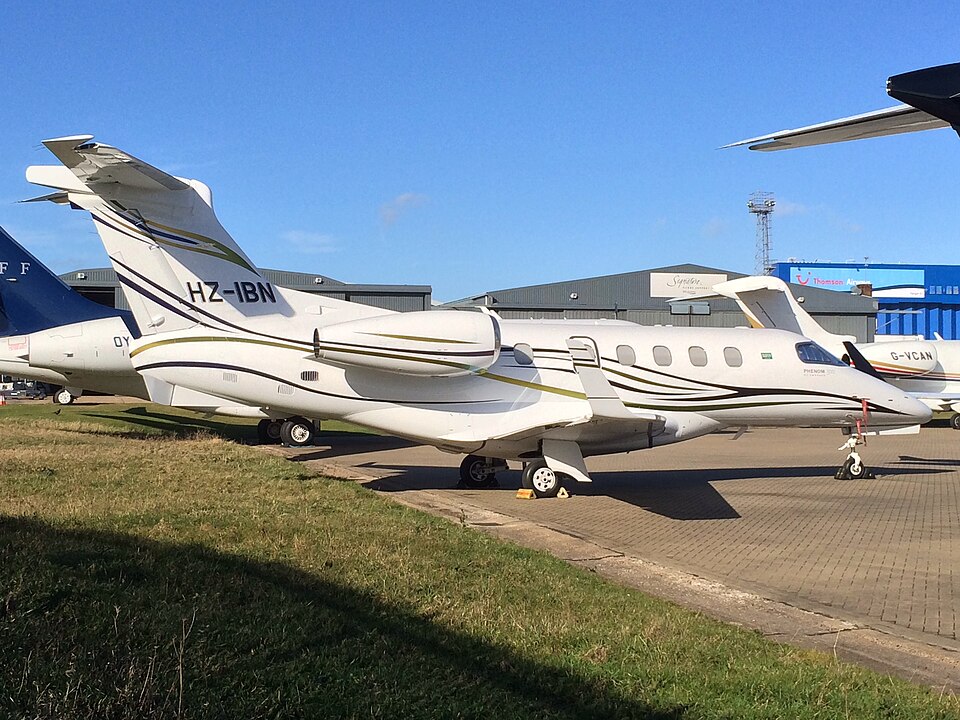
Flight History
The aircraft HZ-IBN had flown from Blackbushe to Milan earlier in the day, piloted by the same pilot, and was returning with the pilot and three passengers. After descending through the London Terminal Manoeuvring Area (TMA), the flight was handed from London Control to Farnborough Approach. The pilot reported the airfield in sight and was instructed to descend at his own discretion. When approximately four miles south of Blackbushe, he was told to contact Blackbushe Information. The weather was fine with light and variable winds, visibility above ten kilometers, and no low cloud.
Circuit and Conflict
HZ-IBN entered a left-hand circuit for Runway 25 via the crosswind leg. Near the end of the downwind leg, it overtook an Ikarus C42 microlight aircraft, climbing to pass ahead and above it. During the climb at about 1,000 ft above aerodrome level, the aircraft's TCAS generated a "descend" resolution advisory (RA) to resolve a conflict with the microlight. The RA later changed to "maintain vertical speed" and then "adjust vertical speed," possibly to resolve a second conflict with a light aircraft above and east of the aerodrome. Neither the microlight nor the light aircraft had TCAS.
Approach and Landing
Following the climb, HZ-IBN flew a curving base leg, descending at up to 3,000 feet per minute toward the Runway 25 threshold. The TCAS annunciated "clear of conflict" when the aircraft was 1.1 nm from the threshold, at 1,200 ft aal, at 146 KIAS, with landing gear down and flap 3 selected. The aircraft continued the approach at about 150 KIAS. Between 1,200 and 500 ft aal, the average descent rate was approximately 3,000 fpm; at 500 ft the rate was 2,500 fpm. The TAWS generated six "pull up" warnings on final approach. The aircraft crossed the threshold at about 50 ft aal at 151 KIAS. The manufacturer's calculated target threshold speed for the aircraft's mass and configuration was 108 KIAS.
Runway Excursion
The AFISO initiated a full emergency at touchdown because it was clear the aircraft would not stop. Tyre marks indicated the aircraft touched down 710 m beyond the Runway 25 threshold. The Landing Distance Available (LDA) was 1,059 m, so the aircraft touched down 349 m before the end of the declared LDA, and the paved surface extended 89 m beyond that. The aircraft continued along the runway, decelerating, but departed the paved end at a groundspeed of 83 kt (84 KIAS). It struck an earth bank, becoming airborne again, then struck cars in a car park of a commercial site adjacent to the aerodrome. The wing separated, and the fuselage rolled left through 350°, coming to rest on top of the detached wing, heading 064°(M), 30° right side down, approximately level in pitch.
Fire and Rescue
A fire broke out in the underside of the aft fuselage and burned with increasing intensity. The aerodrome's Rescue and Fire Fighting Service (RFFS) responded but found their path blocked by a locked gate between the aerodrome and the commercial site. The first two vehicles arrived at the gate 1 minute 34 seconds after the aircraft left the runway. The third vehicle, carrying a key, arrived about one minute later, and all three passed through the gate 2 minutes 46 seconds after the aircraft left the runway. Because the accident site was in a car park area surrounded by a 2.4 m tall wire mesh fence, the RFFS vehicles drove about 400 m to gain access. Despite applying all available media, they could not control the fire, and its intensity prevented approach to save life. All four occupants survived the impact but subsequently died from the effects of fire. Local authority fire appliances arrived later and extinguished the fire.