Incident Summary
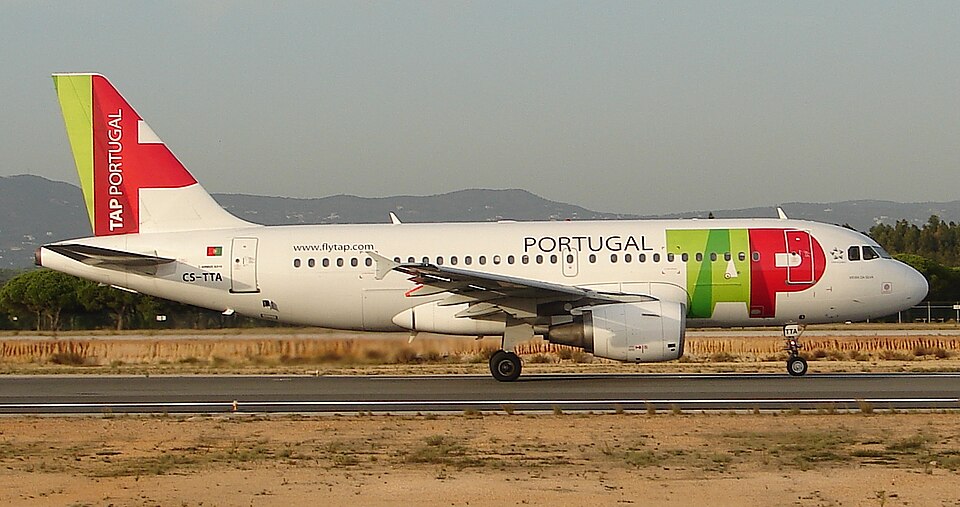
On 22 December 2008 at 08:40 UTC, a TAP Airbus A319-111, registration CS-TTA, was conducting a scheduled passenger flight from Copenhagen to Lisbon. While cruising at Flight Level 390 and approaching waypoint RALUS, located on the boundary between Spanish and Portuguese Flight Information Regions, the cabin pressurization system failed. Both automatic modes (Mode 1 and Mode 2) malfunctioned, and manual control of the outflow valve was ineffective. In manual mode, the cabin rate varied between 1,000 feet per minute descent and 1,600 feet per minute ascent. The crew reset the Cabin Pressure Controllers (CPCs), but the issue persisted. Cabin altitude exceeded the safe threshold of 10,000 feet, reaching 10,800 feet. The crew donned full-face oxygen masks and declared PAN PAN to Madrid ATC. Receiving no response, they declared MAYDAY and initiated an emergency descent, turning to a heading of 280 degrees.
Emergency Descent and Landing
During the descent, the Traffic Collision Avoidance System (TCAS) detected traffic below, forcing the crew to level off at FL350. At that altitude, the cabin altitude recovered to 9,000 feet. The remainder of the descent was managed by Lisbon ATC, to whom the crew canceled the emergency. The final phase of the flight to Lisbon International Airport was completed without further incident.
Technical Findings
After landing, the aircraft was handed over to the operator's maintenance team, who found the outflow valve (OFV) mechanically blocked and unresponsive to CPC commands or manual inputs. The inoperative OFV was replaced and sent to the manufacturer for analysis. Airbus issued a report stating: "The shop inspection revealed bearing defects in the gearbox. If the gearbox is blocked during flight due to these gear defects, this leads to a Sys 1+2 fault, so it is likely that the reason for the incident has been found." Flight data recorder (DFDR) analysis confirmed that the OFV did not move during the flight.
Conclusion
The gearbox blockage during flight, confirmed by DFDR analysis, prevented the outflow valve from moving, resulting in the inability to pressurize the cabin in both automatic and manual modes. This was the direct cause of the depressurization that led to the emergency descent.