Incident Overview
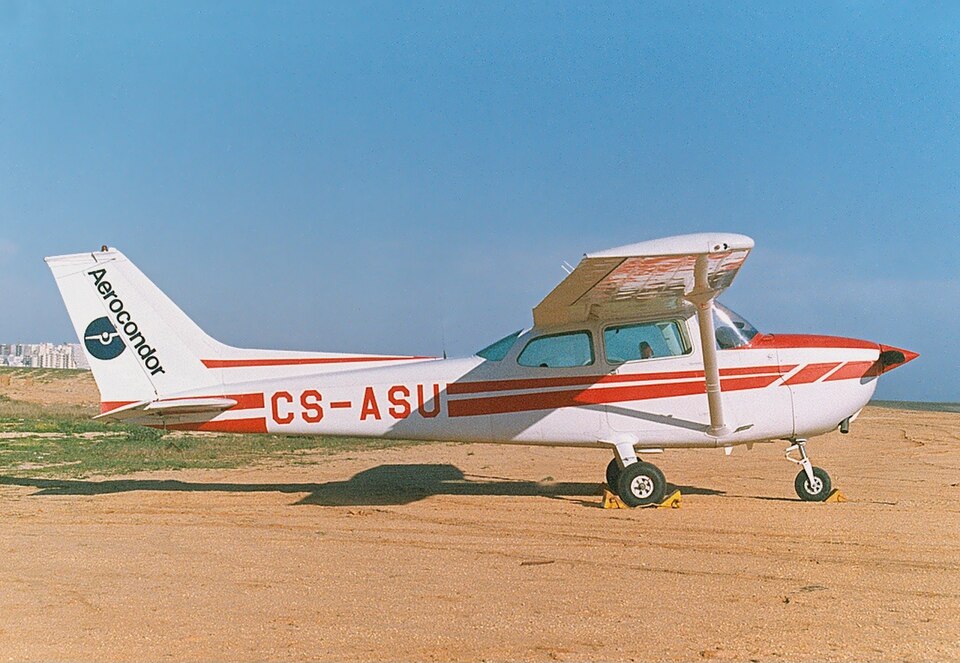
On 28 January 2008, at 13:55 UTC, an incident involving a loss of separation occurred at Cascais Aerodrome (LPCS). The aircraft involved were a Cessna 172 (registration CS-ASU) and a Cessna 152 (registration CS-AVC). CS-ASU was conducting a training flight with one pilot on board, performing touch-and-go landings in a left-hand circuit for runway 35. CS-AVC was on an instructional flight with a student pilot and an instructor, and had informed the ground controller (GRD) of its intention to join the circuit.
Sequence of Events
CS-ASU was on its third or fourth circuit when CS-AVC, after receiving clearance from GRD, joined the traffic pattern. The tower controller, who was simultaneously manning both the tower (TWR) and ground positions, was aware of CS-AVC's intentions but did not inform CS-ASU on the TWR frequency. CS-ASU completed a touch-and-go landing after CS-AVC had departed, and was told by the controller that there was traffic departing ahead.
Unaware that CS-AVC would join the circuit, CS-ASU initiated a turn to the downwind leg before reaching the circuit altitude of 1,000 feet AMSL, climbing to only 800 feet. This irregular maneuver placed CS-ASU ahead of CS-AVC (200 feet below and 300 meters ahead), cutting in front of it and forcing CS-AVC to widen its circuit to maintain separation.
CS-AVC reported the situation to the tower controller, who then questioned CS-ASU and instructed it to land immediately on final approach. After landing, the pilot of CS-ASU and the controller exchanged words on frequency and later by telephone.
Conclusions
1. CS-ASU was performing a local training flight of touch-and-go landings. 2. CS-AVC joined the circuit, departing before CS-ASU's third landing. 3. The tower controller knew CS-AVC's intentions but did not pass traffic information to CS-ASU, as recommended by ICAO Doc 4444, Chapter 5.10. 4. CS-ASU, aiming to expedite traffic flow, did not follow standard procedures and shortened the circuit. 5. CS-AVC, having been cut off and with reduced separation, questioned the tower controller. 6. The tower controller, exceeding his authority, instructed CS-ASU to land and proceed to parking. 7. The subsequent dialogue between the controller and the pilot of CS-ASU was unprofessional.
No injuries or aircraft damage were reported.