Factual Information
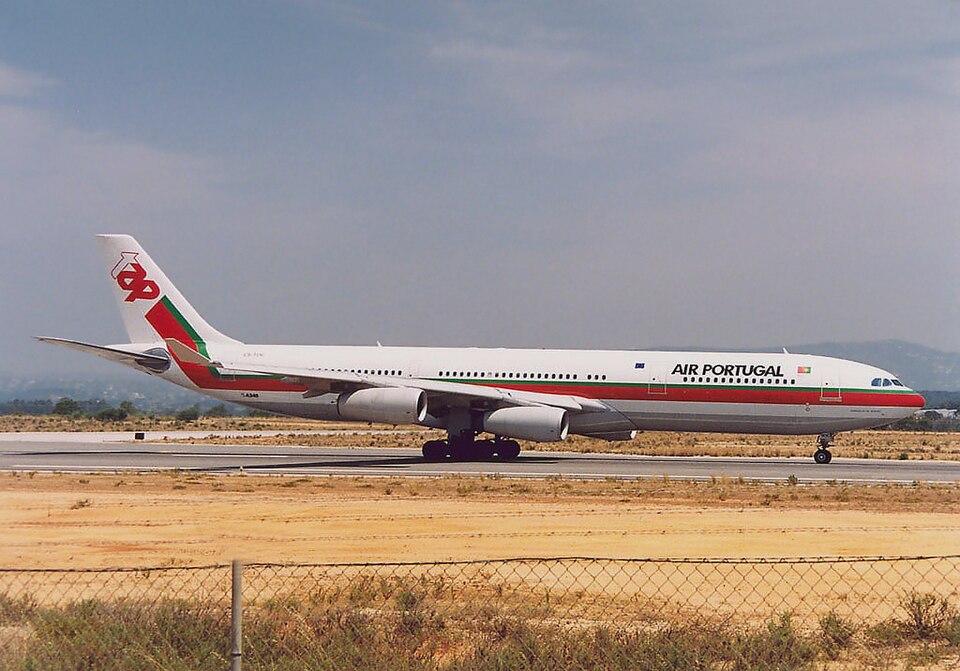
On 7 January 2013, at 02:45 UTC, a TAP Air Portugal Airbus A340-312 (registration CS-TOC) operating flight TAP-087 from Lisbon to São Paulo was climbing to FL360 on airway UN-873. Simultaneously, an Air France Boeing B777-328ER (registration F-GSQJ) operating flight AFR-457 from São Paulo to Paris-Charles de Gaulle was northbound at FL350 on the same airway. Both aircraft were in the vicinity of point IPERA within the Canarias UIR.
At 02:18:53, TAP-087 requested clearance to climb from FL340 to FL360 from Canarias Oceanic Control (GCCC OCE). The controller denied the request due to traffic AFR-443 at FL350 and instructed TAP-087 to wait at point ISOKA. At 02:36:33, after reaching ISOKA, TAP-087 again requested the climb. GCCC OCE coordinated with Sal Oceanic Control (GVXC OCE) at 02:37:17, who indicated no problem. The GCCC OCE controller attempted to contact TAP-087 via VHF but received no reply. At 02:41:28, the controller tasked the HF operator (GCCC HF) to clear TAP-087 to climb. According to TAP-087's QAR data, the aircraft began its climb at 02:44:42. More than a minute later, the HF operator confirmed the clearance. By that time, TAP-087 had already crossed with AFR-443.
At 02:47:09, a pseudotrack appeared on the controller's screen showing AFR-457 over point IPERA, indicating the aircraft was holding at FL350. AFR-457 had not established an ADS/CPDLC connection and had not contacted GCCC OCE on VHF.
At 02:48:21, as TAP-087 reached IPERA climbing through FL354, about one minute after AFR-457 had passed the point, both aircraft received TCAS advisories: first a traffic advisory (TA), then a resolution advisory (RA) instructing TAP-087 to climb and AFR-457 to descend. The crews executed the RA procedures. Once clear of conflict, TAP-087 continued to FL360 and AFR-457 returned to FL350. Both aircraft reported the event to GCCC OCE.
Crew Information
TAP-087 crew consisted of a captain with 13,738:52 total flight hours (715:22 on type), a second captain with 14,015:58 hours (685:29 on type), and a first officer with 6,337:09 hours (1,102:23 on type). All held valid ATPL(A) licenses with A340 ratings and class 1 medical certificates.
AFR-457 crew consisted of a captain aged 57 with 14,503 total hours (3,240 on type), a first officer aged 53 with 9,397 hours (676 on type), and a second first officer aged 45 with 8,380 hours (5,729 on type). All held valid ATPL(A) licenses with B777 ratings and class 1 medical certificates.
ATC Personnel: The GCCC OCE sector was staffed by an executive controller (age 44, instructor rating since 11 Nov 2011) training a controller under instruction, and a planning controller (age 36). Both had valid licenses and endorsements.
Aircraft Information
TAP-087 (CS-TOC) was an Airbus A340-312 (serial number 0079) with four CFM56-5C3 engines. It had a valid airworthiness certificate and was maintained per its approved program. The last A-check was on 26 Jan 2013 at 84,336 hours and 12,520 cycles. The flight plan noted RNP 10 approved RNAV.
AFR-457 (F-GSQJ) was a Boeing B777-328ER (serial number 32852) with two General Electric GE90-115B engines. It had a valid airworthiness certificate and was maintained per its approved program. The last A-check was on 12 Dec 2012. The flight plan noted RNP 10 approved RNAV and a FANS 1/A unit providing ADS and CPDLC functions.
Aids to Navigation
The GCCC OCE sector used the SACCAN system, which displays ADS tracks, integrated ADS-SSR tracks, and pseudotracks for non-ADS aircraft. Pseudotracks are estimated positions based on flight plan data and manual updates. AFR-457's pseudotrack appeared at its expected entry time. ADS-equipped aircraft must establish connection 15-30 minutes before entering Canaries airspace.
Injuries and Damage
No injuries were reported to crew or passengers on either aircraft. No damage occurred to either aircraft or third parties.