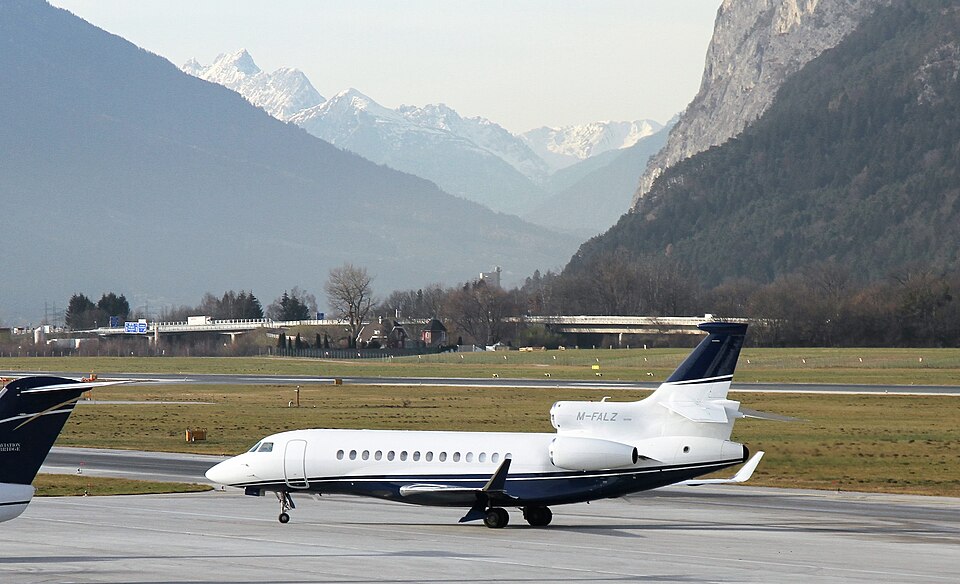
Dassault Falcon 7X Overruns Runway at Salto International Airport

Casualties unknown • UY

A Dassault Falcon 7X failed to stop on the runway during landing at Salto International Airport, exiting the pavement and sinking into soft ground.

What happened

On April 26, 2019, at approximately 19:30 GMT, a Dassault Falcon 7X, registration M-FALZ, was performing a repositioning flight from Carrasco International Airport (SUMU) to Salto International Airport (SUSO). The flight was carrying four occupants.

During the approach to runway 05, the aircraft encountered deteriorating weather conditions, including rain and low ceilings. The aircraft descended below the minimums without the crew establishing visual contact with the runway. After crossing the threshold, the crew initiated a go-around at approximately 35 feet above the ground. However, shortly after breaking through the cloud layer, the crew disconnected the autothrottle and attempted to land.

The aircraft failed to stop within the paved surface of runway 05, exiting the runway and entering the opposite threshold area. The landing gear partially sank into the soft, natural grass soil. All four occupants evacuated the aircraft uninjured. While the aircraft sustained no significant damage, a beacon at the threshold of runway 23 was destroyed.

The investigation

The CIAIA investigation examined the aircraft's flight data recorder (FDR), the operational environment, and the crew's decision-making process. The investigation analyzed the meteorological reports (METAR/SPECI), which indicated heavy rain and low ceilings at the time of the incident. The investigation also reviewed the runway conditions, noting a negative slope, cracks in the pavement, and loose material. Furthermore, the investigators evaluated the crew's adherence to Standard Operating Procedures (SOPs) and Crew Resource Management (CRM) during the unstable approach and the subsequent decision to land rather than continue the missed approach.

Findings

  • The approach was unstable, characterized by a descent rate of 760 ft/min, which exceeded the recommended 600 ft/min.
  • Several environmental factors increased the required landing distance, including a wet runway, a negative runway slope, and a tailwind component of nearly 10 knots.
  • The crew demonstrated an unstable approach followed by a late decision to execute a go-around and an incorrect decision to attempt a landing.
  • There was a lack of effective Crew Resource Management (CRM); the pilot not flying exhibited complacency by failing to challenge the pilot flying's decision-making.
  • The pilot flying exhibited overconfidence due to previous experience at the airport.
  • External pressures to complete the flight to allow the crew to rest for a subsequent scheduled flight influenced the decision-making process.
  • The runway safety area was unable to support the weight of the aircraft, leading to the gear sinking into the ground.

Probable cause

The accident was caused by an unstable approach and a failure to execute a timely go-around, compounded by the decision to attempt a landing despite encountering unfavorable runway conditions, including a wet surface and tailwind.

Frequently asked questions

What happened in the null aircraft accident near UY?

A Dassault Falcon 7X failed to stop on the runway during landing at Salto International Airport, exiting the pavement and sinking into soft ground.

What aircraft was involved and where did it happen?

The accident on null involved a aircraft, registration M-FALZ, at UY.

What was the probable cause of the accident?

The accident was caused by an unstable approach and a failure to execute a timely go-around, compounded by the decision to attempt a landing despite encountering unfavorable runway conditions, including a wet surface and tailwind.

Loading the flight search…