Aircraft and Pilot Information
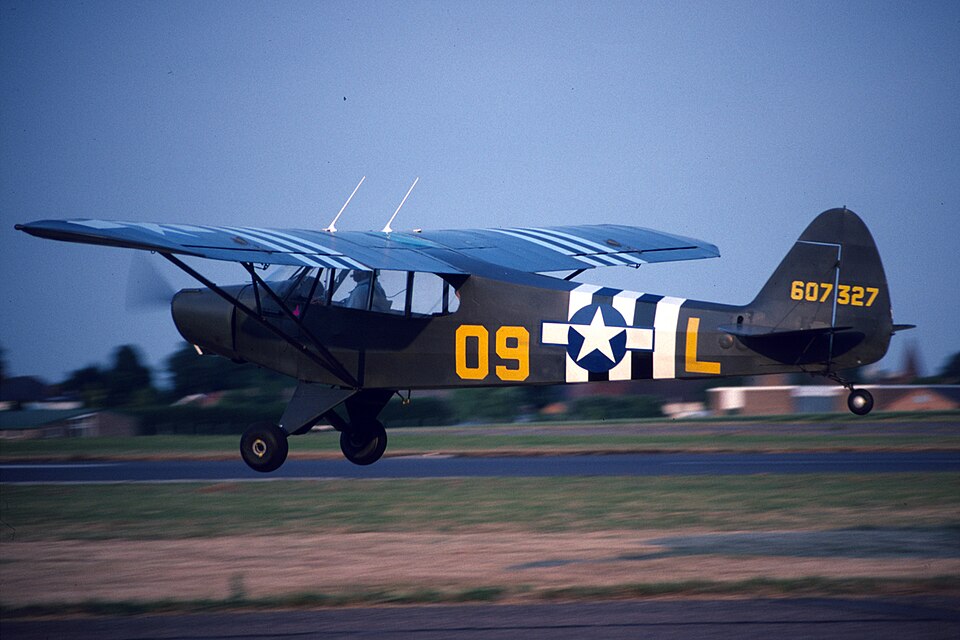
The aircraft involved was a Piper PA-18, registered G-ARAO, manufactured in 1960. It was equipped with one Teledyne Continental C90-14F piston engine. The pilot held a Private Pilot's Licence, was 58 years old, and had accumulated 337 flying hours, of which 327 were on the type. In the previous 90 days, the pilot had flown 6 hours; in the previous 28 days, 5 hours. The flight was private, with one person on board (the pilot) and no passengers.
Sequence of Events
On 1 June 2002 at 1400 UTC, the pilot flew from Denham airfield to Oxenthope, a farm strip situated on exposed moorland near Bradford, West Yorkshire. The strip has an elevation of 1,150 feet amsl and features two grass runways: Runway 11/29, 450 metres long, and Runway 06/24, 250 metres long.
Upon arrival overhead, the weather was CAVOK. From the windsock and other surface indications, the pilot assessed the wind to be south easterly at about 10 knots. He selected Runway 11 for landing and used the 'wing down' technique during the final approach. As he levelled the wings during the landing flare, he noted that the wind direction had changed to approximately 190° and increased to about 20 knots. The left wing dropped, and he applied full power to go around but was unable to prevent the left wing from striking the ground.
He closed the throttle, and the aircraft rapidly slowed down as it overran freshly dug ground to the left of the strip. The aircraft then encountered a steep down-slope and eventually came to rest at an angle of about 45° pitched forward, with its propeller embedded in the earth. The pilot selected the fuel, magnetos and switches to OFF and rapidly vacated the aircraft because fuel was leaking from the fuel tanks. After he vacated the aircraft, a further gust of wind flipped the aircraft onto its back.
Damage and Aftermath
The aircraft sustained substantial damage to the wings, lower fuselage, propeller, and rudder. The pilot reported no injuries.
Probable Cause
No probable cause was stated in the source.